2026-09-21
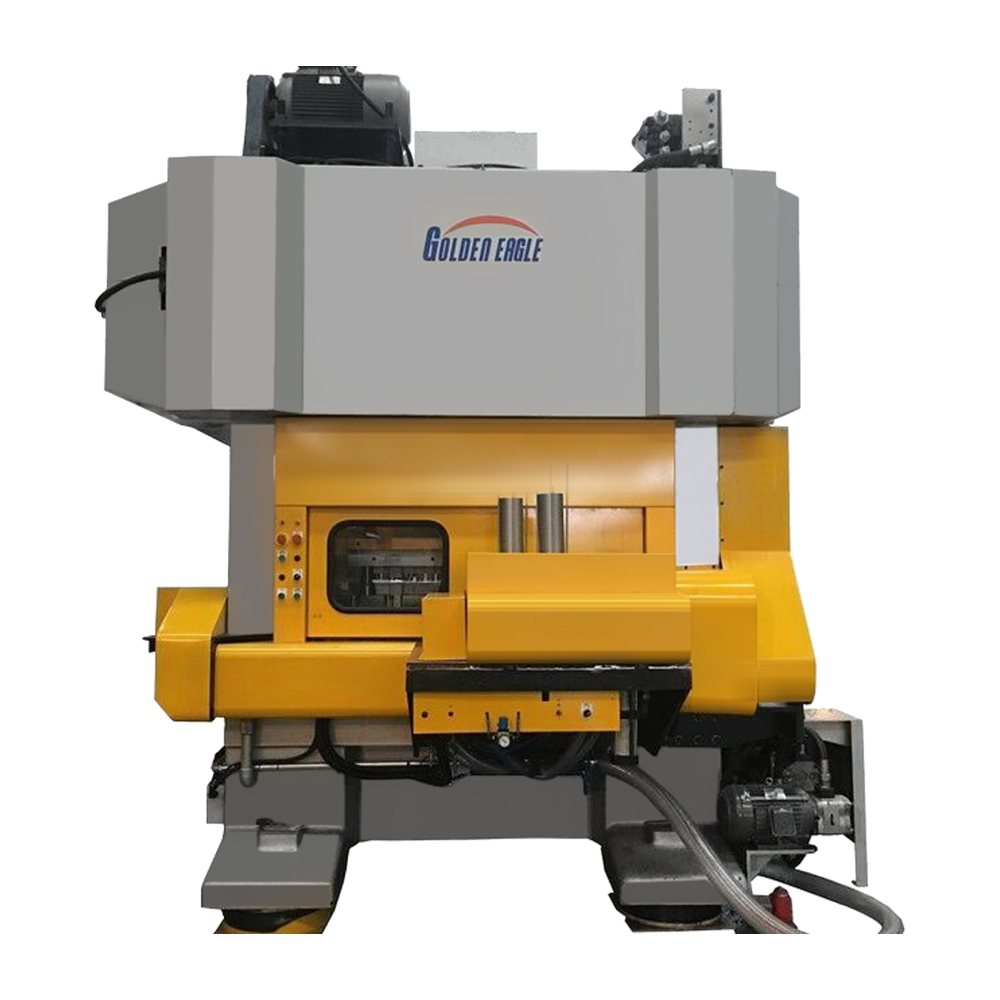
Modern two-piece can production requires equipment that combines high forming accuracy, stable high-speed operation, flexible tooling, and dependable integration with upstream and downstream processes. The CNC multi-mode gantry punch press described in this article is designed for tinplate two-piece can production, including tuna cans and other deep-drawn or punch-formed containers. It provides an automatic solution for sheet-metal punch pressing while supporting different die configurations, can sizes, production speeds, and operating requirements.
The machine is identified as Model CNC-C and is available in several configurations, including CNC-C2L, CNC-C2H, CNC-C1B-L, CNC-C1H-2, CNC-CⅥ-L, CNC-C3, CNC-CⅥ-H, and CNC-C9. Depending on the selected configuration, the equipment can operate with one, two, three, or up to five dies. Its production capability extends from approximately 80 cans per minute in a single-die arrangement to approximately 400–500 cans per minute in a five-die arrangement. This range allows can manufacturers to select a configuration that corresponds to their product dimensions, tooling plan, floor space, and target output.
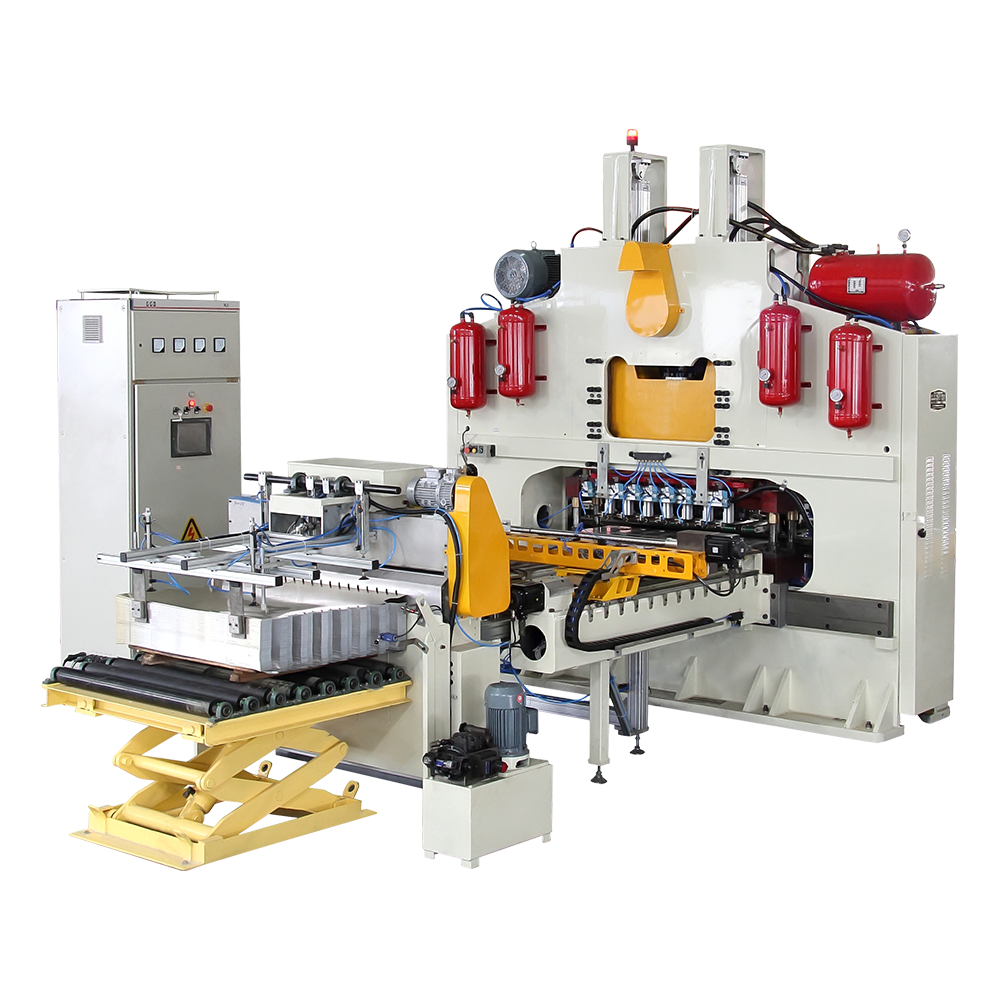
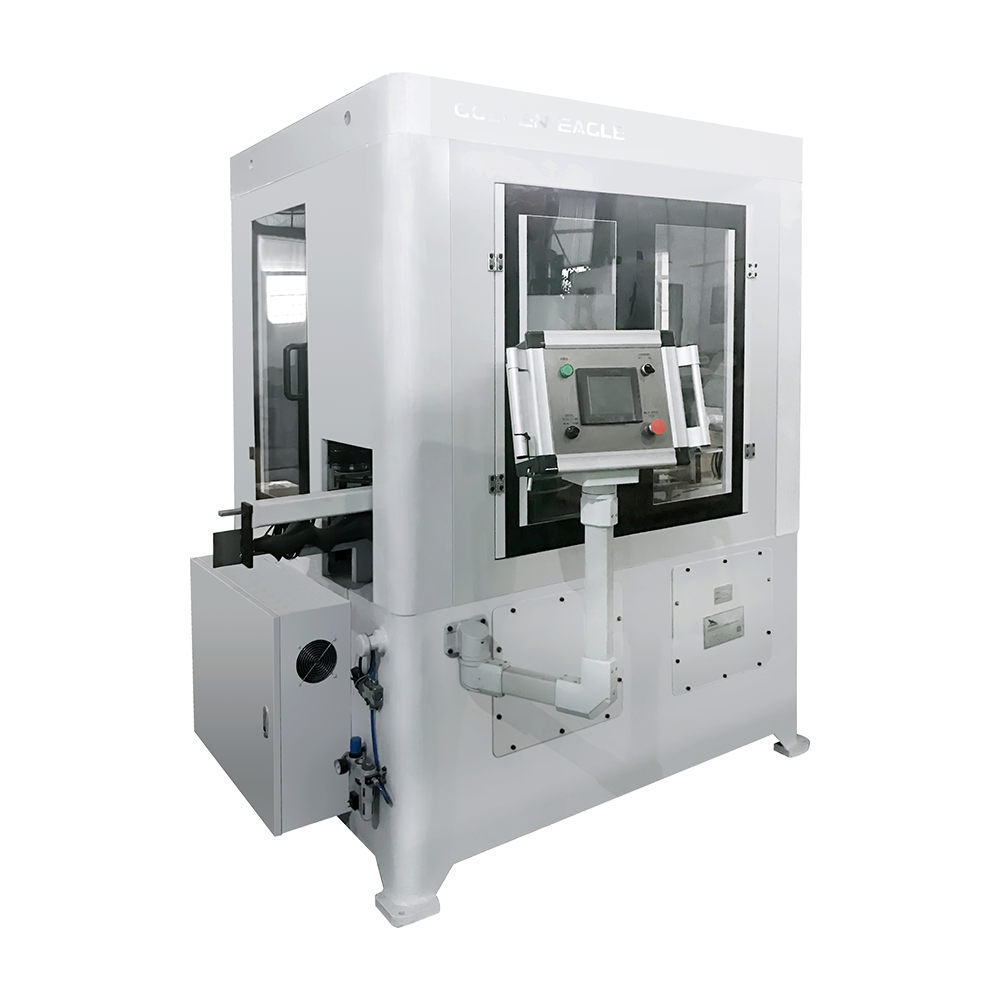
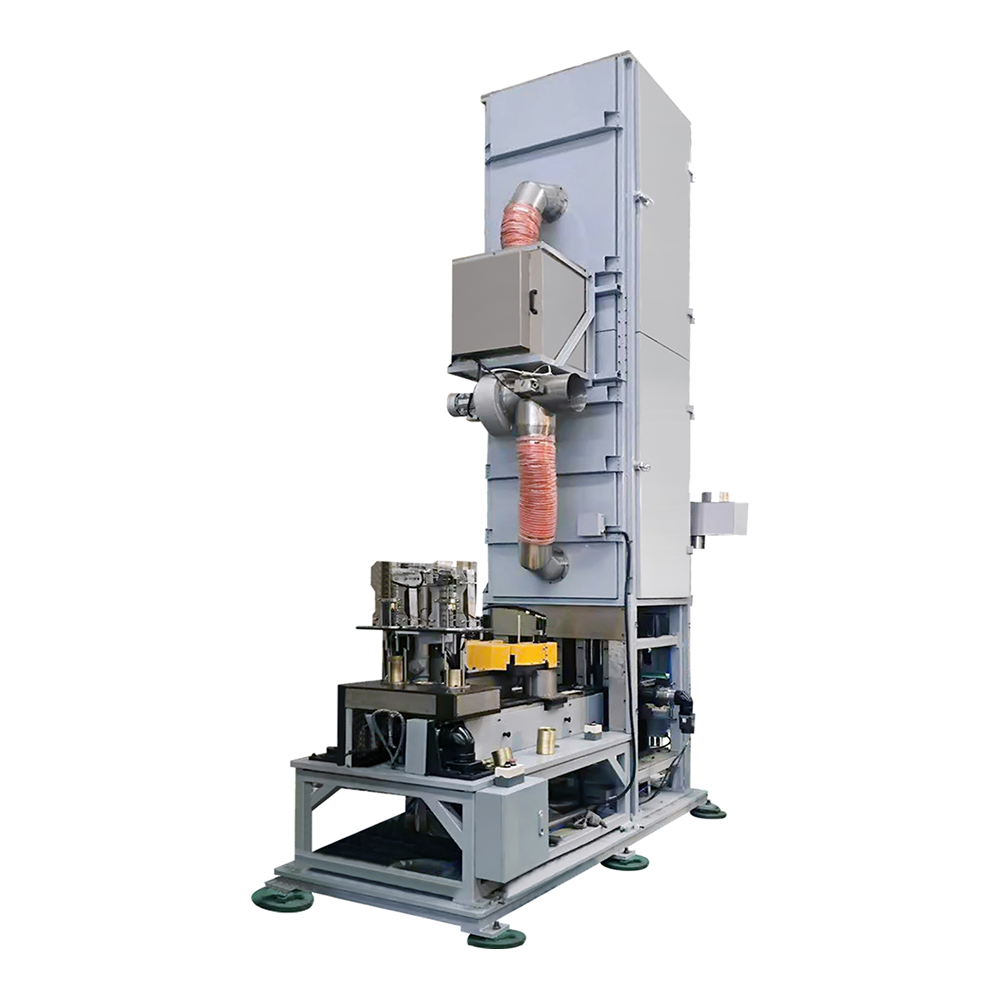
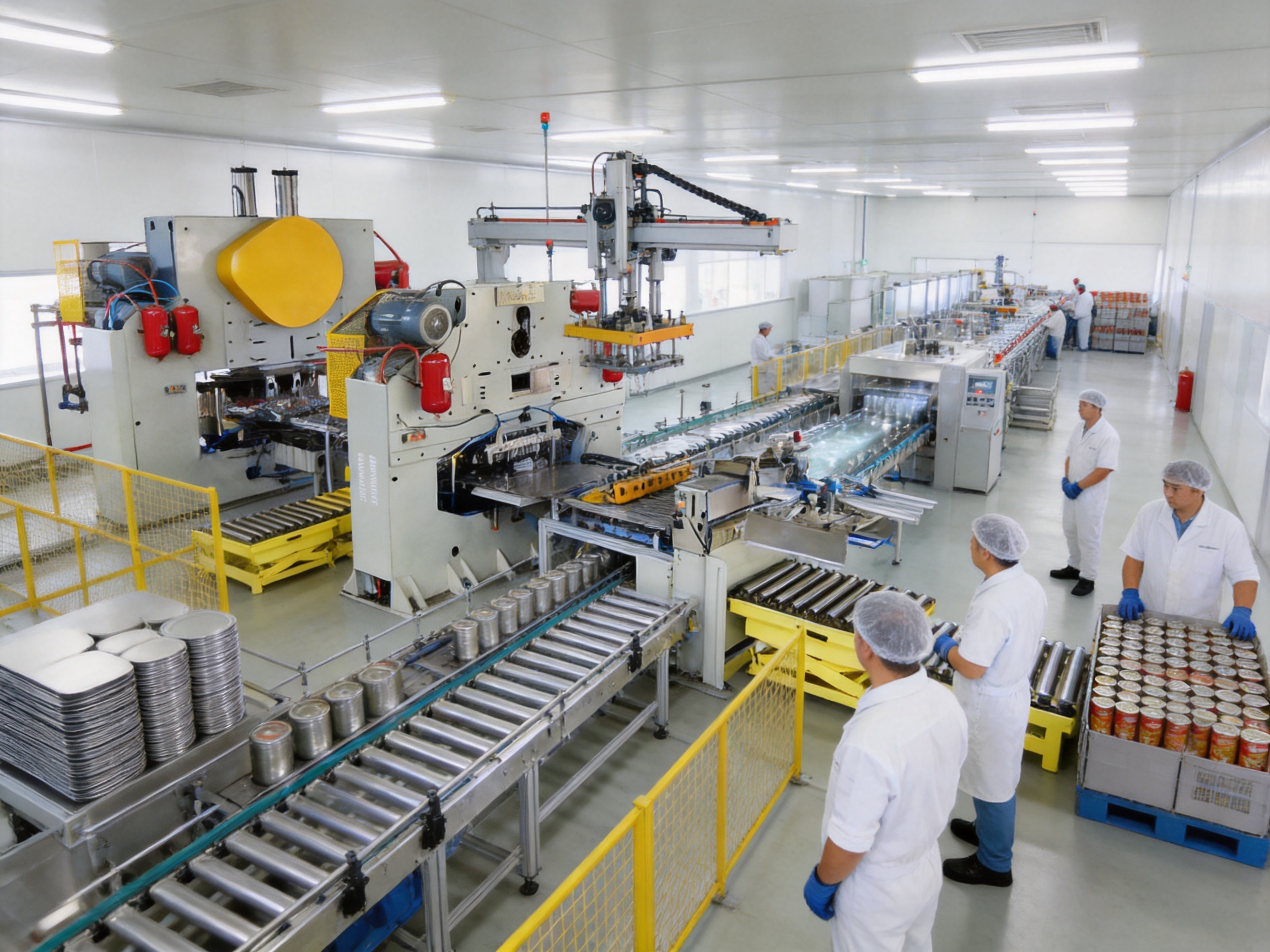
Unlike a basic standalone punch press, the CNC multi-mode gantry system is intended to function as part of a complete can-making production line. It can be combined with sheet feeding, positioning, forming, transfer, inspection, and collection systems. The result is a coordinated production process that helps reduce manual handling and supports consistent output over long operating periods.
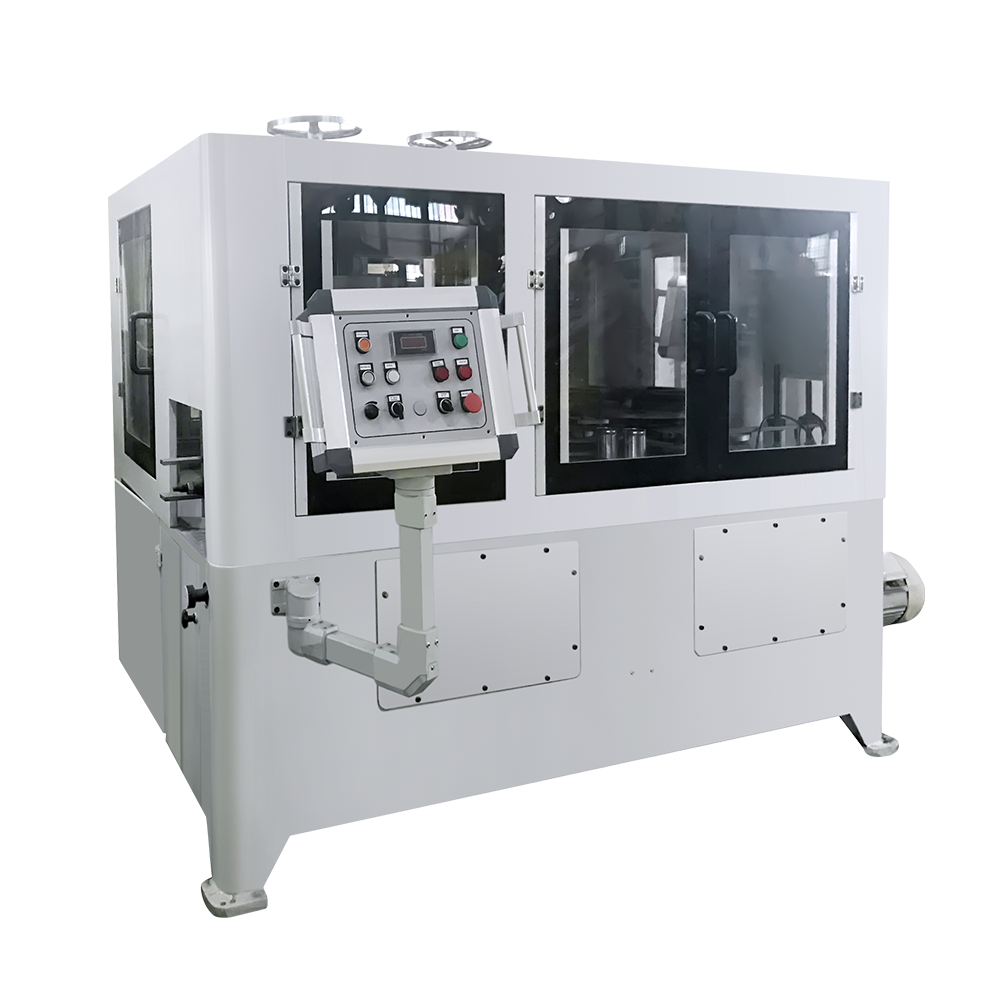
The CNC multi-mode gantry punch press is an automatic punch-forming machine for tinplate and related metal can applications. Its principal use is the production of two-piece cans, where a metal sheet or blank is formed into a body and bottom as one integral piece. Typical applications include tuna cans, food cans, specialty containers, and other products requiring accurately shaped metal bodies.
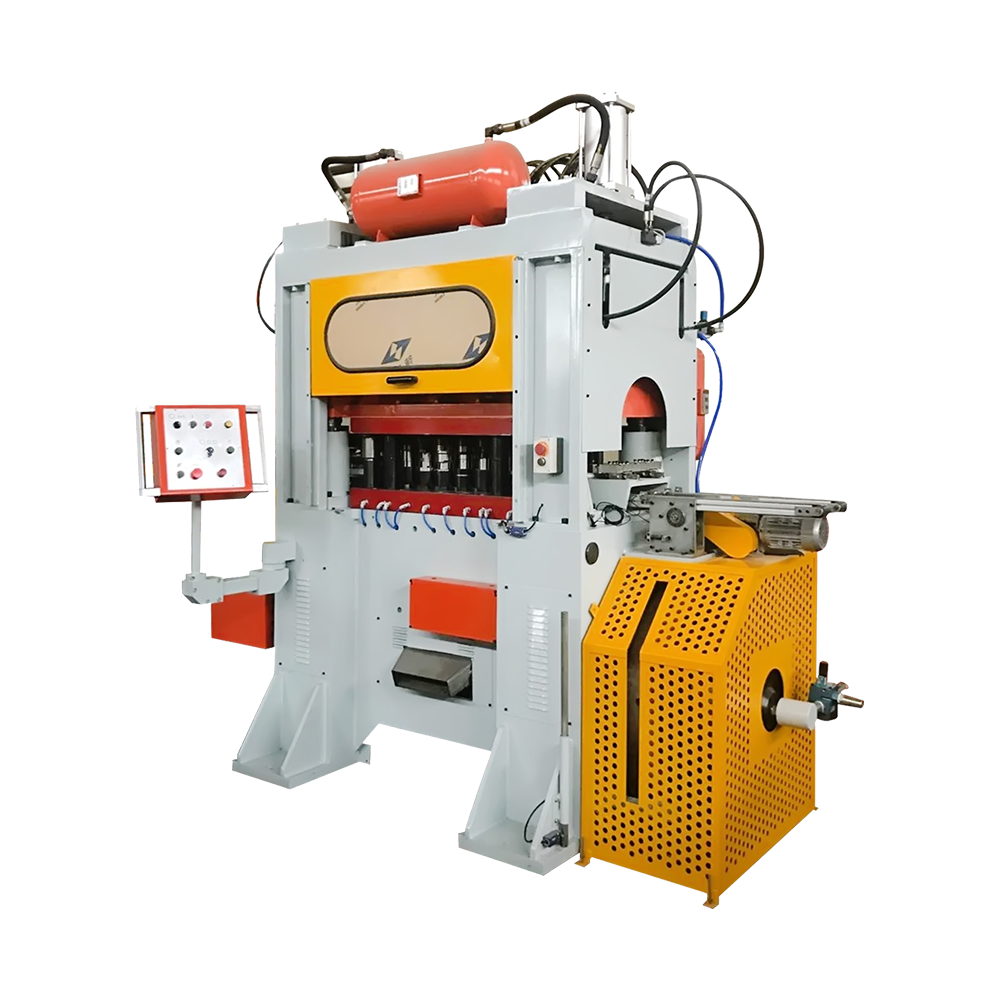
The equipment uses an O-frame pressing structure for metal can making. This structural arrangement provides a rigid working zone around the die area. A rigid frame is important in high-speed forming because it helps limit deformation under pressing force. Maintaining stable alignment between the ram, punch, die, and sheet is essential for controlling wall shape, bottom geometry, flange quality, and dimensional repeatability.
The machine is described as CNC controlled and multi-mode because its operating parameters and production arrangement can be adapted to different tooling combinations. The selected mode can correspond to the number of dies, the required stroke, the material thickness, the can diameter, and the desired output. This flexibility makes the machine suitable for manufacturers producing more than one can specification on the same general production platform.
The standard product information identifies the operation as automatic, the application as punch pressing, and the can size as various and tailor-made. These characteristics are particularly useful for contract manufacturers and food-packaging producers that must handle changing customer requirements. Instead of investing in a completely different machine for every product, a manufacturer can configure the punch press around appropriate tooling and production parameters.
Depending on the can diameter and die arrangement, the system can provide production speeds from approximately 80–100 cans per minute with one die to approximately 400–500 cans per minute with five dies. The actual output depends on the can size, material properties, blank dimensions, tooling design, stroke setting, feeding stability, and line layout. The stated speed range should therefore be treated as a configuration reference rather than a universal output guarantee for every can specification.
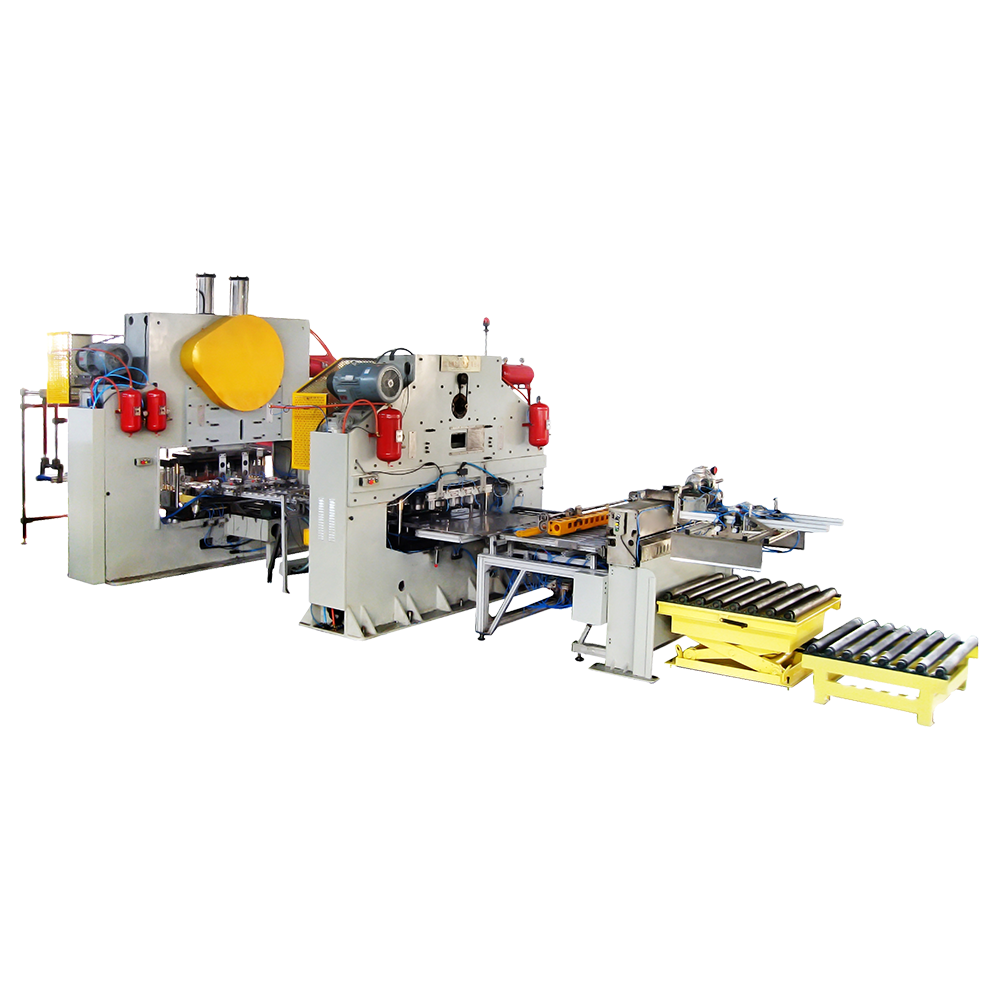
Two cans of CNC multi-mode CNC gantry punch
Two-piece can production begins with a prepared tinplate sheet or blank. The material is positioned in relation to the punch and die, and the press applies a controlled forming force. The punch drives the metal into the die cavity, producing the required can profile. Depending on the tooling arrangement, the process may include drawing, redrawing, shaping, bottom formation, or other operations required by the container design.
In a conventional two-piece can, the body and bottom are formed from the same piece of metal. This differs from a three-piece can, which normally consists of a body shell, a separate top, and a separate bottom joined through seaming or other operations. Because two-piece forming creates the body and bottom as one unit, the press must deliver consistent force, accurate stroke control, and stable material positioning.
The ram stroke distance varies by model. The listed configurations provide stroke distances of approximately 140 mm, 150 mm, or 190 mm. Lower-stroke versions are suited to applications where the forming depth and tooling requirements are more moderate, while higher-stroke versions provide additional forming travel for deeper or more demanding container shapes. The correct selection depends on the final can height, draw depth, tooling design, and forming sequence.
The press also offers different maximum lift-depth values. Depending on the model, the maximum lift depth is approximately 35 mm or 55 mm. Lift depth affects the way material and tooling move during the production cycle. A suitable lift arrangement helps maintain clearance, supports reliable transfer, and reduces the risk of interference between the formed container, punch, die, and feeding mechanism.
For high-speed operation, the feeding system and press must work as one coordinated unit. A feeding error can cause an off-center draw, a damaged blank, a deformed can, or a collision with the die. The CNC control system supports the adjustment of machine timing and operating parameters so that the press can be synchronized with automatic feeding and transfer equipment.
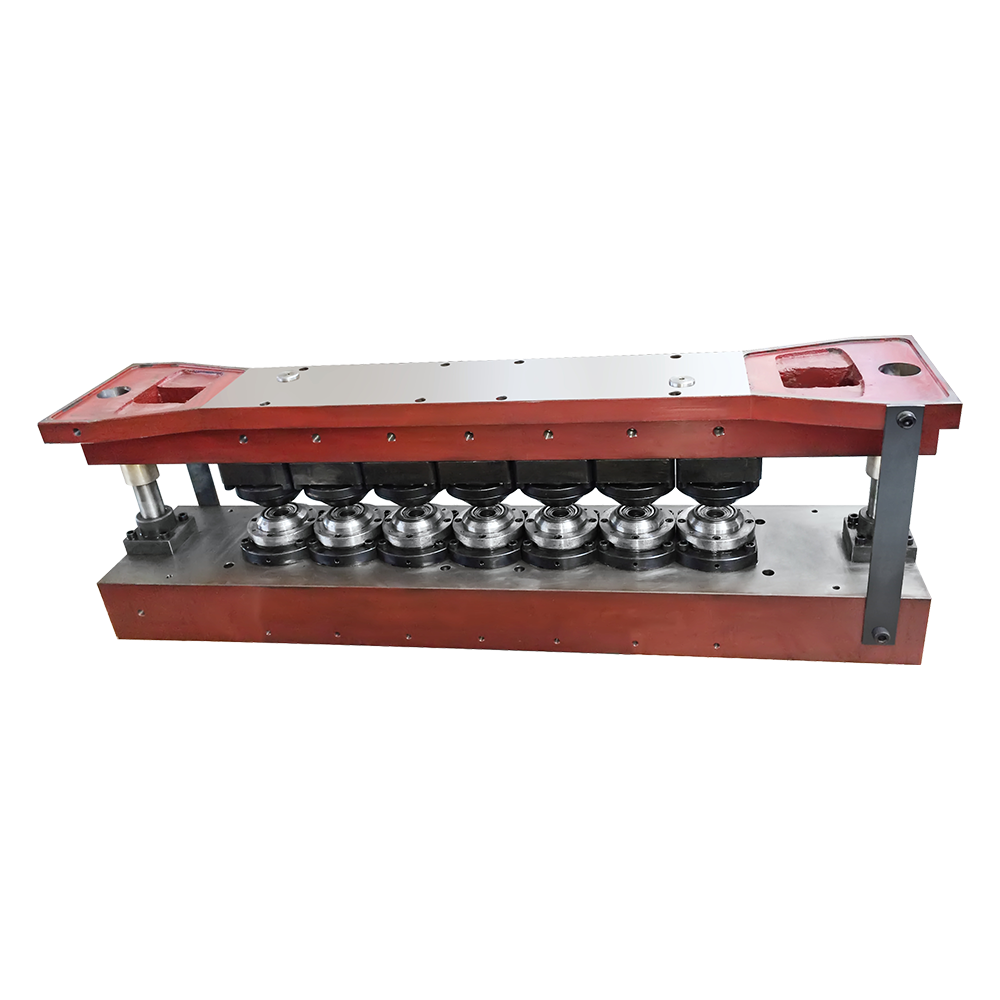
The press may be used with a single die or multiple dies. A single-die configuration can be appropriate for smaller production volumes, product development, customized containers, or applications where tooling changeover flexibility is more important than maximum output. Multiple-die configurations increase productivity by allowing more forming operations or more pieces to be processed during each operating cycle.
The following table summarizes the principal information supplied for the CNC-C series. Some specifications are grouped by machine configuration because several models share the same general mechanical arrangement. Final technical selection should be confirmed according to the intended can size, material, tooling, and production line design.
| Specification | CNC-C2L | CNC-C2H | CNC-C1B-L | CNC-C1H-2 | CNC-CⅥ-L | CNC-C3 | CNC-CⅥ-H | CNC-C9 |
|---|---|---|---|---|---|---|---|---|
| Working pressure | 450 kN | 450 kN | 900 kN | 900 kN | 120 kN | 120 kN | 120 kN | 160 kN |
| Ram stroke distance | 140 mm | 190 mm | 140 mm | 190 mm | 150 mm | 190 mm | 150 mm | 190 mm |
| Maximum stroke rate | 150 spm at approximately 153 mm diameter | 100 spm | 150 spm at approximately 153 mm diameter | 100 spm | 150 spm at approximately 153 mm diameter | 100 spm | 150 spm at approximately 153 mm diameter | 100 spm |
| Maximum lift depth | 35 mm | 55 mm | 35 mm | 55 mm | 35 mm | 55 mm | 35 mm | 55 mm |
| Maximum shut height | 485 mm | 466 mm | 485 mm | 466 mm | 505 mm | 466 mm | 505 mm | 466 mm |
| Shut-height adjustment | 17 mm | 17 mm | 17 mm | 17 mm | 17 mm | 25 mm | 17 mm | 25 mm |
| Main motor power | 7.5 kW | 7.5 kW | 11 kW | 11 kW | 15 kW | 18.5 kW | 15 kW | 22 kW |
| General Configuration | Single or associated models | Double or associated models | Three-die configuration | Five-die configuration |
|---|---|---|---|---|
| Typical die capacity | One die | Up to two dies | Up to three dies | Up to five dies |
| Approximate production function | 80–100 cpm at one die | 160–200 cpm at two dies | 240–300 cpm at three dies | 400–500 cpm at five dies |
| Typical total power reference | Approximately 40 kW | Approximately 50 kW | Approximately 60 kW | Approximately 65 kW |
| Typical total weight reference | Approximately 18 tonnes | Approximately 22 tonnes | Approximately 25 tonnes | Approximately 27 tonnes |
| Typical machine dimension reference | Approximately 12,120 × 5,000 × 3,170 mm | Approximately 12,120 × 6,000 × 3,170 mm | Approximately 12,560 × 6,000 × 3,780 mm | Approximately 12,560 × 6,000 × 3,780 mm |
The working pressure options range from approximately 120 kN to 900 kN. This broad range enables the equipment family to cover different forming loads. Higher-pressure configurations are appropriate when the tooling and material require greater forming force, while lower-pressure models can serve lighter or more specialized applications.
Maximum shut height is listed between approximately 466 mm and 505 mm. Shut height is an important tooling parameter because it defines the available distance between the press working surfaces when the ram is in its closed position. The adjustment range, listed as approximately 17 mm or 25 mm depending on the model, helps operators set the machine for different die heights and forming conditions.
Main motor power varies from approximately 7.5 kW to 22 kW, while total power references range from approximately 40 kW to 65 kW. The difference between main motor power and total power reflects the broader electrical demand of the press and its associated systems. Factory planning should consider the complete connected load, voltage, frequency, control cabinet requirements, and auxiliary equipment.
One of the strongest advantages of the CNC-C platform is its range of production configurations. A producer may select a one-die arrangement when flexibility and moderate output are priorities, then choose two-, three-, or five-die arrangements when higher capacity is required. This approach allows the machine family to serve small, medium, and large production operations without forcing every user into a single capacity level.
Competitor equipment may be optimized for only one production rate or one fixed tooling layout. A fixed arrangement can deliver excellent output for a narrow product range, but it may become less efficient when the manufacturer introduces new can diameters, different draw depths, or shorter production runs. The multi-mode concept offers a more adaptable platform for companies that serve several markets or regularly change their product portfolio.
The O-frame pressing structure supports a stable load path around the forming area. In metal forming, structural rigidity affects dimensional accuracy and tool life. When the frame remains stable under pressure, the punch and die can maintain more consistent alignment. This is beneficial for reducing uneven wall thickness, irregular bottom profiles, edge damage, and premature tool wear.
A rigid frame also supports repeatability during extended production. High-speed can making involves thousands or millions of repeated cycles. Small alignment errors can become significant when multiplied across a long production run. The O-frame arrangement is therefore an important mechanical advantage for manufacturers that require consistent results and predictable maintenance intervals.
The ability to use up to five dies in the higher-capacity configuration helps increase output without requiring a proportional increase in individual machine count. A multi-die arrangement can improve the productivity of the complete line by allowing several forming operations to be carried out within a coordinated cycle.
Compared with a single-die press, a five-die configuration can be especially valuable when demand is high and floor space is limited. It can also reduce the number of separate machines, operators, and transfer arrangements required for the same nominal output. The final benefit depends on the can design, tooling arrangement, material feed, and line balance, but the architecture provides a strong foundation for large-scale production.
Automatic operation reduces dependence on manual placement and removal of blanks. It also promotes more uniform cycle timing. Manual handling can introduce variations in position, create production bottlenecks, and expose operators to repetitive tasks around moving tooling. A properly integrated automatic feeding and transfer system improves continuity and makes production data easier to monitor.
Automatic operation is particularly useful for food and beverage packaging, where consistent hygiene practices, controlled material flow, and stable production conditions are important. By reducing unnecessary manual contact with blanks and formed containers, the line can support a cleaner and more controlled manufacturing environment.
The product information identifies the can size as various and tailor-made. This means the machine is not restricted to one standard container format. Tooling, stroke selection, shut height, die arrangement, and feeding design can be developed around the intended can dimensions.
Customizable production is an advantage for brands and contract packers that require special tuna cans, food containers, promotional formats, or regional packaging sizes. It also allows the producer to respond to changes in customer demand without replacing the entire production system. Any custom application should be evaluated through engineering review, tooling analysis, sample production, and final capacity verification.
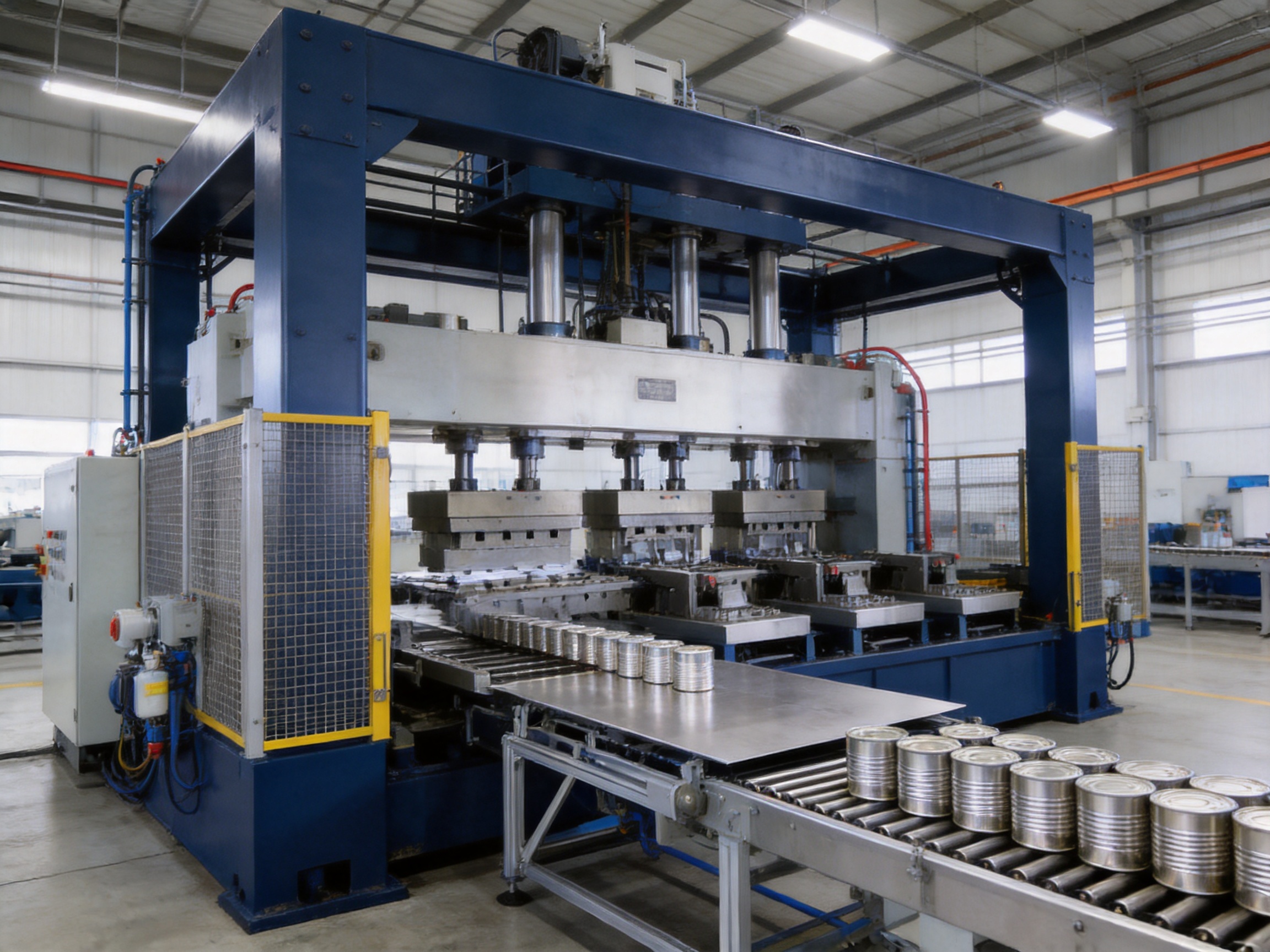
The equipment is manufactured by Zhejiang Golden Eagle Food Machinery Co., Ltd., a company with a history in can-making machinery and mold production dating back to 1978. The company was formerly associated with Zhejiang Food Machinery Factory and Zhoushan Mold Factory. Its long-term focus on can-making equipment gives it experience across presses, can bodies, can ends, molds, feeding systems, and complete production lines.
The company reports a workforce of more than 350 trained personnel, including experienced design and development engineers. This combination of manufacturing labor, engineering knowledge, and product-specific experience is important for complex forming equipment. A punch press is not an isolated mechanical product; it must work with dies, feed systems, control systems, material specifications, and downstream machinery. In-house technical competence can help coordinate these interfaces.
The company also reports the use of CNC high-precision machining equipment and complete mechanical machining equipment. Precision machining is essential for press components and tooling because the quality of the die, punch, guide elements, and mounting surfaces directly affects forming accuracy. CNC machining can provide repeatable dimensions and support the production of complex components with controlled tolerances.
Advanced machining equipment also supports the maintenance of consistent parts across different machine units. When replacement components are manufactured according to controlled drawings and machining procedures, servicing becomes more predictable. This is especially valuable for international users who need dependable spare-part compatibility over the life of a production line.
The company states that its product design principles are similar to those associated with established European can-making equipment manufacturers, including KRUPP, SOUDRONIC, and ALFONS-HAAR. This should be understood as a design reference rather than a claim that the equipment is identical to any competitor’s machine. The significance is that the manufacturer has studied recognized industrial approaches and combined them with practical production experience and its own engineering development.
After more than four decades of development, the company reports that it has produced more than 10,000 pieces of can and can-lid equipment. Such a production history indicates broad exposure to different factory conditions, material requirements, tooling systems, and customer applications. Experience at this scale can help identify common causes of downtime, tooling wear, feeding instability, and quality variation during the design and commissioning stages.
A high-quality punch press begins with engineering rather than assembly alone. The manufacturing process normally starts with product specification, can drawing review, material assessment, production-capacity analysis, and tooling planning. For a tailor-made application, the intended can diameter, height, bottom shape, metal thickness, coating, blank dimensions, and production speed must be considered together.
The machine frame and major structural components must be produced with attention to geometry, flatness, and load-bearing capacity. Machined surfaces used for mounting the press, guides, dies, and drive components must be properly prepared. The objective is to create a stable reference structure that can maintain alignment throughout repeated cycles.
Critical mechanical components are manufactured using high-precision machining equipment. CNC processing helps maintain repeatable dimensions and supports the production of complex shapes. Where necessary, components can be inspected after machining to confirm dimensional compliance. Good inspection practices are especially important for components that influence ram guidance, die positioning, shut height, and feeding alignment.
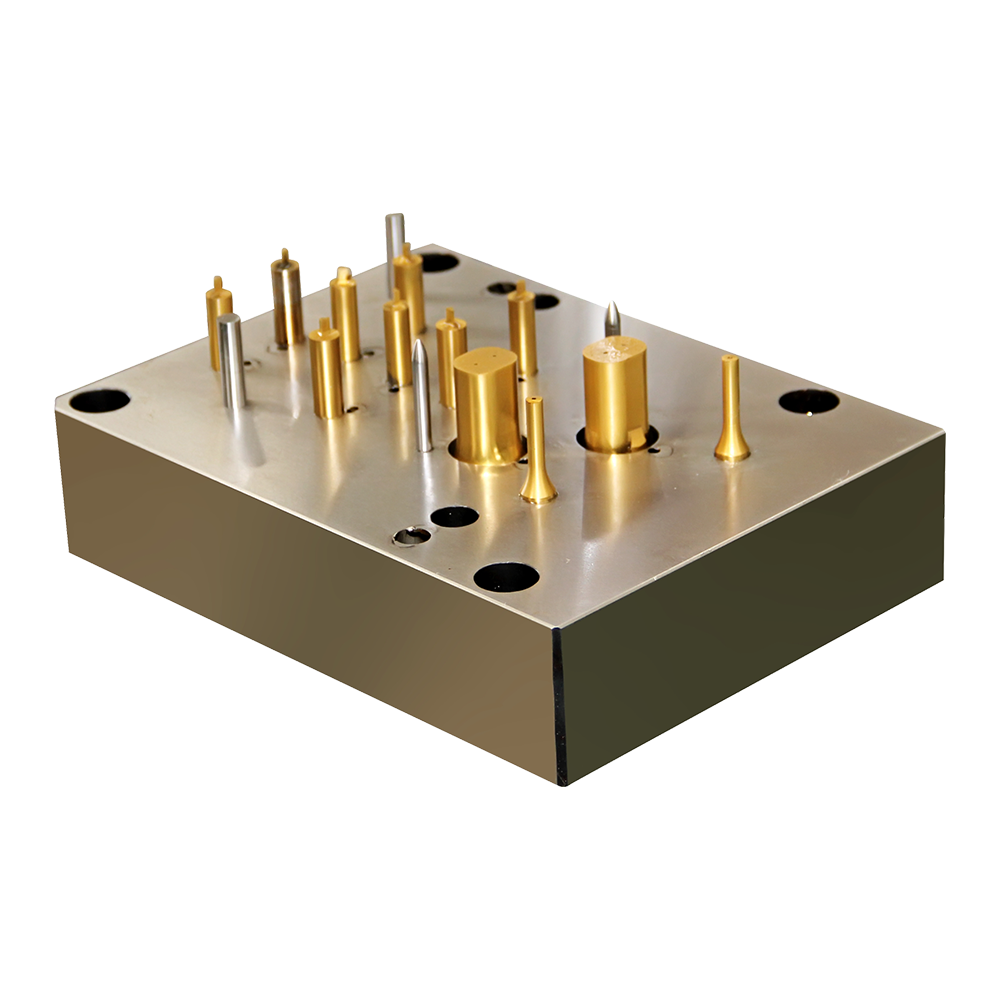
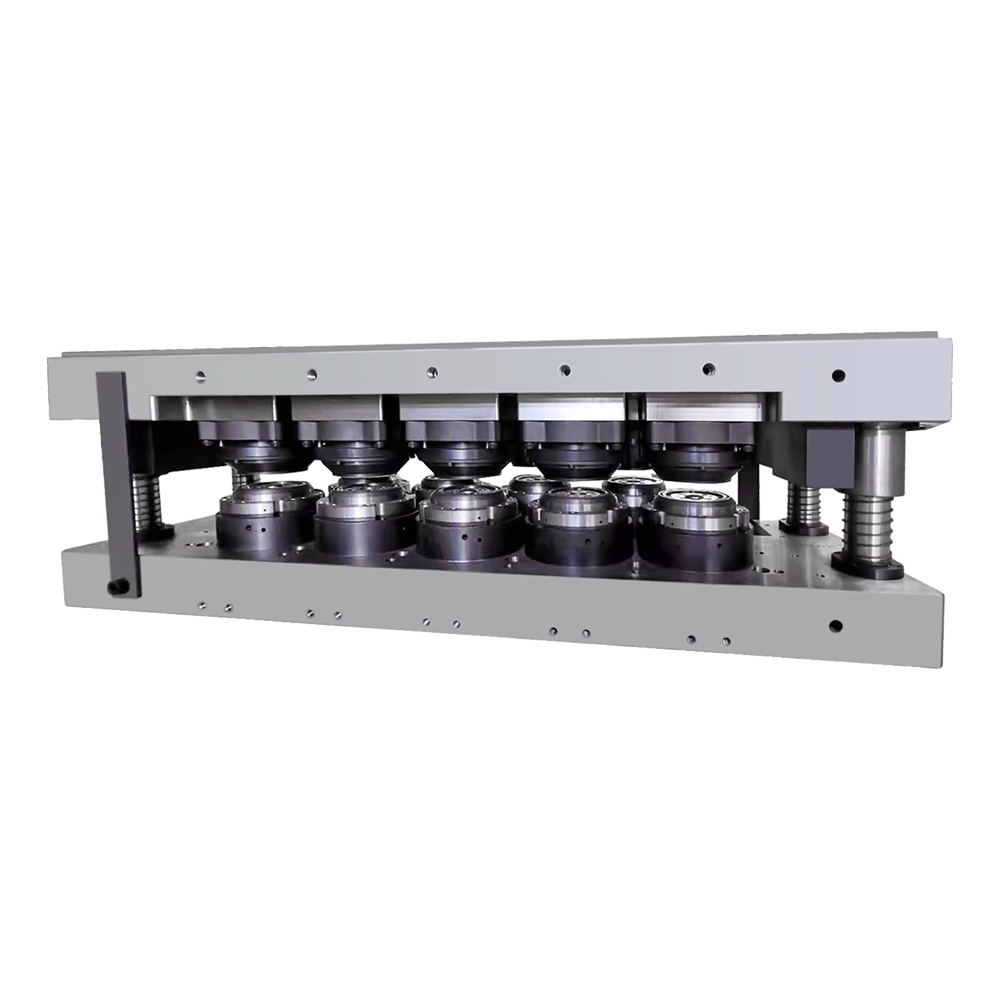
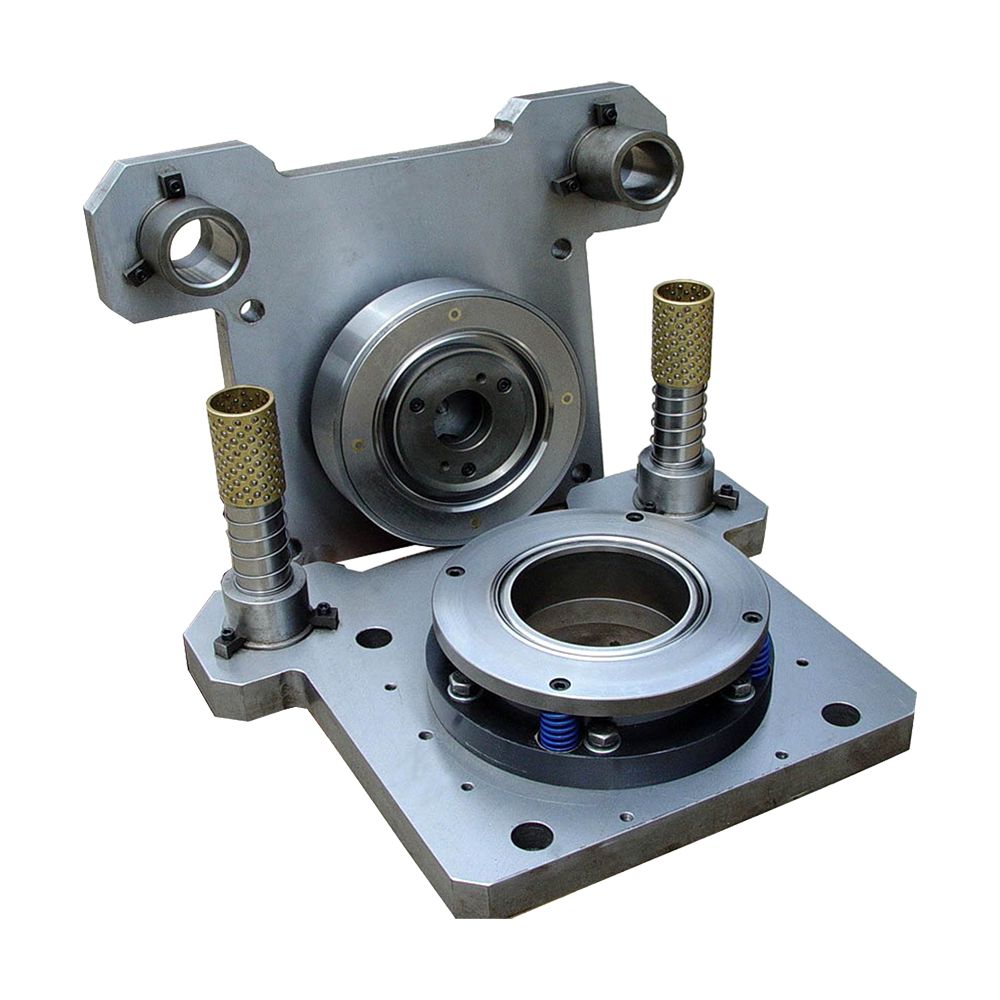
The die and punch system requires particular attention. Forming tools must be matched to the metal grade, thickness, lubrication conditions, drawing depth, and final shape. The design must balance forming force and material flow. If the tool clearance is incorrect, the result may include cracking, wrinkling, excessive thinning, scratching, or dimensional instability.
Assembly is followed by mechanical adjustment and functional testing. The ram, drive system, guide elements, feeding equipment, sensors, controls, and safety systems must work together. A complete test should examine operating smoothness, stroke timing, shut-height adjustment, die alignment, feeding accuracy, emergency functions, and the response of the control system.
For an integrated production line, commissioning should include trial material and representative tooling. The line must be checked at low speed before gradually increasing the operating rate. This process helps verify that the feeder, punch press, transfer system, inspection devices, and collection equipment remain synchronized throughout the cycle.
The manufacturer reports certification to the ISO 9001 quality management system and ISO 14001 environmental management system. ISO 9001 provides a framework for quality-related processes, documentation, corrective action, and continual improvement. ISO 14001 addresses environmental management practices and encourages systematic control of environmental responsibilities.
Certifications do not replace product testing or application-specific engineering, but they provide an indication that the company has established formal management procedures. For industrial buyers, this can support supplier evaluation, documentation review, traceability, and project management.
Production reliability depends on more than the rated stroke speed. A reliable line must maintain stable feeding, minimize unplanned stops, protect tooling, manage lubrication, and allow operators to identify problems quickly. The CNC-C design is intended to support these requirements through rigid construction, automatic control, adjustable operating parameters, and model selection based on actual production needs.
Preventive maintenance is also essential. Operators should inspect tooling condition, guide components, lubrication points, fasteners, electrical connections, sensors, and feeding equipment according to a documented schedule. Regular maintenance helps preserve forming accuracy and reduces the chance that a small problem will develop into a major breakdown.
For food can applications, the production environment should also be organized around cleanliness and material control. The machine, tooling, lubricants, and handling systems must be selected and maintained according to the requirements of the finished product and the applicable packaging regulations. The press itself is one part of a broader quality system that includes incoming tinplate inspection, process control, coating management, washing, drying, testing, and final packing.
A conventional single-mode punch press can be effective when a manufacturer produces one can format at a constant volume. However, it may be less suitable for companies that need multiple product formats or different output levels. The CNC multi-mode gantry press offers a broader selection of stroke, pressure, die capacity, and speed configurations.
Compared with manual or semi-automatic production, the automatic CNC system can improve cycle consistency and reduce labor requirements for repetitive feeding and transfer tasks. It can also reduce the variation caused by manual positioning. These benefits are particularly relevant when production volumes are high and quality standards are strict.
Compared with a machine designed only for maximum speed, the CNC-C series offers a more graduated capacity range. Not every factory needs the largest five-die machine. A smaller configuration may provide better economic performance for a specialized product or moderate demand. The ability to select a suitable model helps prevent overinvestment in unused capacity while preserving a path for future expansion.
Compared with equipment that depends heavily on external engineering support, a manufacturer with experience in both machines and molds can provide a more coordinated project solution. The press, die, feeding system, and production line can be evaluated together. This may reduce interface problems that occur when different suppliers are responsible for separate parts of the system.
Any comparison with competitors should be made using verified production trials, energy consumption, tooling life, maintenance requirements, after-sales response, and total cost of ownership. The machine’s published specifications provide a useful starting point, but the final decision should be based on the specific can design and factory conditions.
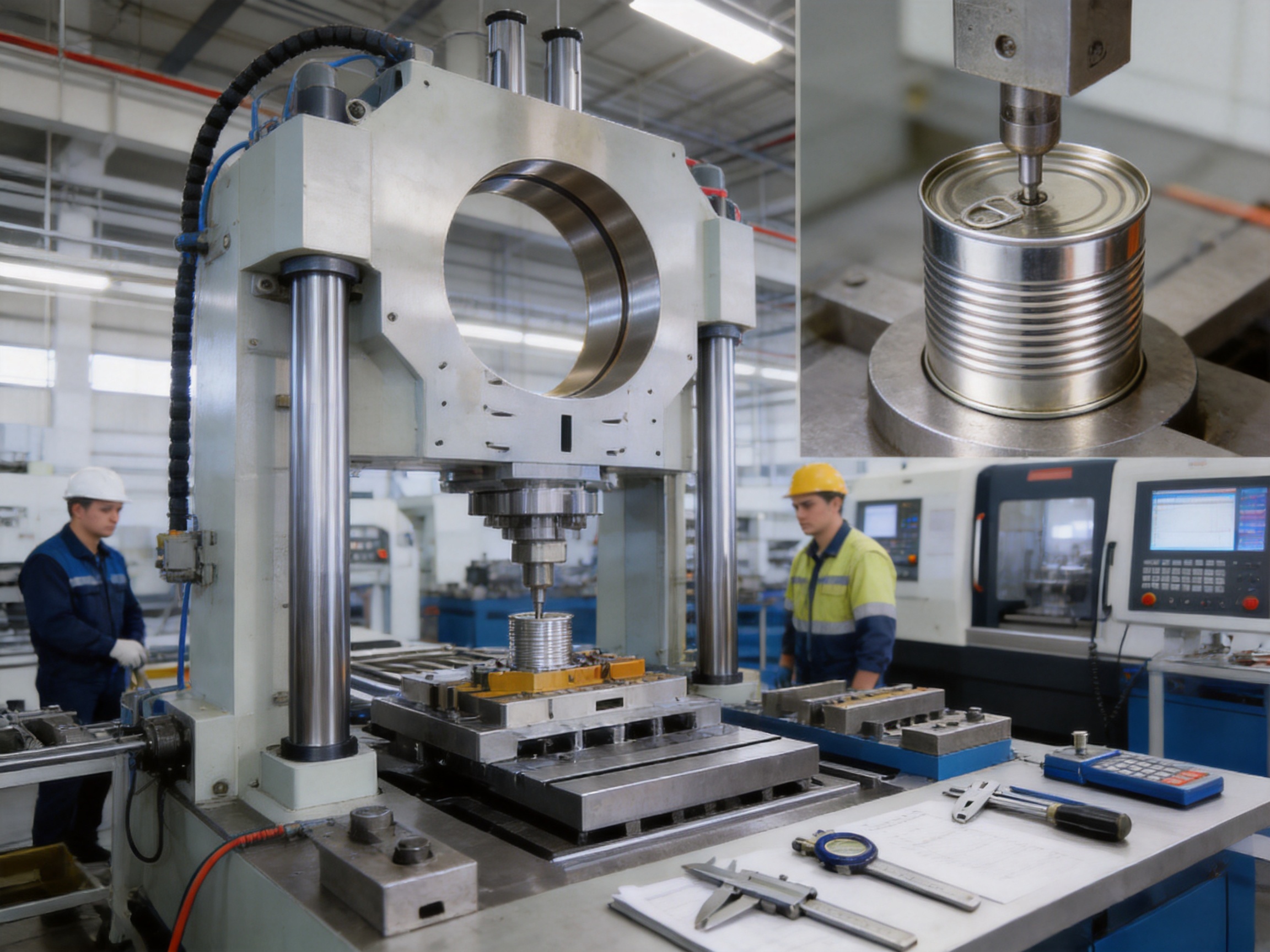
The principal application is tinplate two-piece can production. Tuna cans are a representative product because they require a stable body shape, reliable bottom formation, and consistent dimensions for subsequent filling, sealing, labeling, and distribution. The same general forming platform may also be adapted to other food cans and specialty metal containers, subject to tooling and engineering review.
Food can producers often operate under strict requirements for dimensional consistency and surface quality. A can that is slightly out of round or has an irregular flange may cause problems in later processes. Accurate punching and forming can therefore contribute to smoother seaming, more stable lid application, and reduced rejection rates.
The machine can also support contract manufacturers that produce containers for different customers. Such companies benefit from flexible tooling and adjustable operating modes because they may need to alternate between different diameters, heights, or production quantities. Changeover procedures, die storage, setup documentation, and first-piece approval should be incorporated into the factory’s operating system.
For high-volume applications, the five-die configuration can be considered when the target output is in the approximate 400–500 cans-per-minute range. For medium-volume production, two- or three-die configurations may provide an appropriate balance between output, investment, and flexibility. For development work or smaller orders, a one-die system may be more practical.
The CNC multi-mode punch press is most effective when integrated into a balanced line. Upstream equipment may include sheet preparation, blanking, lubrication, stacking, and automatic feeding. The press then performs the primary forming operation. Downstream systems may include transfer conveyors, trimming, beading, washing, drying, coating, inspection, packing, and palletizing.
Line balancing is important because the press should not be forced to wait for a slower upstream process or overwhelm a downstream operation. The target speed must be evaluated across the complete line. Buffer conveyors or accumulation systems may be used where appropriate, but excessive buffering can increase floor-space requirements and complicate material control.
Automatic feeding equipment should be matched to the sheet size, blank geometry, material surface, and press cycle. The supplied information lists maximum sheet sizes of approximately 1,150 × 1,150 mm for the relevant model groups. Actual sheet handling should be confirmed according to the selected feeder and product layout.
Electrical and utility planning should be completed before installation. The factory should provide suitable foundations, lifting access, ventilation, electrical capacity, grounding, compressed air where required, lubrication arrangements, and safe operator access. The listed machine dimensions and weights indicate that this is heavy industrial equipment. The largest configurations may weigh approximately 25–27 tonnes, so foundation design and transportation planning must be handled by qualified personnel.
Control integration is another important consideration. Signals from feeders, sensors, safety devices, and downstream machines should be coordinated so that the line can stop safely when a fault occurs. The control philosophy should include fault indication, restart procedures, production counting, parameter management, and protection against incorrect tooling or setup conditions.
The manufacturer reports that it provides installation, commissioning, technical guidance, operation training, and spare-part supply. These services are valuable because the performance of a punch press depends heavily on correct installation and setup. A machine that is not properly leveled, aligned, lubricated, or synchronized may not achieve its intended production performance.
Commissioning should begin with a review of the machine foundation, utilities, transport condition, tooling, and documentation. Mechanical and electrical checks should be completed before the first powered operation. The machine can then be tested at slow speed, followed by progressive increases after the blank path, forming quality, safety circuits, and transfer timing have been confirmed.
Operator training should cover machine controls, start-up and shutdown, die installation, shut-height adjustment, basic parameter management, alarm response, inspection of formed cans, and routine cleaning. Maintenance personnel should receive additional instruction on lubrication, wear-part replacement, alignment checks, electrical troubleshooting, and preventive maintenance schedules.
Spare parts planning should include components with predictable wear, such as selected tooling elements, guides, seals, sensors, fasteners, and other machine-specific parts. Critical spares can reduce downtime when a replacement is required. The correct spare-part list depends on the model, tooling arrangement, operating hours, material, and local maintenance capability.
Before ordering a CNC multi-mode gantry punch press, the buyer should prepare a complete technical brief. This should include the can diameter, can height, wall profile, bottom design, metal thickness, tinplate grade, coating, sheet size, blank layout, target speed, working hours, and expected annual output.
The number of dies should be selected after considering both current and future demand. A single-die configuration may be sufficient for a specialized product, while a two- or three-die system may provide a better balance for a growing business. A five-die arrangement is appropriate only when the production volume, tooling plan, and downstream equipment can support the higher output.
The buyer should request sample production or a forming feasibility review for new can shapes. This allows the supplier to verify the required working pressure, stroke distance, lift depth, shut height, tooling arrangement, and feeding method. It also gives the customer an opportunity to assess surface quality, dimensional accuracy, cycle stability, and changeover requirements.
Factory layout should be considered at the beginning of the project. The published machine dimensions are substantial, and the working area must include space for sheet loading, tooling access, maintenance, operator movement, safety barriers, transfer equipment, and finished-can handling. Adequate space around the machine improves maintenance efficiency and supports safer operation.
Total cost should include the press, dies, feeder, line integration, installation, commissioning, training, utilities, spare parts, maintenance, and future tooling. A lower initial purchase price does not necessarily represent the lowest long-term cost. Productivity, quality stability, energy demand, downtime, tooling life, and service response should all be included in the evaluation.
Operators should verify that the correct tooling, material, and production recipe are installed before starting the machine. The blank size and position must correspond to the selected die. Incorrect material or tooling can cause poor forming and may damage the press.
Before each shift, the operator should inspect the work area, guards, emergency stops, lubrication condition, sensors, feeder alignment, and visible fasteners. The first formed pieces should be checked for dimensions, shape, cracks, wrinkles, scratches, bottom integrity, and flange condition. Production should proceed at full speed only after the first-piece inspection is satisfactory.
During operation, unusual vibration, noise, heat, or changes in forming quality should be treated as warning signs. The machine should be stopped according to the approved procedure, and the cause should be investigated. Continuing to operate with a damaged tool or unstable feeder can increase scrap and cause more serious equipment damage.
At scheduled intervals, maintenance personnel should check ram guidance, die mounting, drive components, lubrication points, electrical cabinets, safety circuits, and feeding mechanisms. The maintenance schedule should be adapted to the actual operating rate. A machine running near its maximum cycle rate for multiple shifts will require closer inspection than a machine used intermittently.
Tooling maintenance deserves special attention. Punches and dies should be cleaned, inspected, and stored correctly. Wear or damage should be recorded so that corrective action can be taken before product quality is affected. Proper tool maintenance supports longer service life and more stable can dimensions.
The machine is designed primarily for tinplate two-piece cans, including tuna cans and other food or specialty metal containers. The final application depends on the tooling, material, dimensions, and forming requirements.
Yes. The product is specified as an automatic punch press. It can be integrated with automatic feeding and transfer systems to reduce manual handling and maintain consistent cycle timing.
The available configurations cover approximately 80–100 cans per minute with one die, 160–200 cans per minute with two dies, 240–300 cans per minute with three dies, and 400–500 cans per minute with five dies. Actual speed depends on can size, die design, material, stroke, feeding, and complete line balance.
The product information lists arrangements from one die to up to five dies. The appropriate arrangement should be selected according to the required output and forming process.
Yes. Can sizes are described as various and tailor-made. Different sizes require appropriate punches, dies, settings, and feeding arrangements. A technical review is recommended before confirming a custom can specification.
The O-frame design provides a rigid structure around the pressing area. This supports stable alignment between the ram, punch, and die and can contribute to repeatable forming quality during continuous production.
The listed models provide working-pressure options from approximately 120 kN to 900 kN. The correct value depends on the can design, metal properties, draw depth, and tooling requirements.
The supplied specifications list maximum sheet sizes of approximately 1,150 × 1,150 mm for the relevant configurations. The actual sheet-handling limit should be confirmed with the selected feeder and product layout.
The supplier reports that it provides installation, commissioning, technical guidance, operation training, and spare-part support. The exact scope should be included in the purchase agreement and project plan.
The choice should be based on target output, product mix, available floor space, tooling investment, downstream capacity, and future demand. Higher die counts can increase output, but the entire line must be capable of receiving, inspecting, and handling the additional production.
The buyer should provide the can diameter, height, bottom profile, metal thickness, material grade, sheet dimensions, target production rate, operating hours, product drawings, and any requirements for feeding, inspection, installation, or training.
The CNC multi-mode gantry punch press provides a flexible automatic platform for tinplate two-piece can production. Its main strengths include an O-frame pressing structure, several working-pressure options, multiple ram strokes, adjustable shut height, one- to five-die configurations, and production capacities ranging from moderate output to approximately 400–500 cans per minute in a high-capacity arrangement.
These features give the machine advantages over less adaptable presses that are limited to one product format or one fixed production level. The system can be selected for specialized, medium-volume, or high-volume applications, while tailor-made tooling supports different can dimensions. Its ability to form two-piece bodies with automatic operation makes it suitable for tuna cans, food cans, and related metal packaging products.
The manufacturer’s long experience in can-making machinery and molds, reported workforce of more than 350 personnel, CNC high-precision machining facilities, ISO 9001 and ISO 14001 certifications, and production history of more than 10,000 pieces of can and can-lid equipment provide a substantial engineering and manufacturing foundation. These capabilities are complemented by installation, commissioning, technical training, and spare-parts services.
For the best result, the machine should be evaluated as part of a complete production line rather than as an isolated press. Correct model selection, tooling design, material testing, feeder synchronization, factory planning, operator training, and preventive maintenance are all necessary to achieve stable performance. When these factors are properly coordinated, the CNC multi-mode gantry punch press can support efficient, repeatable, and scalable two-piece can manufacturing.
1. Product technical specification for the CNC-C multi-mode gantry punch press, including model configurations, working pressure, stroke, speed, die capacity, power, dimensions, and weight.
2. Manufacturer company information concerning can-making machinery, can-making molds, production history, engineering personnel, manufacturing equipment, and international applications.
3. ISO 9001 quality management system principles for industrial manufacturing and process control.
4. ISO 14001 environmental management system principles for manufacturing organizations.
5. General engineering principles for sheet-metal drawing, punch pressing, two-piece can forming, tooling alignment, and automatic production-line integration.
Related Products

Founded in 1978, the company is one of the largest can-making machinery well-known companies at home and abroad.
Product Categories
Contact Information
Zhongshatou Shenjiamen Zhoushan Zhejiang China
+86-580-3056646

 English
 中文简体
中文简体
 русский
 عربى
عربى
 Español