2026-08-22
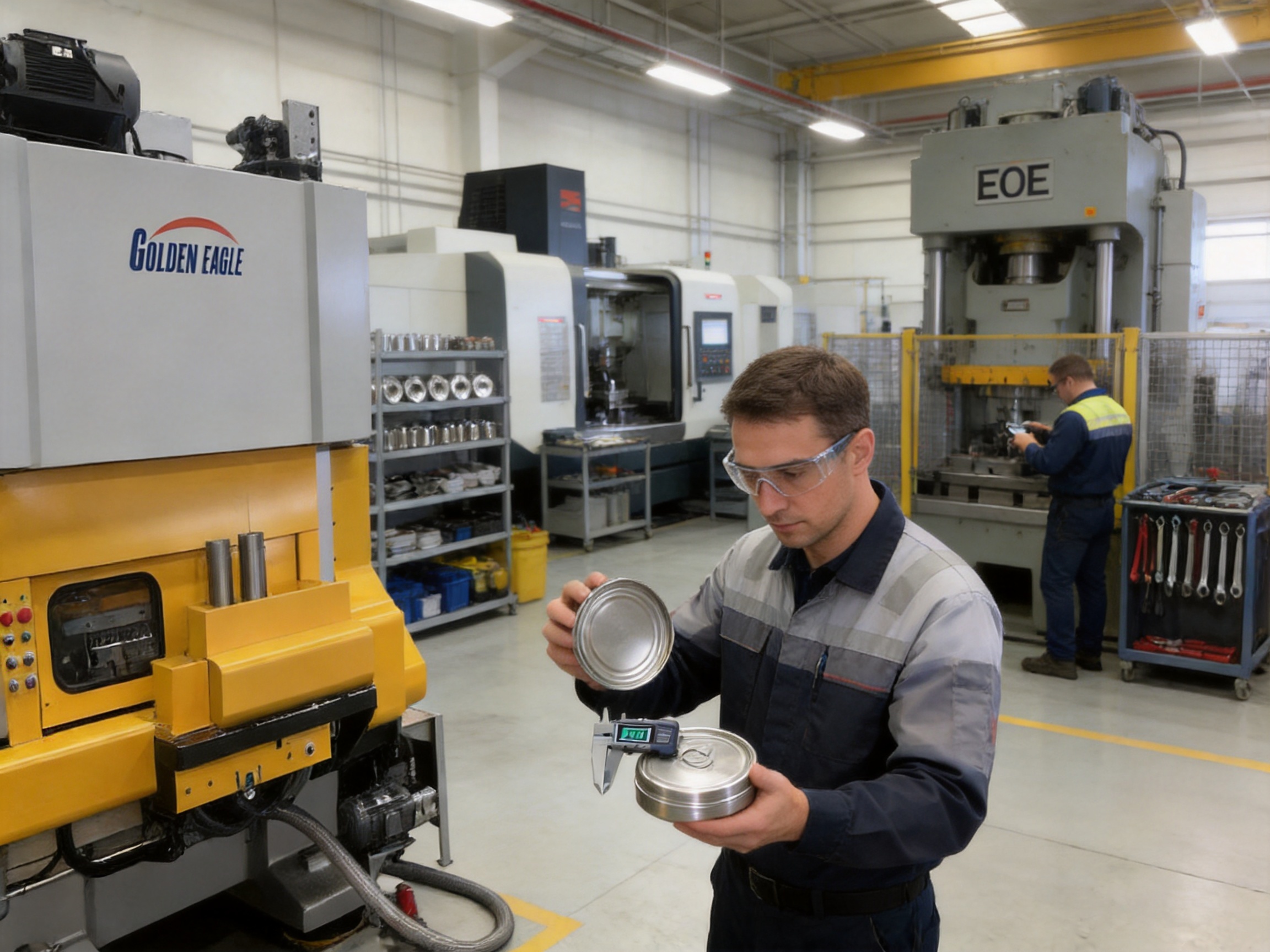
Easy-open-end lids have become an essential component of modern food cans, beverage containers, aerosol packages, and other metal packaging products. Consumers expect lids to open smoothly, remain secure during storage, and protect the contents from contamination. Manufacturers, meanwhile, require high production speed, consistent dimensional accuracy, reliable sealing performance, and efficient use of tinplate. These requirements have made the automatic easy-open-end, or EOE, making line an important investment for can-making factories.
The automatic EOE lid making machine described in this article is designed for the high-volume conversion of tinplate into finished easy-open ends. It supports common can sizes including 202#, 211#, 300#, 307#, and 401#. Depending on the selected configuration, the line can operate with one, two, three, or four lanes. Its listed production range is 200 to 600 easy-open ends per minute for a single lane, while the four-lane configuration can reach up to 2,400 easy-open ends per minute.
Manufactured by Zhejiang Golden Eagle Food Machinery Co., Ltd., the machine combines heavy-duty press technology, automatic operation, multi-lane production, and long-term engineering experience in can-making machinery and molds. Its design is intended for companies that need dependable output rather than a small-scale or manually intensive production solution.
An easy-open end is a metal can lid that includes an integrated tab and a scored opening panel. The consumer can open the package by lifting and pulling the tab instead of using a separate can opener. Although the finished product appears simple, its manufacture requires precise control of several critical features.
The lid must have the correct outside diameter and profile for the corresponding can body. The score line must be formed with controlled depth so that the lid opens smoothly but remains sealed during transportation and storage. The rivet or tab attachment area must be accurately positioned. The compound or sealing material must be applied consistently. Any variation in these areas can lead to leakage, difficult opening, poor shelf performance, or customer complaints.
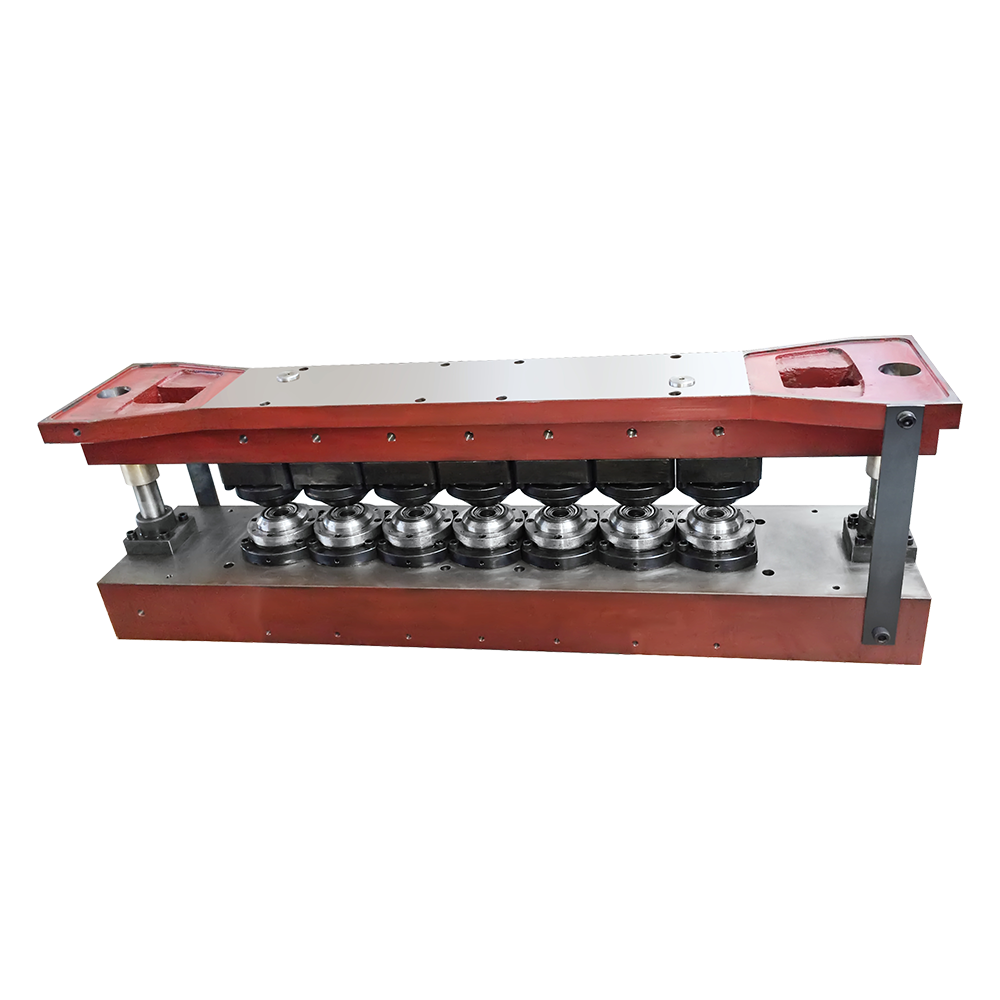
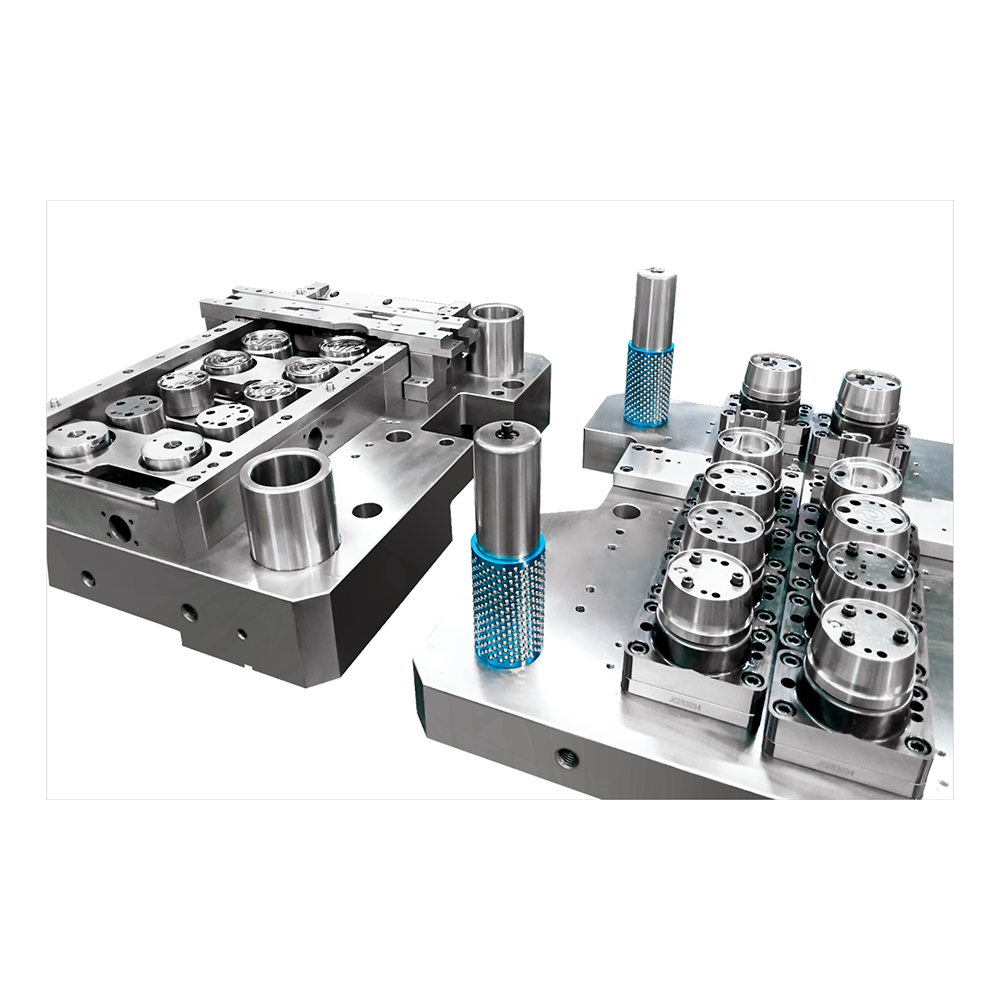
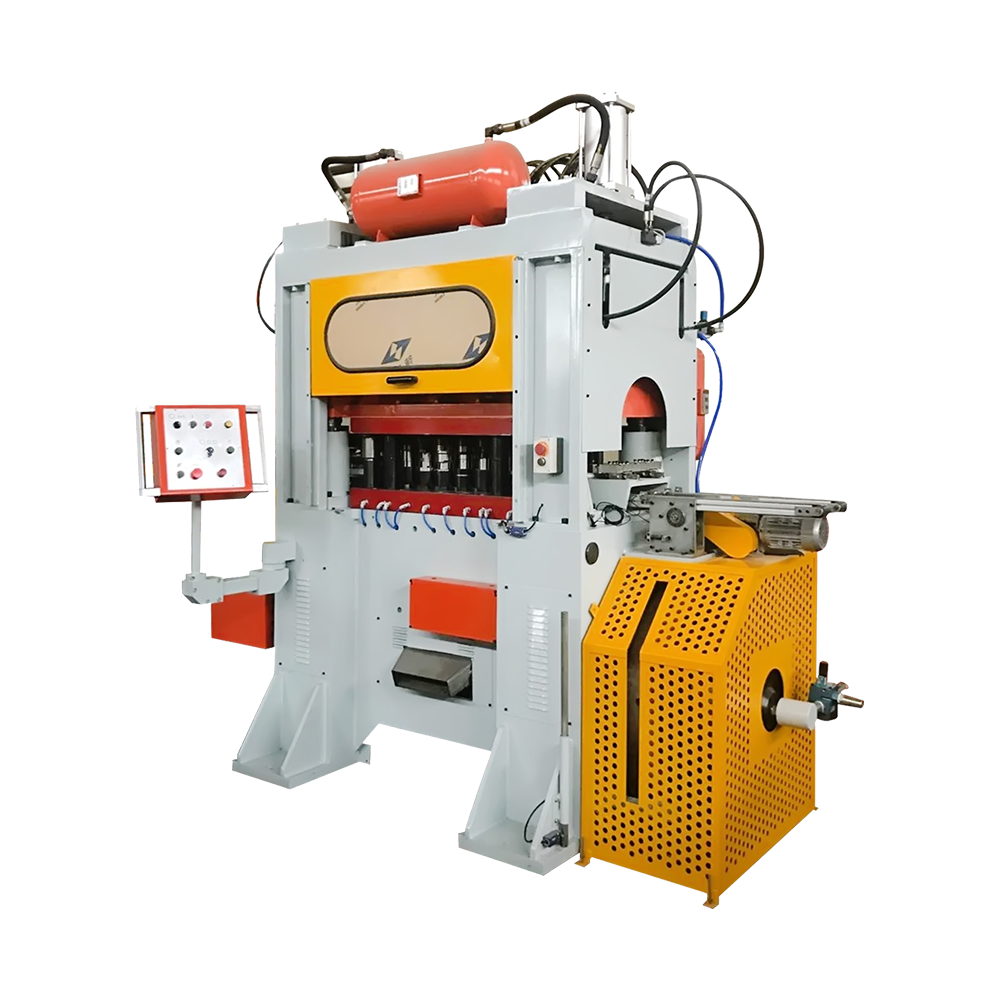
An automatic EOE making line converts printed or coated tinplate sheets, shells, or partially formed components into finished easy-open ends through a coordinated series of operations. Depending on the production configuration, these operations may include feeding, forming, scoring, tab riveting, compound application, inspection, and collection. The conversion press is the central component of this system because it performs high-force forming and cutting operations at production speed.
The machine is suitable for food can production and can also be adapted to other metal packaging applications where an easy-opening lid is required. Its supported size range allows manufacturers to serve multiple packaging formats without purchasing a completely separate production system for every can diameter.
The EOE lid making machine is available in four primary configurations: one lane, two lanes, three lanes, and four lanes. The number of lanes directly influences production capacity. More lanes allow multiple streams of components to pass through the press during each cycle, increasing output while using the same basic press principle.
Configuration |
Nominal Pressure |
Slide Block Stroke |
Stroke Rate |
Output Capacity |
Machine Power |
Machine Weight |
One lane |
75 or 80 tons |
35–63.5 mm |
200–600 spm |
200–600 epm |
50–70 kW |
17–32 tons |
Two lanes |
100 tons |
35–63.5 mm |
200–600 spm |
400–1,200 epm |
50–70 kW |
17–32 tons |
Three lanes |
125 tons |
35–63.5 mm |
200–600 spm |
600–1,800 epm |
50–70 kW |
17–32 tons |
Four lanes |
125 tons |
35–63.5 mm |
200–600 spm |
800–2,400 epm |
50–70 kW |
17–32 tons |
The machine supports 202#, 211#, 300#, 307#, and 401# can sizes. The actual production result depends on the selected tooling, material thickness, product design, operating speed, feeding conditions, and quality requirements. The listed 2,400 epm figure applies to the four-lane configuration under suitable production conditions.
The slide block stroke can be adjusted from 35 to 63.5 millimeters. This range gives the press flexibility for different forming requirements and tooling arrangements. The operating stroke range of 200 to 600 strokes per minute provides a broad working window, allowing the user to select a suitable speed based on product complexity, material characteristics, and desired service life.
The machine power range is listed at 50 to 70 kilowatts. Its weight can range from approximately 17 to 32 tons depending on the configuration and equipment arrangement. This substantial mass is important for a high-speed forming press because it contributes to rigidity, vibration control, and stable operation under repeated loading.
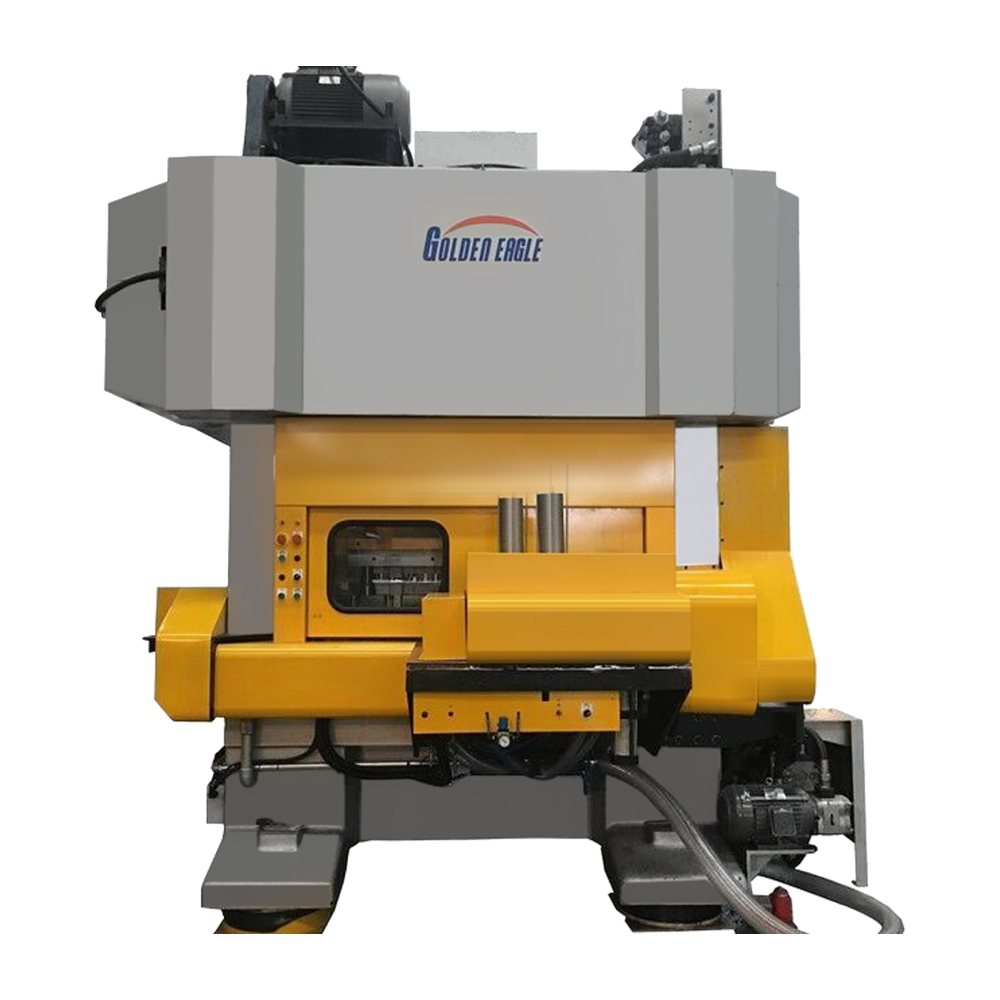
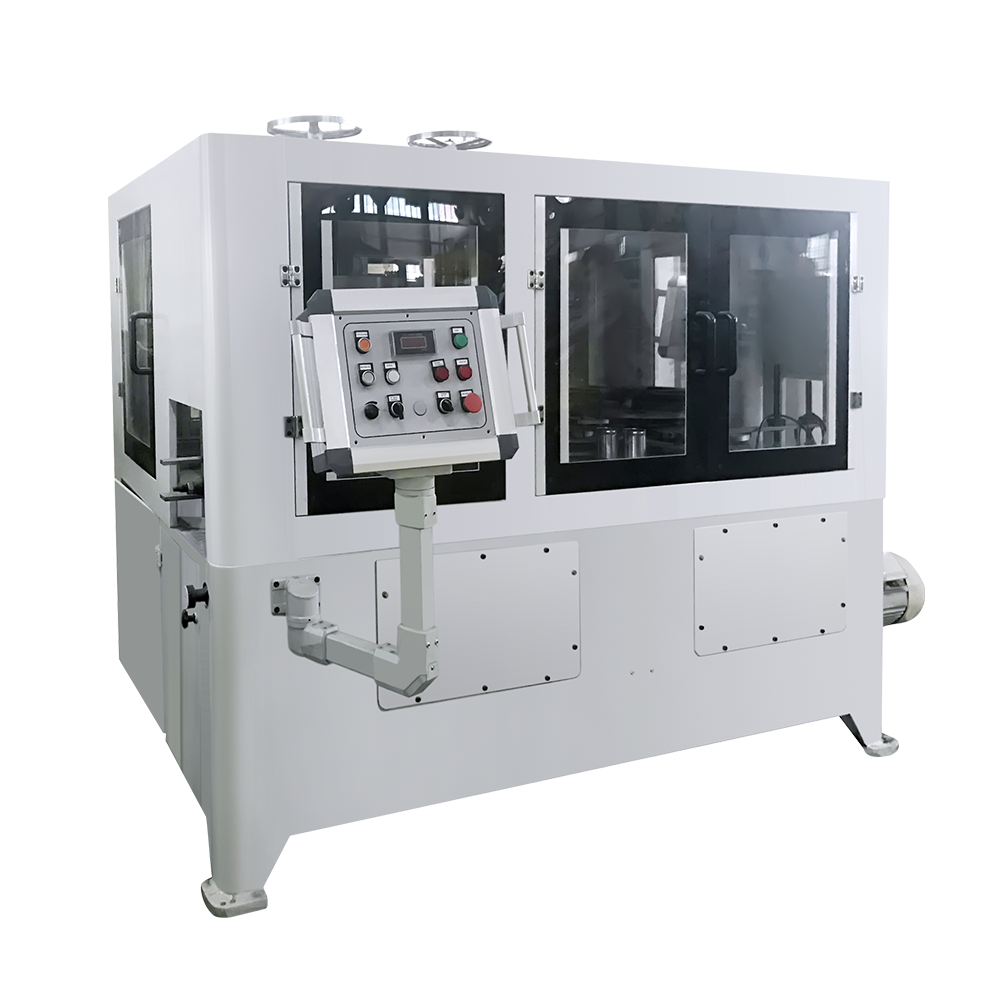
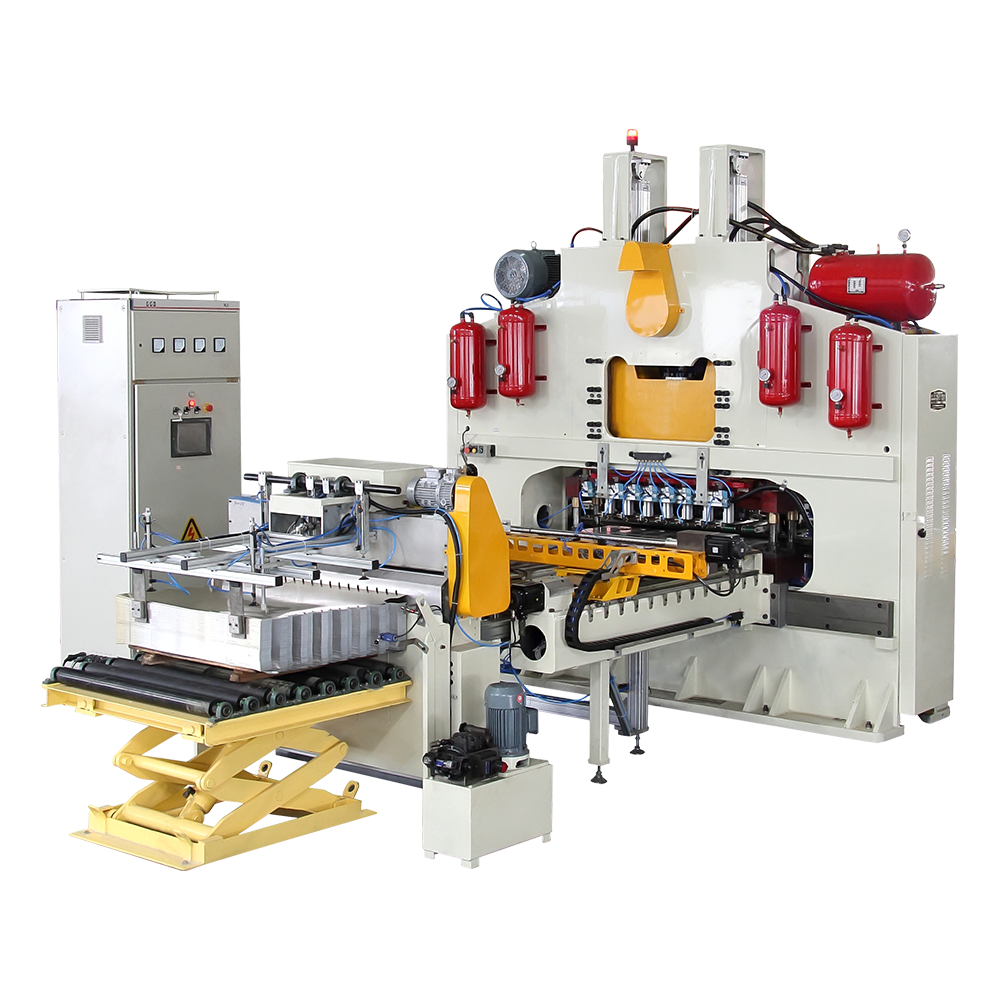
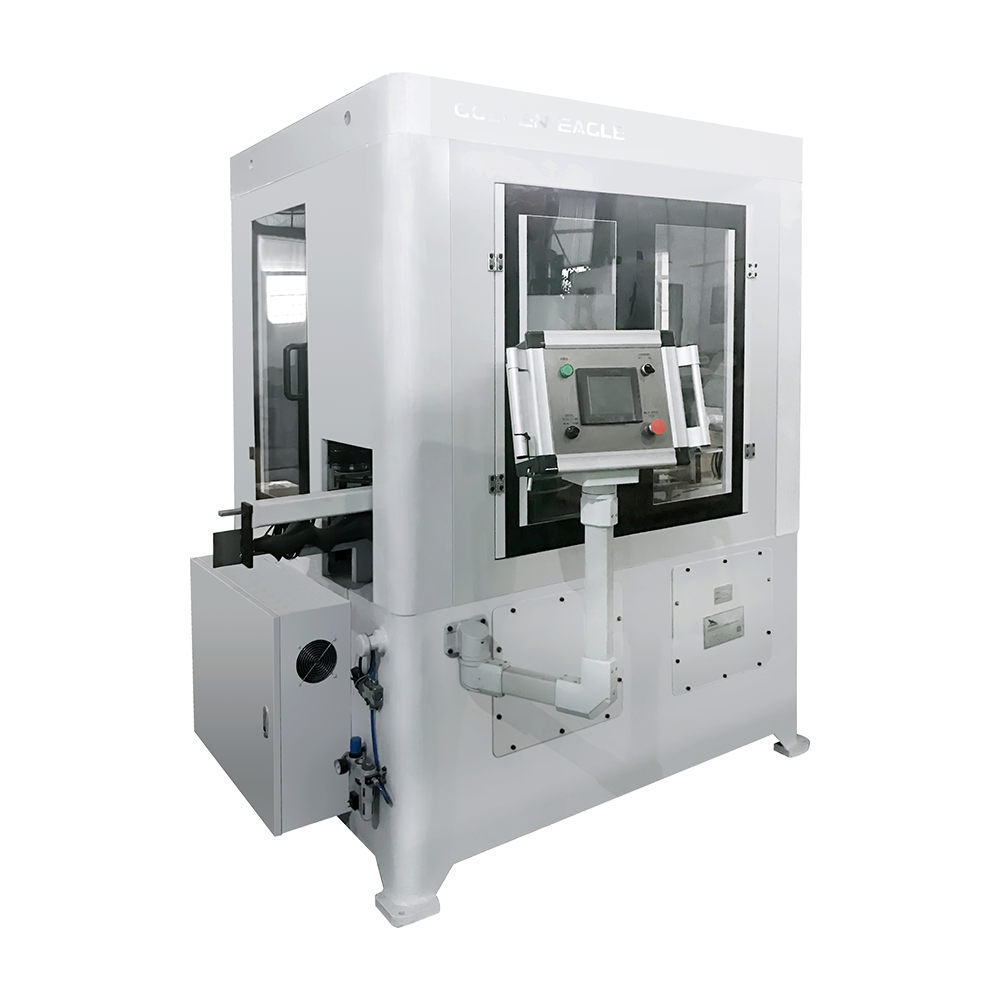
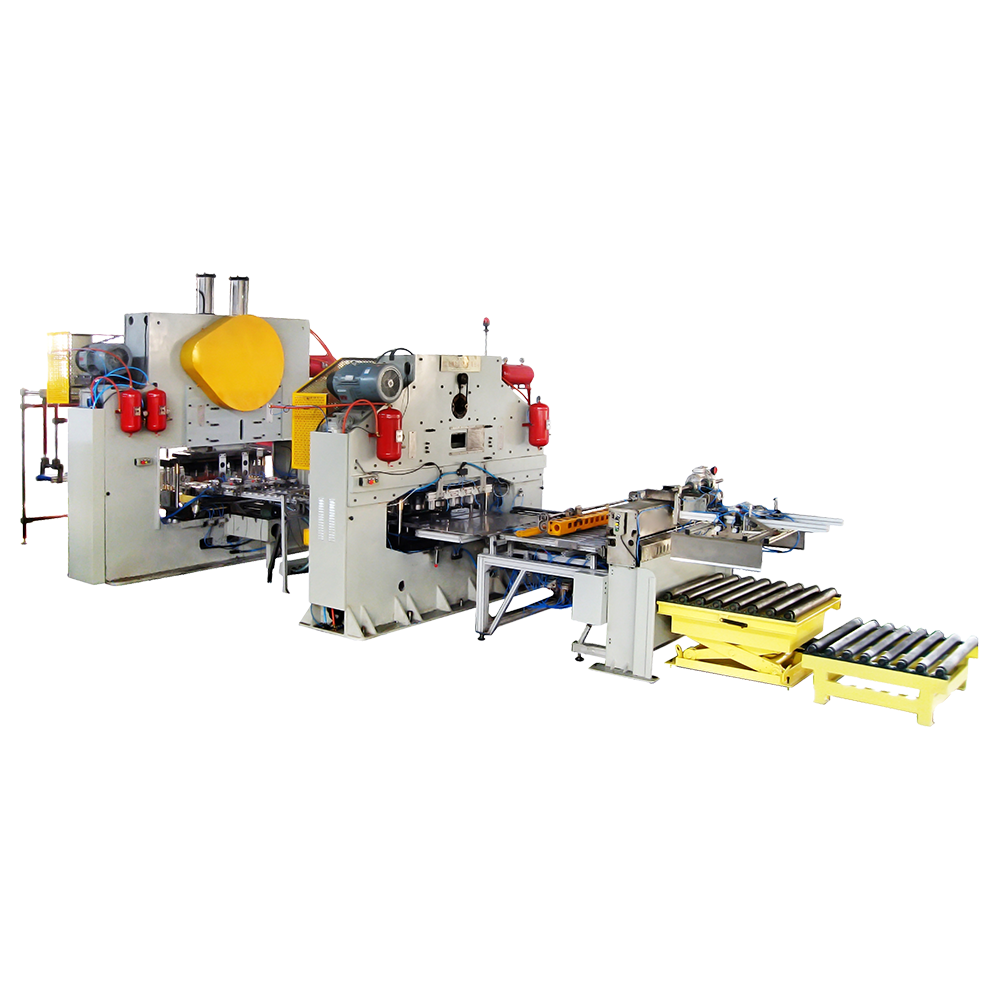
EOE Lid Making Machine
One of the most important advantages of this EOE lid making machine is its multi-lane architecture. A single-lane press can provide 200 to 600 easy-open ends per minute. When production demand increases, the two-lane, three-lane, and four-lane versions can raise output to 1,200, 1,800, and 2,400 easy-open ends per minute respectively.
This arrangement gives can manufacturers a practical way to match equipment capacity with market demand. A company serving regional food producers may select a one-lane system for controlled investment and flexible production. A large can-making factory supplying several packaging lines may choose a four-lane system to maximize throughput and reduce the number of separate presses required.
Multi-lane production can provide several operational benefits:
First, it increases output without requiring a proportional increase in floor space. A single multi-lane press may replace several lower-capacity machines, depending on the factory layout and product requirements.
Second, it can simplify production management. When the lanes use compatible tooling and material specifications, operators can coordinate production through one central machine platform rather than managing multiple independent presses.
Third, it can reduce the number of auxiliary systems required for feeding, transfer, collection, and monitoring. Fewer separate machines may mean fewer control interfaces, fewer maintenance schedules, and a more organized production area.
Fourth, multi-lane equipment supports growth. A manufacturer can select a configuration that corresponds to present demand while considering future expansion into higher-volume contracts and larger can production programs.
High speed alone does not guarantee productivity. The press must maintain accurate motion, reliable feeding, and stable tooling performance at the selected operating rate. The heavy construction and engineering background of this machine are therefore important complements to its output capacity.
The machine is designed for several widely used easy-open-end sizes: 202#, 211#, 300#, 307#, and 401#. These size designations are commonly used in the metal packaging sector to identify nominal lid and can-body dimensions. Supporting multiple sizes makes the equipment suitable for food can manufacturers that produce different package formats.
Smaller ends may be used for compact food portions, prepared meals, pet food, or specialty products. Medium sizes are common in general food packaging and beverage-related applications. Larger ends can be selected for family-size products, bulk foods, and other packages requiring a wider opening.
When changing from one end size to another, the user normally needs the appropriate dies, forming tools, guides, feeders, and related components. The exact changeover method depends on the configuration and the tooling package supplied with the machine. Proper changeover planning is essential because the opening panel, score line, tab position, flange profile, and sealing dimensions must all correspond to the selected can design.
Multi-size compatibility is particularly valuable for contract manufacturers. Instead of dedicating one machine to one lid dimension, a suitable tooling strategy allows the plant to produce a wider product range. This can improve equipment utilization and make it easier to respond to seasonal orders or changes in customer demand.
The line is specified for automatic operation. In an automated system, material handling and production steps are coordinated to reduce manual intervention. Automatic feeding helps deliver components to the press in a consistent orientation and sequence. The forming and cutting stages are synchronized with the machine cycle, while downstream handling moves completed ends toward collection or inspection.
Automation has a direct effect on production consistency. Manual loading and handling can introduce variation in positioning, feeding rhythm, and operator fatigue. At high production rates, even small inconsistencies can interrupt the process or cause rejected parts. An automatic system is better suited to maintaining a regular cycle over an extended shift.
Automation also supports workplace efficiency. Operators can focus on monitoring, material replenishment, quality checks, setup, and preventive maintenance rather than repeatedly handling individual components. This is especially important for a machine capable of producing hundreds or thousands of ends per minute.
For best results, the complete line should be planned as an integrated system. The press, feeding equipment, tooling, compound application equipment, inspection devices, conveyors, and collection systems must be compatible. A high-speed press cannot achieve its full potential if the upstream material supply or downstream handling system is unable to keep pace.
Feeding stability is a fundamental requirement for EOE production. The material must enter the forming area at the correct location and orientation. Poor feeding can cause misalignment, tooling damage, incomplete forming, or production stoppages.
An automatic feeding arrangement helps maintain a repeatable material path. Guides and transfer mechanisms must be adjusted to match the selected end size and material specification. Operators should also monitor the condition of the material, because curled sheets, damaged shells, contamination, or inconsistent dimensions can affect feeding performance.
The press must coordinate its slide movement, material transfer, and tooling engagement with precision. The adjustable stroke range allows the system to accommodate different process requirements, but speed should always be selected with regard to the product and tool design.
Operating at a lower speed during setup or when introducing a new product can help technicians verify alignment and forming quality. Once the process is stable, the speed can be increased gradually while monitoring product dimensions, score quality, tab attachment, noise, vibration, and reject rates.
Finished easy-open ends must be collected without scratching, bending, contaminating, or mixing different specifications. A suitable downstream arrangement can include conveyors, stacking equipment, counters, inspection stations, and packaging equipment. The design should also allow operators to remove rejected pieces and respond quickly to abnormal conditions.
Efficient downstream handling protects the quality gains achieved in the press. It also helps the factory maintain accurate production records and traceability for different customer orders.
The automatic EOE lid making machine offers several advantages when compared with basic single-lane or manually intensive alternatives. These advantages relate not only to speed but also to production organization, repeatability, equipment utilization, and long-term operating efficiency.
The four-lane configuration can reach up to 2,400 easy-open ends per minute. This allows a high-volume manufacturer to consolidate production on a powerful press platform. In many cases, a multi-lane arrangement can provide greater capacity than several small machines occupying separate areas and requiring separate operator attention.
Automatic operation supports a steady material flow and repeatable press cycle. Consistency is especially important for score depth, tab attachment, lid profile, and sealing performance. A stable process can help reduce rejects and improve the reliability of the finished package.
The four available lane configurations give users a choice based on current capacity requirements. This is more flexible than purchasing a single fixed-capacity machine that may quickly become insufficient or, alternatively, remain underutilized for years.
Compatibility with 202#, 211#, 300#, 307#, and 401# ends provides a broader production range. Manufacturers can serve multiple customers and product categories with a common equipment platform, provided the required tooling and setup components are available.
A machine weight of approximately 17 to 32 tons indicates a substantial mechanical structure. For high-force, high-speed forming, a rigid frame can help reduce unwanted movement and vibration. Stable construction also supports better alignment between the press, dies, and material path.
Equipment designed for continuous industrial production must be accessible for inspection, lubrication, adjustment, and replacement of wear parts. A professionally engineered press should allow maintenance personnel to perform scheduled work without unnecessary disruption to the production line.
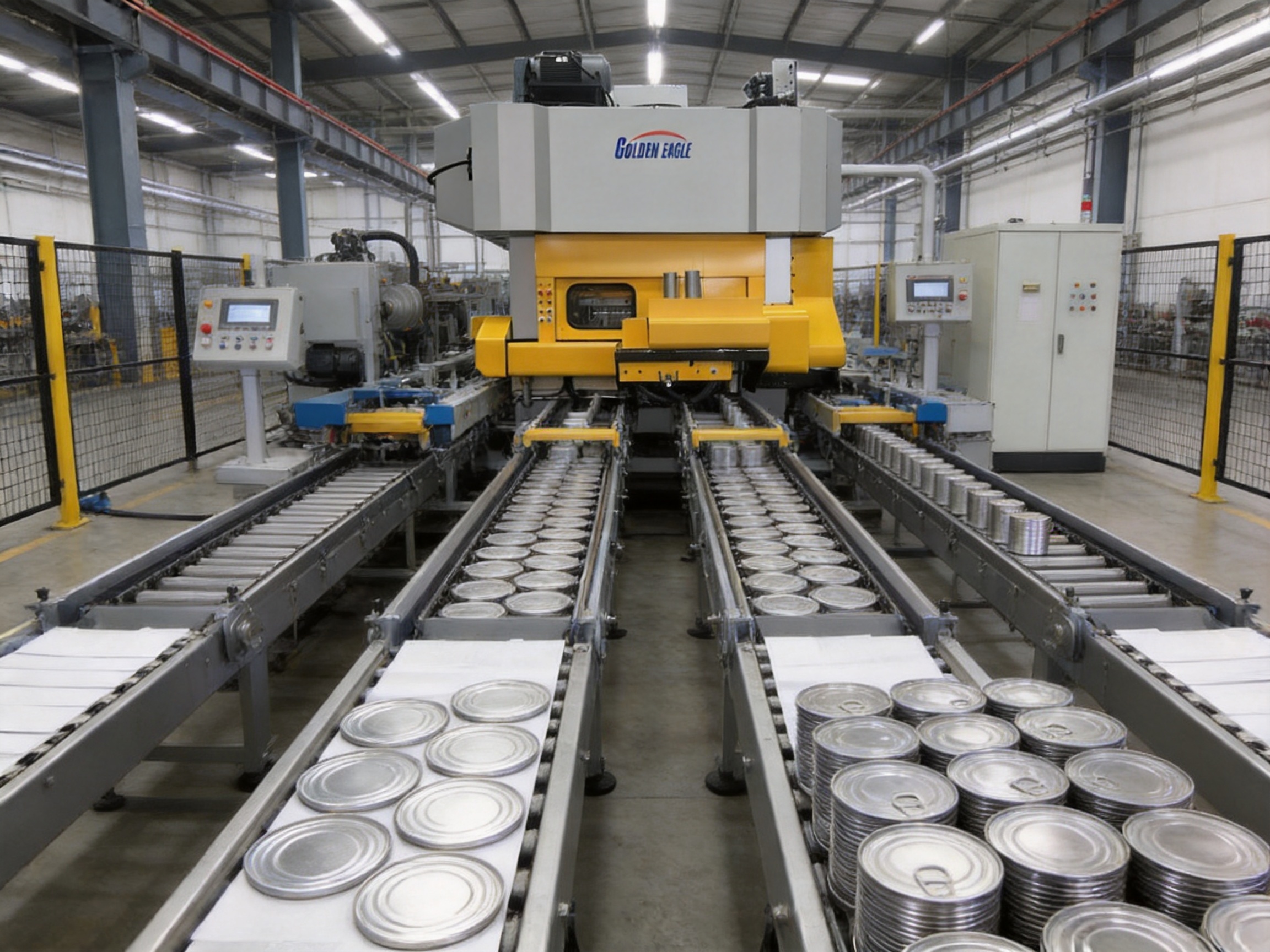
The quality of an EOE machine depends heavily on the accuracy of its mechanical components and tooling. Easy-open ends contain several features that must be formed within controlled tolerances. The score line, rivet area, opening panel, edge profile, and sealing surface all influence the usability and safety of the final lid.
Zhejiang Golden Eagle Food Machinery Co., Ltd. has manufactured can-making machinery and can-making molds since 1978. The company reports that it uses CNC high-precision machining equipment together with complete mechanical machining equipment. This manufacturing foundation is significant because a press is only as effective as the accuracy of its frame, slide, dies, guides, shafts, fixtures, and replacement components.
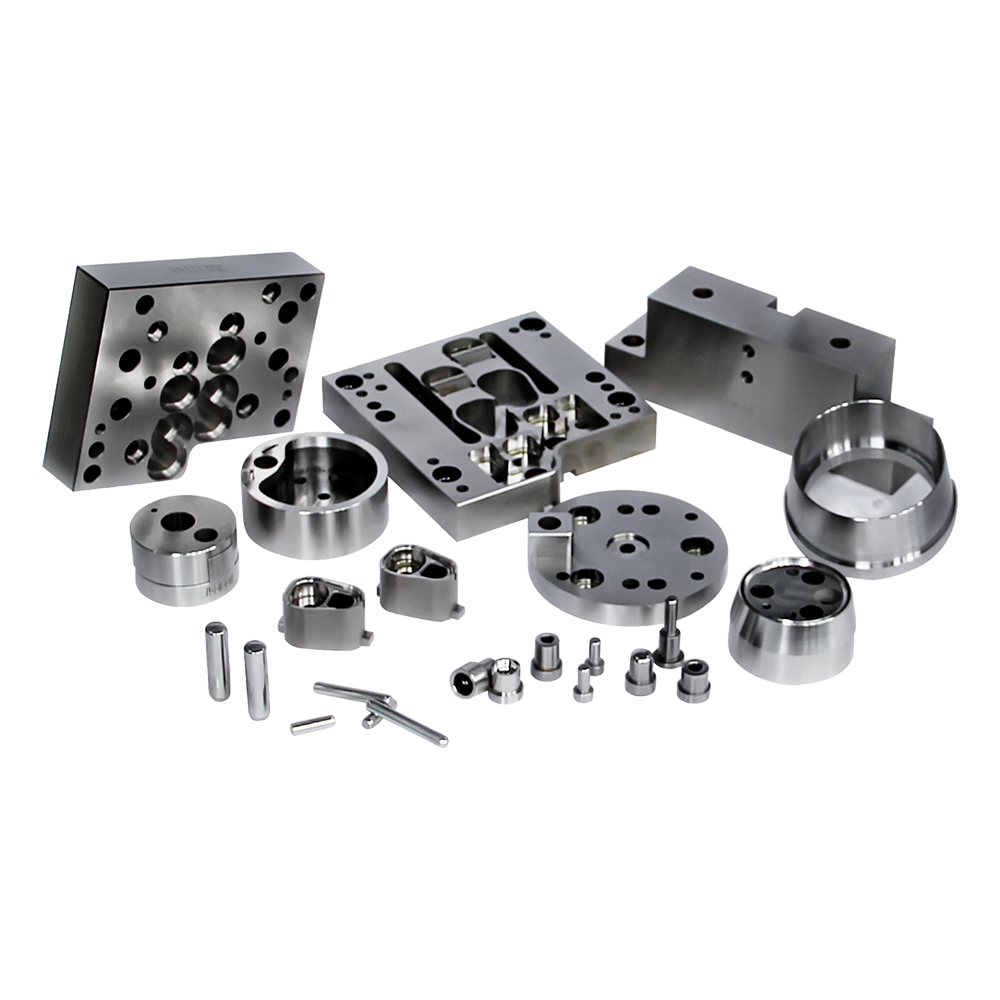
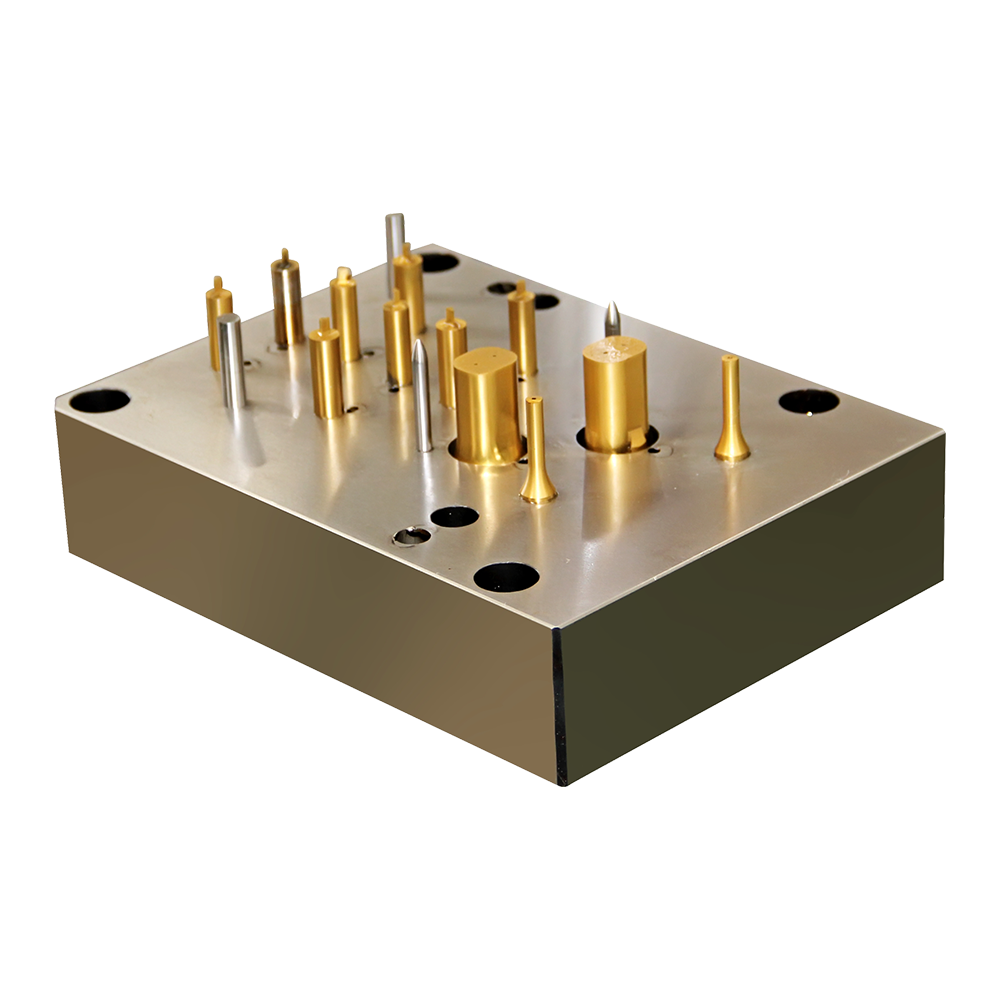
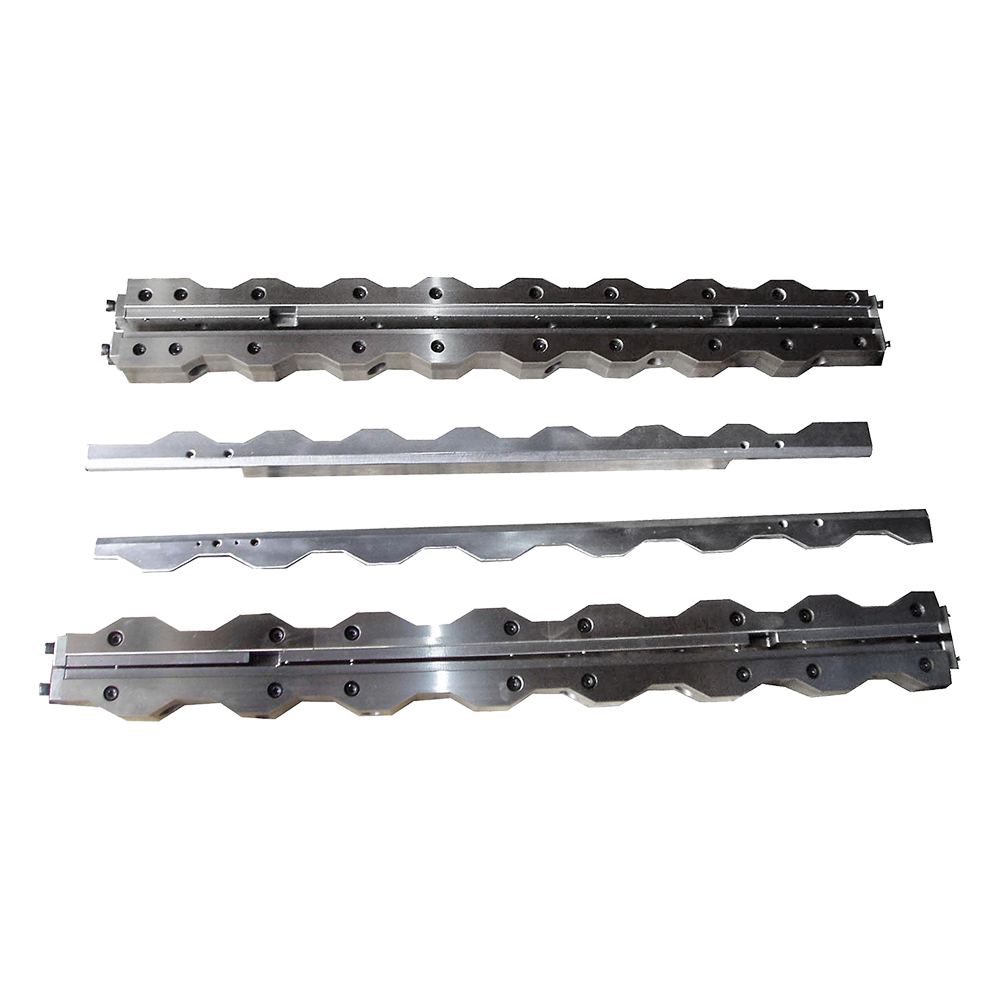
High-precision CNC machining can support repeatable production of tooling components. Controlled machining processes are particularly important for scoring and forming tools, where small dimensional differences can affect opening force and sealing performance. Accurate tool surfaces can also help reduce irregular wear and extend the useful production period between maintenance intervals.
The company’s background in both machinery and molds is another important strength. In can production, the press and the tooling cannot be treated as entirely separate products. Their dimensions, motion, force distribution, and material path must work together. A manufacturer with experience in both areas can better understand the relationship between machine construction and the final can component.
High-speed forming produces repeated impact and force. If the press frame or slide system lacks rigidity, the machine may experience vibration, alignment changes, excessive noise, or uneven tooling wear. A heavy machine structure helps create a stable base for the forming process.
Rigidity also contributes to product repeatability. When the press maintains its geometry throughout the stroke, each component has a better chance of receiving the same forming action. This is essential for production lines that operate for long shifts and handle large quantities of material.
Tooling accuracy affects the dimensions and functional performance of the easy-open end. The tools must form the correct lid contour, create the required score geometry, and position the opening features accurately. CNC machining and skilled assembly can help achieve the precision required for these operations.
The company’s complete equipment and mold manufacturing capability can simplify technical coordination. Instead of relying on unrelated suppliers for the press and major tooling components, customers may benefit from a more unified engineering approach. This can be valuable during installation, commissioning, product changeover, and troubleshooting.
The manufacturer states that it employs more than 350 trained personnel, including experienced design and development engineers. A team of this size can support several important functions: mechanical design, electrical control, machining, assembly, testing, installation, customer service, spare-parts supply, and technical training.
The company also reports that it has produced more than 10,000 pieces of can and can-lid equipment. Such production experience can contribute to practical improvements in machine design. Feedback from operating factories often reveals details that are difficult to identify during theoretical design alone, such as preferred maintenance access, common wear points, setup challenges, and the effects of different material conditions.
The manufacturer indicates that its product design principles are similar to those associated with established European can-making equipment producers. This does not mean that every machine has identical construction or performance, but it suggests an effort to apply recognized industrial principles in areas such as heavy-duty press design, mechanical precision, and production reliability.
The company is certified to ISO 9001 for quality management and ISO 14001 for environmental management. ISO 9001 provides a framework for controlled processes, documentation, corrective actions, and continual improvement. ISO 14001 focuses on environmental management and the systematic control of environmental responsibilities.
Certifications alone do not replace machine testing or customer evaluation, but they provide useful evidence that the manufacturer has established formal management procedures. For buyers of large industrial equipment, process control is important because the purchase involves not only the machine itself but also documentation, assembly standards, inspection, service, and long-term support.
EOE lids are widely used in food packaging because they improve consumer convenience while maintaining the protective characteristics of metal containers. Applications may include canned vegetables, fruits, meat, seafood, sauces, soups, prepared meals, pet food, and other shelf-stable products.
Different products may require different can dimensions, lid designs, opening diameters, and coating or compound specifications. The ability to support several standard end sizes helps the machine serve a broad section of the food can industry.
The machine can be especially appropriate for:
Food can manufacturers producing large quantities of standard-size cans.
Integrated packaging factories that operate can-body, can-lid, and filling lines.
Contract manufacturers serving multiple food brands and package specifications.
Export-oriented can producers that require industrial output and reliable equipment support.
Factories upgrading from manual or semi-automatic EOE production.
Manufacturers that need a scalable platform with one to four lanes.
The machine may also be considered for other metal packaging projects where an easy-opening end is required, subject to suitable tooling, material selection, and technical confirmation.
Tinplate is a valuable packaging material, and efficient use of it has a direct effect on manufacturing cost. Accurate tooling and stable feeding help reduce misalignment, rejected components, and unnecessary scrap. A high-speed automatic line can also improve labor productivity by producing more finished ends with fewer manual handling steps.
Production economics should be evaluated across the entire line rather than by press speed alone. Important factors include:
Actual operating speed rather than maximum rated speed.
Product changeover time.
Material utilization and scrap rate.
Availability of tooling and replacement parts.
Preventive maintenance requirements.
Energy consumption and installed power.
Operator skill and staffing needs.
Downstream inspection and packaging capacity.
Technical service response and installation support.
A four-lane machine may provide excellent economics for a factory with sustained demand, while a one-lane or two-lane model may be more appropriate for a smaller operation. The correct choice depends on production volume, customer orders, available floor space, financing, and future growth plans.
Because the listed machine power range is 50 to 70 kilowatts across the configurations, buyers should request a detailed power assessment for the selected model and auxiliary equipment. The complete electrical load may be higher when feeders, conveyors, compound systems, inspection devices, compressors, and other line components are included.
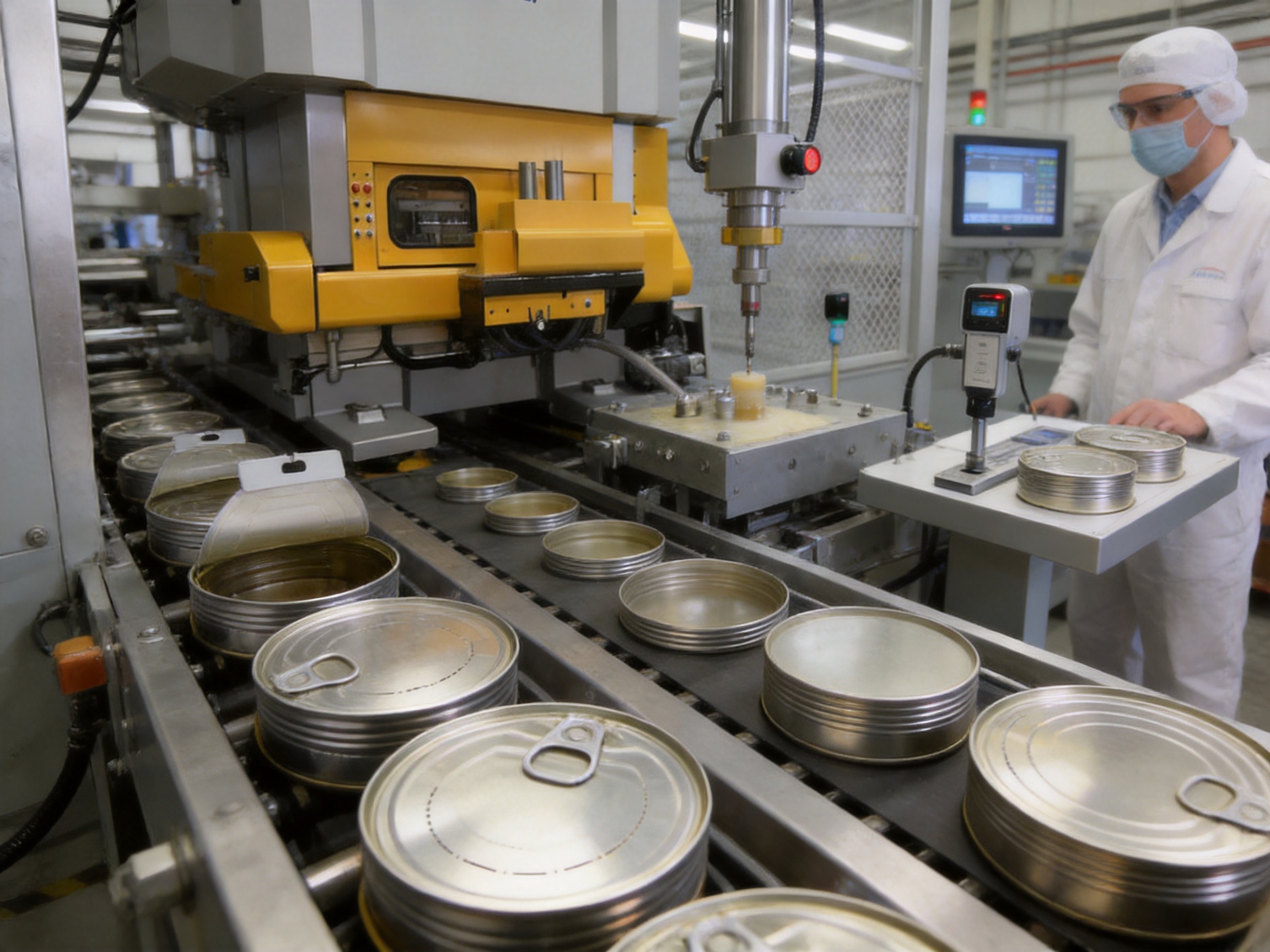
A high-speed conversion press requires careful installation. The foundation, floor level, machine positioning, electrical supply, compressed air, material flow, ventilation, and safety clearances should be reviewed before delivery. The machine’s weight, which may reach approximately 32 tons, must be considered during transportation, lifting, and foundation preparation.
Commissioning normally includes mechanical inspection, electrical connection, tooling installation, low-speed testing, feeding adjustment, product sampling, speed optimization, and safety verification. The objective is to confirm that the press and its auxiliary systems work together under actual production conditions.
Operator training is important because EOE production involves both equipment operation and product-quality control. Operators should learn how to:
Start and stop the line safely.
Load and guide material correctly.
Monitor pressure, speed, lubrication, and abnormal noise.
Identify defective scoring, forming, or tab attachment.
Perform routine cleaning and inspection.
Respond to alarms and emergency conditions.
Carry out approved changeover procedures.
Record production data and quality results.
Coordinate with maintenance personnel when adjustments or repairs are required.
The manufacturer states that it provides after-sales services including installation, commissioning, technical guidance, and operation training. These services can reduce the time required to bring the machine into stable production and help the customer develop local operating competence.
Preventive maintenance is essential for any high-speed press. The exact maintenance schedule should be based on the machine manual, operating hours, material conditions, tooling design, and manufacturer recommendations. Regular attention is generally required for lubrication, fasteners, guides, bearings, drive components, sensors, safety devices, feeders, and forming tools.
Tooling should be inspected for wear, damage, contamination, and dimensional change. Scoring tools require particular attention because excessive wear can change opening performance. Forming and cutting tools should also be checked for burrs, deformation, or abnormal contact marks.
Lubrication must be controlled carefully. Too little lubrication can increase friction, heat, and wear. Excessive or unsuitable lubricant can contaminate the product or attract particles. The correct lubricant and application method should be specified by the manufacturer.
Operators should monitor changes in sound, vibration, temperature, product appearance, and reject rate. These indicators can reveal developing problems before they result in a major breakdown. Early intervention is usually less costly than repairing damaged tooling or restoring a stopped production line.
Spare-parts availability is another important consideration. The manufacturer reports that it supplies parts and aims to provide them quickly. Buyers should still establish a recommended spare-parts inventory for critical components, especially for high-utilization four-lane lines. Keeping essential wear parts on site can shorten downtime during routine maintenance.
An automatic EOE press contains moving slides, high-force tooling, feeding mechanisms, rotating components, and electrical systems. Safety must therefore be treated as a central part of installation, operation, and maintenance.
Protective guards and interlocks should remain in place during operation. Operators should not reach into the forming area while the machine is running. Lockout and tagout procedures should be used before maintenance, tooling changes, cleaning inside guarded areas, or removal of jammed material.
Personnel should receive training in emergency-stop procedures, safe access routes, lifting practices, and the hazards associated with stored mechanical, pneumatic, and electrical energy. Appropriate personal protective equipment should be selected according to the factory’s risk assessment.
Noise and vibration levels should be evaluated during commissioning. The machine foundation and surrounding work area should be designed to support safe and comfortable operation. Clear labeling, accessible controls, adequate lighting, and organized material storage can further improve workplace safety.
Purchasing an EOE line is a long-term capital decision. The buyer is not simply selecting a machine with a specified speed; the buyer is selecting an engineering partner capable of supporting the complete production lifecycle.
A manufacturer with experience in can-making machinery can help customers consider press capacity, end dimensions, tooling selection, material flow, factory layout, and integration with existing equipment. Experience in molds and tooling is especially valuable because tooling performance directly affects the final product.
Design and development personnel can also help adapt the machine to customer requirements. These requirements may include special can dimensions, different material thicknesses, particular production volumes, factory electrical standards, safety expectations, or integration with other lines.
The manufacturer’s reported export experience across Europe, Asia, Africa, North America, South America, and Oceania indicates familiarity with international customers and different operating environments. Export projects often require attention to packaging, shipping, documentation, electrical standards, installation arrangements, and remote technical communication.
For an industrial buyer, these capabilities can reduce project risk. A machine that performs well in isolation may still cause difficulties if installation documents are incomplete, spare parts are difficult to obtain, or operators lack technical support. Comprehensive service is therefore one of the practical advantages to evaluate alongside output and price.
The appropriate lane configuration should be selected according to planned production volume rather than maximum theoretical output alone.
The one-lane model provides 200 to 600 easy-open ends per minute. It can be suitable for smaller food can plants, new production projects, specialty products, or companies entering EOE manufacturing. It may also be appropriate where product variety is high and production batches are relatively short.
The two-lane model offers 400 to 1,200 easy-open ends per minute. It provides a balance between investment, capacity, and flexibility. This configuration may suit medium-sized factories or manufacturers with several regular customers but without the continuous volume required for a four-lane system.
The three-lane model reaches 600 to 1,800 easy-open ends per minute. It is suited to larger production programs and factories that need to supply multiple packaging lines. Its 125-ton nominal pressure provides a strong platform for demanding high-volume operations.
The four-lane model can produce 800 to 2,400 easy-open ends per minute. It is designed for high-output manufacturing environments where throughput, labor efficiency, and equipment consolidation are major priorities. Buyers should ensure that their material preparation, inspection, collection, and packaging systems can support this capacity.
Before ordering, customers should provide the manufacturer with the required end sizes, material information, expected production volume, product drawings, power conditions, factory layout, and desired automation level. These details allow the technical team to recommend a suitable configuration and tooling package.
Quality control should be performed throughout the process rather than only at the end of production. Incoming tinplate or shells should be checked for dimensions, surface condition, coating quality, and cleanliness. During production, operators should monitor feeding stability, press behavior, tool condition, and product appearance.
Finished ends may be evaluated for:
Outside diameter and overall profile.
Flange dimensions and sealing surface condition.
Score-line position and consistency.
Opening-panel formation.
Tab position and attachment strength.
Rivet quality.
Surface scratches, dents, burrs, or coating damage.
Stacking and handling condition.
Opening force and functional performance.
Seal integrity when used with the intended can body and compound system.
The exact inspection criteria should be established according to the customer’s product drawings, applicable packaging standards, filling process, and end-use requirements. Consistent inspection records help identify trends and support continuous improvement.
Metal packaging provides strong product protection and can be recovered through recycling systems. Efficient EOE production contributes to responsible material use by reducing scrap and avoiding unnecessary rework. Stable forming conditions also help manufacturers make better use of coated and printed tinplate.
The manufacturer’s ISO 14001 environmental management certification indicates that environmental considerations are addressed within a formal management framework. Factory owners should nevertheless evaluate the complete line in their own operating context, including energy use, lubricant management, waste collection, noise, emissions from related processes, and recycling of rejected metal.
Good housekeeping supports both environmental performance and machine reliability. Scrap should be collected promptly, spilled lubricants should be managed according to local procedures, and the working area should be kept free of loose material that could enter the press or create a trip hazard.
Zhejiang Golden Eagle Food Machinery Co., Ltd. is located in Zhoushan City, Zhejiang Province, China. The company was established in 1978 and was formerly associated with Zhejiang Food Machinery Factory and Zhoushan Mold Factory. Its product range covers machinery and molds for food cans, beverage cans, can lids, chemical tanks, aerosol containers, two-piece cans, pop cans, and related metal packaging applications.
The company reports more than 46 years of development and continuous innovation, a workforce of more than 350 trained personnel, and production of over 10,000 pieces of can and can-lid equipment. Its facilities use CNC high-precision machining equipment and other mechanical processing equipment. The company also reports ISO 9001 and ISO 14001 certification.
These capabilities position the manufacturer as a supplier of complete can-making equipment rather than a producer of one isolated machine type. For customers developing a complete metal packaging factory, this broader product portfolio can simplify communication and allow coordination between can-body equipment, lid lines, molds, feeding systems, and auxiliary machinery.
The company states that its equipment has been exported to numerous countries and that it provides installation, commissioning, technical guidance, operator training, and spare-parts support. These services are relevant to customers that do not have extensive local experience with high-speed EOE production.
A successful installation begins before the machine arrives. The customer should establish a clear production plan covering target can sizes, required output, raw material supply, factory space, utilities, staffing, quality requirements, and maintenance resources.
The following project questions should be addressed:
Which EOE sizes will be produced most frequently?
What is the expected monthly and annual output?
Will production run one shift, two shifts, or continuously?
What level of automation is required before and after the press?
Is the existing building capable of supporting the machine weight and vibration?
Are power, compressed air, lighting, ventilation, and material storage adequate?
How will different tools be stored and changed?
What inspection system will be used for score quality, dimensions, and tab attachment?
Which spare parts should be ordered with the machine?
Who will be responsible for daily operation and preventive maintenance?
How will finished ends be packaged and transferred to the can-making or filling department?
Answering these questions early helps prevent delays and allows the manufacturer to prepare a more accurate technical proposal. It also ensures that the press is evaluated as part of a complete production system.
EOE means easy-open end. It is a metal can lid with an integrated opening panel and pull tab, allowing the consumer to open the package without a separate can opener.
The listed supported sizes are 202#, 211#, 300#, 307#, and 401#. The correct tooling and setup components are required for each size.
The four-lane configuration has a listed capacity of up to 2,400 easy-open ends per minute. Actual output depends on the product, tooling, material, operating speed, and line conditions.
The one-lane configuration is listed at 200 to 600 easy-open ends per minute.
Spm means strokes per minute, describing the press cycle rate. Epm means ends per minute, describing finished easy-open-end output. Multi-lane equipment can produce multiple ends during one press cycle, so its epm output can be higher than the stroke rate.
The one-lane model is listed at 75 or 80 tons, the two-lane model at 100 tons, and the three-lane and four-lane models at 125 tons.
Yes. The product is specified as an automatic EOE making line. Its feeding, press operation, and material transfer are intended to work as a coordinated production system.
Yes, it is designed to support several EOE sizes. Size changes require the appropriate tooling and setup adjustments, and the exact changeover procedure should be confirmed with the manufacturer.
The listed machine power range is 50 to 70 kilowatts. The total power requirement for a complete line may be higher after auxiliary equipment is included.
The listed machine weight ranges from approximately 17 to 32 tons, depending on the selected configuration and equipment arrangement.
A substantial machine structure can improve rigidity and help control vibration during high-force, high-speed forming. It also means that the customer must plan suitable transportation, lifting, and foundation arrangements.
The supplier has manufactured can-making machinery and molds since 1978. It reports more than 350 personnel, CNC high-precision machining equipment, production of more than 10,000 pieces of can and can-lid equipment, and ISO 9001 and ISO 14001 certifications.
The company states that it provides installation, commissioning, technical guidance, operation training, after-sales service, and spare-parts support.
Customers should provide the desired end sizes, target output, material details, product drawings, lane preference, factory utility information, automation requirements, and any special packaging or integration needs.
The one-lane configuration may be suitable for a smaller factory or a company starting EOE production. The best selection depends on expected demand, investment capacity, product variety, and future expansion plans.
Important inspection points include end dimensions, score-line quality, tab position, rivet condition, flange profile, surface defects, burrs, coating damage, opening performance, and compatibility with the intended can-body sealing process.
The automatic EOE lid making machine is a high-capacity solution for manufacturers that require reliable production of tinplate easy-open ends. Its support for 202#, 211#, 300#, 307#, and 401# sizes provides product flexibility, while its one-lane through four-lane configurations allow customers to select capacity from 200 epm up to a listed maximum of 2,400 epm.
Its principal strengths include automatic operation, multi-lane output, adjustable slide stroke, heavy-duty press construction, broad end-size compatibility, and suitability for food can production. Compared with lower-capacity or manually intensive alternatives, it can improve production efficiency, reduce handling requirements, support more consistent product quality, and provide a scalable foundation for factory growth.
The machine is further supported by the manufacturer’s long experience in can-making machinery and molds. CNC high-precision machining, extensive mechanical manufacturing resources, formal ISO quality and environmental management systems, and reported production of more than 10,000 pieces of equipment provide a strong industrial foundation.
For the best result, buyers should assess the EOE press as part of a complete production project. Correct tooling, feeding, inspection, collection, utilities, operator training, spare-parts planning, and preventive maintenance are all essential. With appropriate integration and operation, this automatic EOE conversion line can serve as a dependable core system for modern tinplate can and lid manufacturing.
1. Product specification materials for the automatic easy-open-end making line, including lane configurations, pressure, stroke, output capacity, power, and weight.
2. General principles of metal packaging engineering and tinplate can manufacturing.
3. Industrial guidance on press operation, tooling maintenance, and preventive maintenance for high-speed forming equipment.
4. ISO 9001 quality management system principles.
5. ISO 14001 environmental management system principles.
6. Technical information concerning easy-open-end design, scoring, tab attachment, sealing surfaces, and consumer opening performance.
7. Manufacturer-provided company information concerning can-making machinery, mold production, manufacturing facilities, engineering personnel, export experience, installation, commissioning, training, and spare-parts service.
Related Products

Founded in 1978, the company is one of the largest can-making machinery well-known companies at home and abroad.
Product Categories
Contact Information
Zhongshatou Shenjiamen Zhoushan Zhejiang China
+86-580-3056646

 English
 中文简体
中文简体
 русский
 عربى
عربى
 Español