2026-09-05
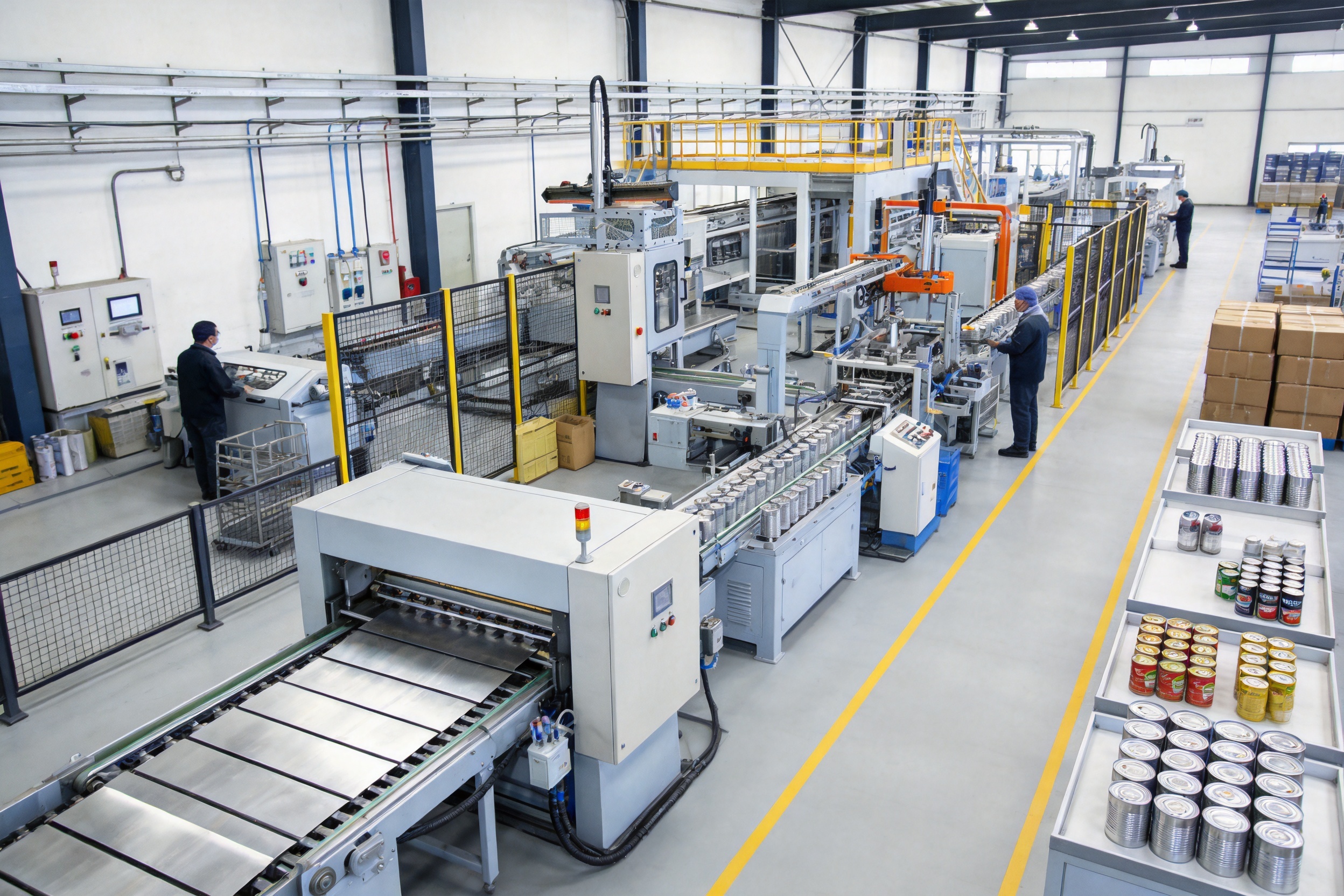
Automatic feeding is one of the most important stages in a modern can-making line. Before a sheet reaches a press, slitter, welding unit, or forming machine, it must be separated, aligned, transferred, and delivered at a stable speed. Any interruption at this stage can reduce the output of the entire line. A poorly designed feeder may cause sheet overlap, misalignment, scratches, stoppages, excessive operator intervention, and inconsistent production quality.
The GT10B-1 Automatic Feeding Machine is designed to provide a reliable sheet-feeding solution for tinplate can production. It is suitable for feeding metal sheets used in food cans, beverage cans, chemical containers, aerosol packaging, and other cylindrical or formed metal packaging applications. With an output capacity of 600 to 1,000 pieces of sheet per minute, the machine is intended for high-speed production environments where continuous and accurately controlled material delivery is essential.
Manufactured by Zhejiang Golden Eagle Food Machinery Co., Ltd., the GT10B-1 combines high productivity, broad can-size compatibility, pneumatic efficiency, and a robust industrial structure. Its design is supported by decades of experience in can-making machinery, mold manufacturing, mechanical processing, equipment integration, and production-line service.
Can production is usually organized as a sequence of connected operations. Metal sheets may first be cut to size, coated or printed, and then transferred to a forming, welding, flanging, necking, seaming, or other processing station. Each machine depends on a consistent supply of correctly positioned material. If the feeder fails to maintain the required rhythm, downstream equipment cannot operate at its rated capacity.
Manual feeding can be acceptable for small-scale production, sampling, or special packaging formats. However, it becomes inefficient and inconsistent when production volume increases. Operators may become tired, the feeding interval may vary, and the material may not enter the next machine at the correct angle. These problems can result in damaged sheets, irregular can bodies, production waste, and unplanned downtime.
An automatic feeder addresses these problems by coordinating sheet separation and transfer according to the operating speed of the production line. It reduces dependence on manual labor, provides a more stable material flow, and allows other machines to operate closer to their designed capacity. The result is a more balanced production line with better productivity and improved process control.
For manufacturers producing several can formats, an automatic feeding machine also supports more efficient changeovers. The GT10B-1 is designed for can diameters from 52 to 99 millimeters and can accommodate can heights from 95 to 220 millimeters, making it suitable for a wide range of packaging requirements within its operating range.
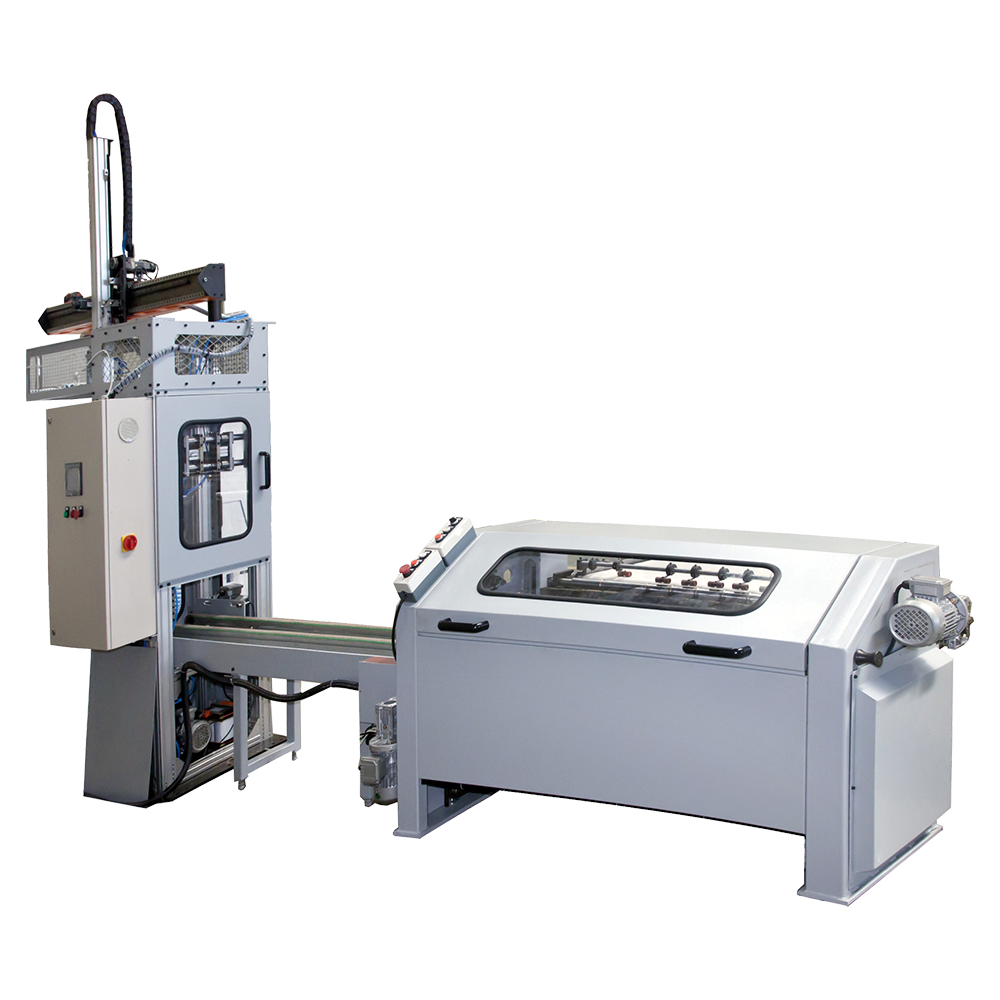
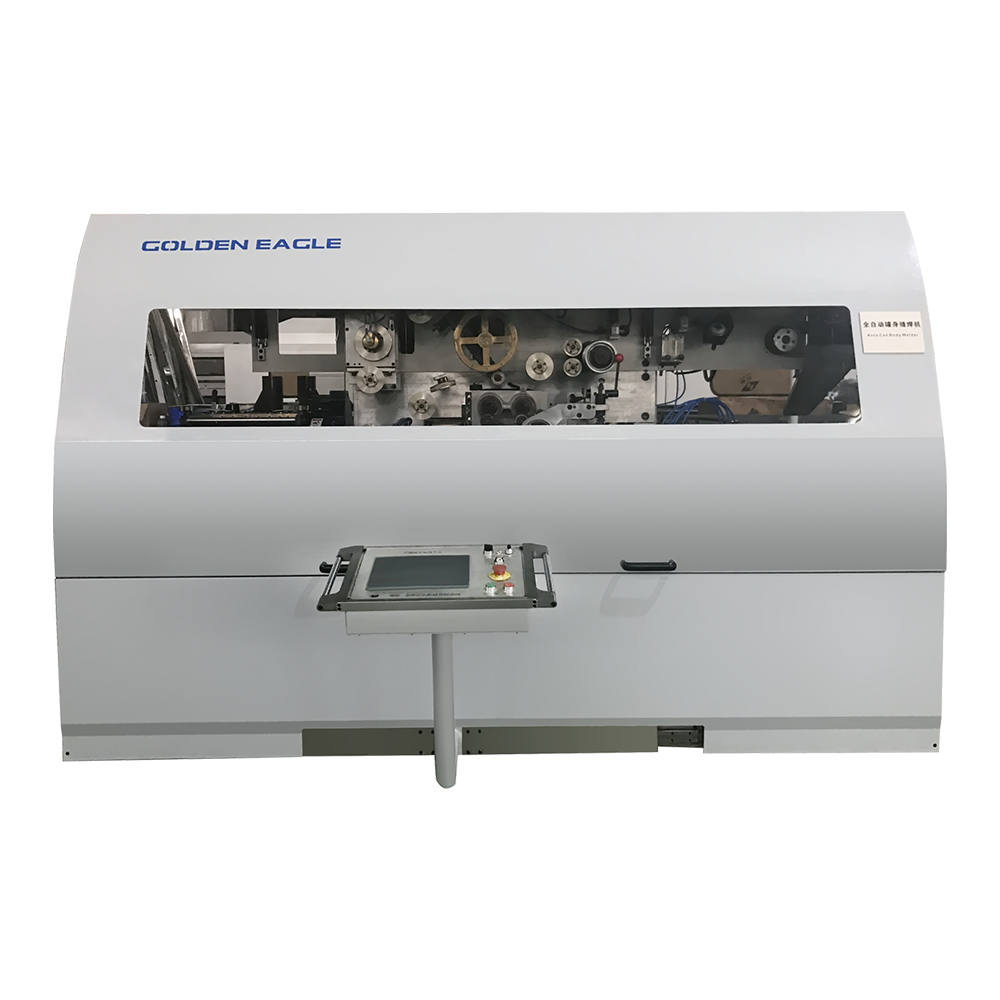
Automatic Feeding Machine
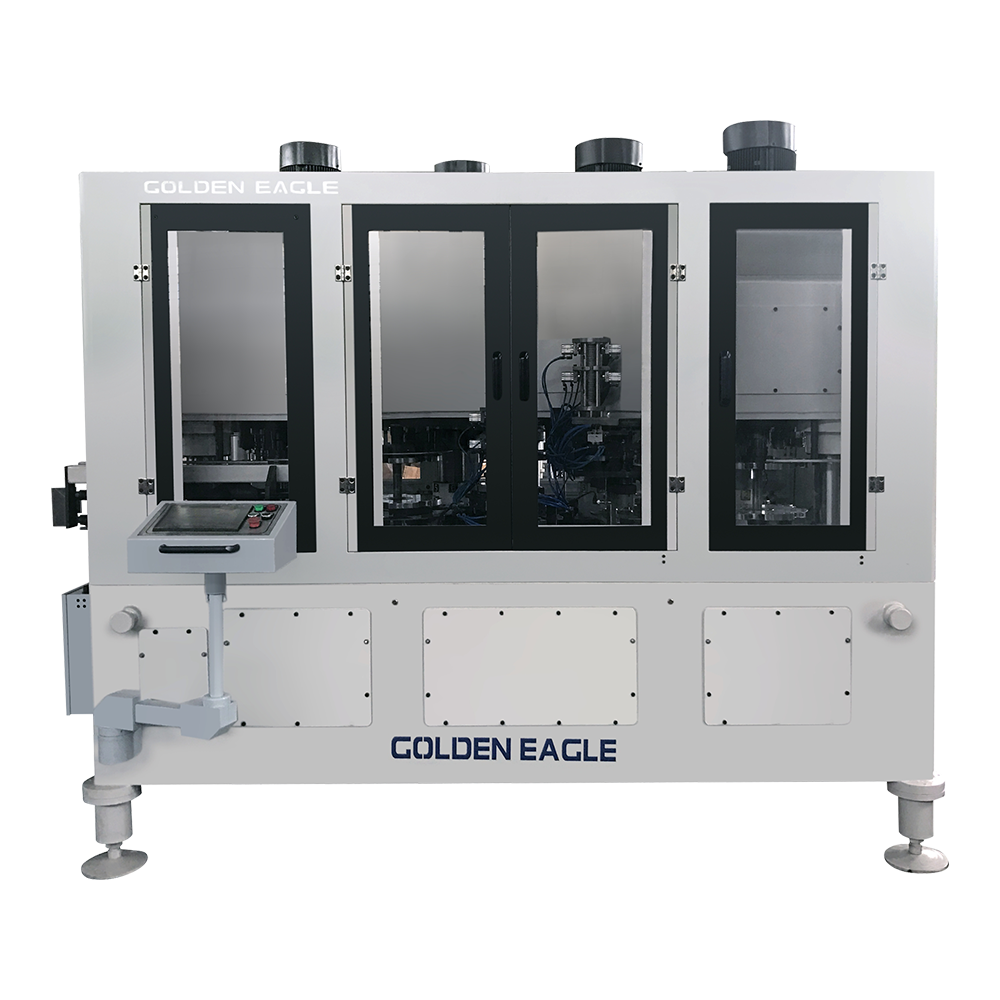
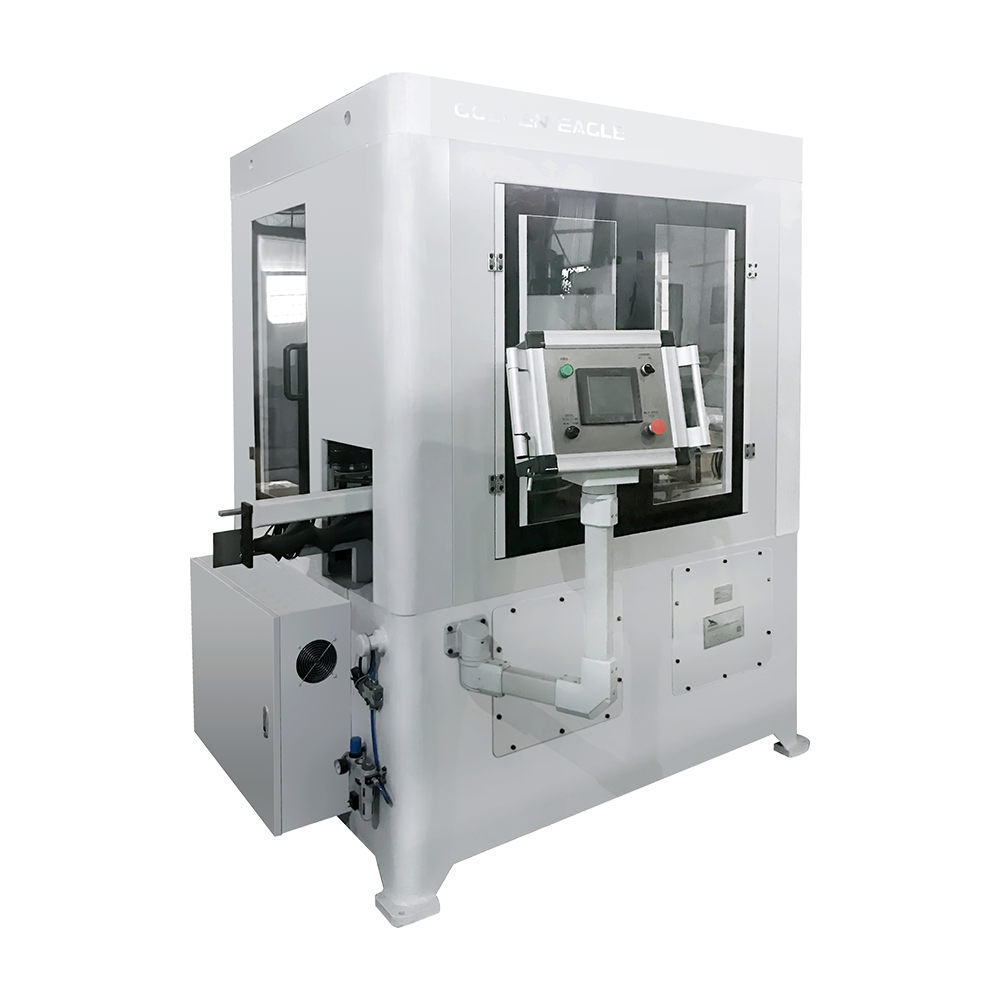
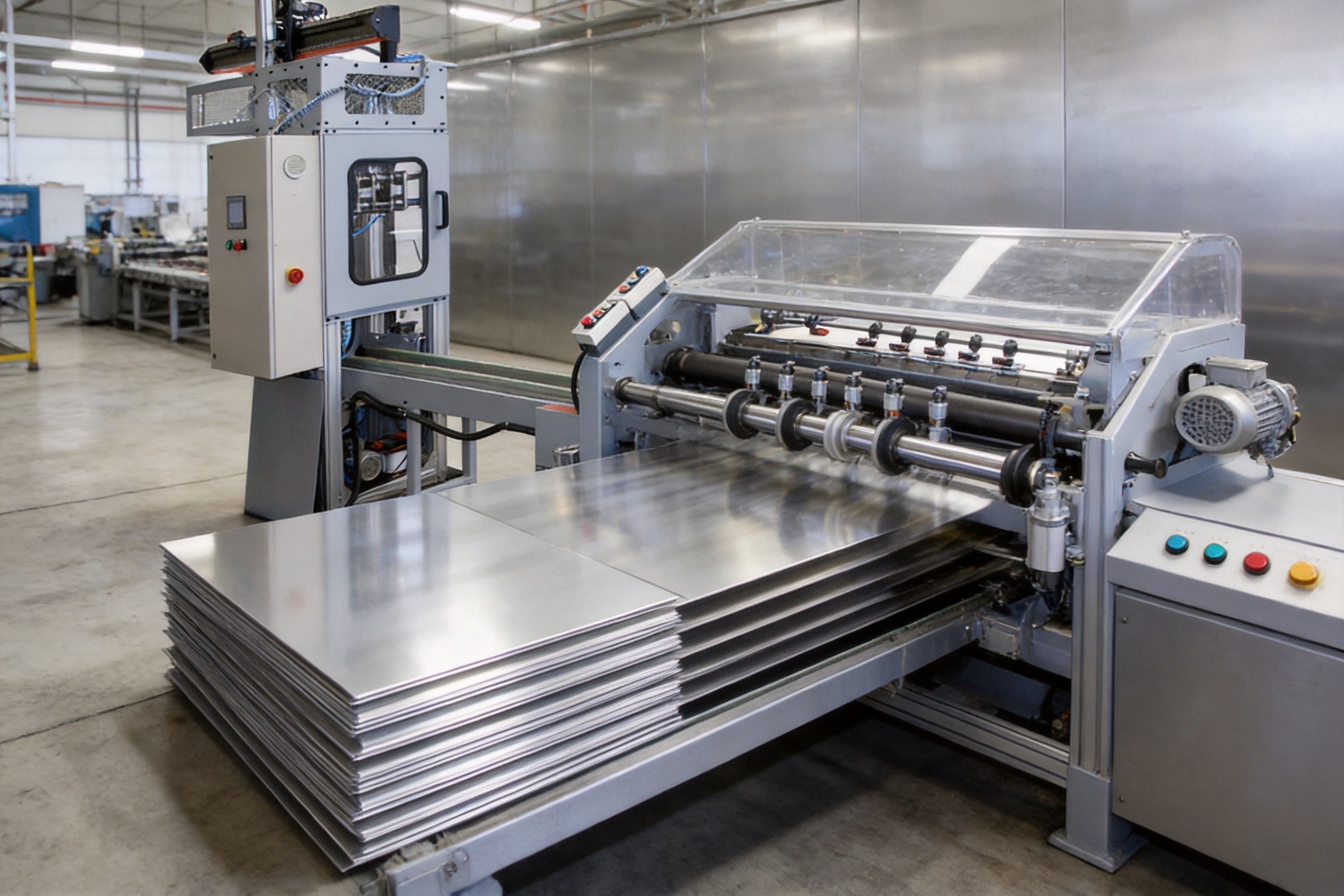
The GT10B-1 Automatic Feeding Machine is a high-speed sheet-feeding unit for can-making operations. It is engineered to collect and feed sheets in a continuous sequence, helping connect material preparation equipment with subsequent production processes. Its 600 to 1,000 pieces per minute output range allows users to select an appropriate operating speed according to material characteristics, line configuration, and production requirements.
The machine is designed for industrial environments where stable operation, mechanical durability, and compatibility with existing equipment are important. Its large overall structure provides space for feeding mechanisms, sheet-transfer components, material guides, drive assemblies, and adjustment systems. The construction is intended to support long-term operation in a factory setting rather than occasional or low-duty use.
Although the automatic feeder performs a specialized function, its influence extends across the complete line. A stable feeding rhythm can improve press utilization, reduce the frequency of downstream interruptions, and make production planning more predictable. When installed and adjusted correctly, the machine becomes an essential link between sheet storage and the next manufacturing process.
| Specification | GT10B-1 Automatic Feeding Machine |
| Output capacity | 600–1,000 pieces of sheet per minute |
| Applicable can diameter | 52–99 millimeters |
| Applicable can height | 95–220 millimeters |
| Air consumption | 50 liters per minute |
| Total power | 2 kilowatts, 380 volts, 60 hertz |
| Machine weight | 1,300 kilograms |
| Machine dimensions | 5,300 × 4,730 × 2,750 millimeters |
The specification profile shows that the GT10B-1 is intended for a substantial production environment. Its 1,300-kilogram weight contributes to mechanical stability, while the 2-kilowatt drive requirement provides a practical balance between output and energy demand. The stated compressed-air consumption of 50 liters per minute is also suitable for facilities that require efficient pneumatic operation.
One of the most important advantages of the GT10B-1 is its rated capacity of 600 to 1,000 sheets per minute. This range allows the equipment to support high-volume production while giving manufacturers flexibility in selecting an operating speed. A lower speed may be appropriate during commissioning, material testing, product changeover, or operation with more sensitive sheets. A higher speed can be selected when the line, tooling, and material conditions are properly matched.
High-speed feeding is not simply a matter of increasing motor speed. A suitable feeder must maintain timing, separation, alignment, and transfer accuracy as the operating rate rises. If these functions are not synchronized, the machine may feed two sheets together, miss a feeding cycle, or deliver a sheet in an incorrect position. The design of an industrial feeder therefore needs to consider the complete movement path from sheet pickup to sheet release.
The GT10B-1 is designed around this continuous production requirement. Its purpose is to provide a controlled and repeatable flow of sheets rather than intermittent manual placement. This helps reduce the variation between individual cycles and allows downstream equipment to receive material at a more consistent interval.
Stable high-speed feeding can create several practical benefits:
First, it helps increase the effective utilization of presses and forming equipment. A downstream machine cannot achieve its rated output if it frequently waits for material. A reliable feeder minimizes these idle intervals.
Second, it can reduce the amount of labor required for repetitive sheet handling. Operators can focus on material replenishment, inspection, adjustments, and production supervision instead of manually inserting every sheet.
Third, it can improve production planning. When the feeding rate remains stable, manufacturers can estimate throughput more accurately and coordinate the feeder with other machines in the line.
Fourth, consistent feeding can help reduce process defects associated with irregular positioning. Correct alignment is particularly important when sheets must enter a press, welding station, forming tool, or other precision process.
The GT10B-1 is suitable for can diameters from 52 to 99 millimeters and can heights from 95 to 220 millimeters. This operating range covers many common metal packaging formats. It can therefore serve manufacturers that produce more than one type of can instead of being limited to a single fixed specification.
Flexible size compatibility is valuable for contract manufacturers, packaging groups, and factories serving several markets. Food cans, beverage containers, chemical packages, and other metal cans may differ in diameter, height, sheet dimensions, and production requirements. A feeder that can be adjusted across a defined range can help reduce the need for separate equipment for every product size.
Before purchasing or installing the machine, users should confirm the exact sheet dimensions, material thickness, coating condition, surface characteristics, and line interface requirements. Can diameter and height are important reference parameters, but the total feeding system must also be matched to the shape and dimensions of the sheets being processed.
Proper adjustment is essential when changing from one format to another. Guides, supports, timing, and transfer positions should be checked before production begins. A controlled changeover procedure helps protect the material and ensures that the new format enters the downstream equipment correctly.
High-speed equipment must be mechanically stable. Vibration, movement, or frame deformation can affect feeding accuracy and may accelerate wear on moving components. The GT10B-1 has a machine weight of approximately 1,300 kilograms, which provides a substantial base for continuous operation.
A heavy industrial structure can offer several advantages. It can help absorb operating forces, maintain the relationship between feeding components, and reduce unwanted movement during high-speed cycles. It also provides a solid platform for installation in a production workshop where the machine may operate for extended shifts.
The machine dimensions are approximately 5,300 millimeters in length, 4,730 millimeters in width, and 2,750 millimeters in height. These dimensions should be considered during factory planning. Sufficient space is needed not only for the machine itself, but also for sheet loading, operator access, inspection, cleaning, maintenance, and connection to adjacent equipment.
A properly prepared foundation and accurately aligned connection with the neighboring machine are important for performance. Installation personnel should confirm floor conditions, transport access, electrical supply, compressed-air quality, safety clearances, and the direction of material flow before commissioning.
The GT10B-1 uses approximately 50 liters of air per minute. This relatively defined air-consumption figure assists users in planning the factory compressed-air system. The air supply should be clean, dry, and maintained at the pressure recommended during installation and commissioning. Contaminated or unstable compressed air may affect pneumatic components and reduce operating reliability.
For facilities with several pneumatic machines, accurate air-consumption planning is especially important. The total demand of the production line should include the feeder, presses, welding systems, actuators, valves, and other air-driven equipment. A properly sized compressor and air-treatment system can help maintain stable production conditions.
The total electrical power of the machine is 2 kilowatts, based on a 380-volt, 60-hertz supply. This rating provides a clear reference for factory electrical planning. Users should verify that the available power system corresponds to the machine configuration and local electrical standards before shipment and installation.
Efficient power requirements can support lower operating costs when compared with equipment that uses unnecessarily large drives for the same feeding task. Energy efficiency should be evaluated together with output capacity, operating hours, compressed-air demand, maintenance, and total production performance.
Manual feeding requires operators to repeat the same movement hundreds or thousands of times during a production shift. This creates fatigue and may lead to differences in timing or positioning. Automatic operation reduces the need for constant repetitive handling and allows workers to perform more valuable tasks such as quality checks, material preparation, and equipment monitoring.
A basic manual arrangement may produce an irregular material flow. Even experienced operators cannot always maintain identical timing over a long shift. An automatic machine is better suited to maintaining a repeatable feeding rhythm, helping downstream equipment operate more consistently.
When output requirements increase, manual feeding can become a bottleneck. The GT10B-1 is designed for up to 1,000 sheets per minute, making it more appropriate for high-volume production than labor-intensive manual methods.
An automatic feeder can be integrated into a broader can-making line. It can work as part of a sequence that includes sheet cutting, printing, forming, welding, flanging, seaming, and inspection. This integration helps manufacturers build a more continuous and organized production process.
Incorrectly placed sheets may be damaged by presses or other downstream equipment. Consistent feeding and alignment can help reduce these risks. Although the final result depends on material quality, tooling, adjustment, and operator training, automatic feeding provides a stronger foundation for process control.
The value of an automatic feeding machine is determined by more than its rated speed. It must also offer dependable movement, adjustment capability, structural strength, and compatibility with other equipment. The GT10B-1 has been developed within a company that specializes in can-making machinery and molds, giving the product a practical connection to the requirements of metal packaging production.
Experience in can-making equipment helps manufacturers understand that every machine affects the next operation. A feeder must not only move sheets; it must present them in a way that suits the receiving equipment. The correct relationship between sheet position, timing, tooling, and production speed is essential for a successful line.
The use of precision machining equipment also supports the production of accurately manufactured mechanical components. CNC machining and other advanced processing methods can improve dimensional consistency, surface quality, and repeatability in parts that require close coordination.
The solid machine structure, defined power system, and controlled pneumatic demand make the GT10B-1 suitable for factories seeking a dependable feeder rather than a temporary or improvised material-handling solution.
Zhejiang Golden Eagle Food Machinery Co., Ltd. was established in 1978 and has built its business around can-making machinery and can-making molds. The company has more than 350 trained employees, including experienced design and development personnel and professional engineers. This team provides a broad technical foundation for product design, mechanical engineering, manufacturing, assembly, commissioning, and service.
The company operates with CNC high-precision machining equipment and a complete range of mechanical processing equipment. These resources support the manufacturing of structural parts, transmission components, tooling, molds, guides, and other parts used in can-making equipment.
Precision machining is particularly important in a sheet-feeding machine because the relationship between components must remain stable during rapid movement. Manufacturing accuracy can affect alignment, timing, wear, adjustment, and service life. A production process that combines computer-controlled machining with experienced mechanical assembly can help achieve more dependable equipment performance.
The company states that its product design principles are similar to those associated with internationally recognized can-making equipment manufacturers such as Krupp, Soudronic, and Alfons Haar. At the same time, it has combined these design principles with practical experience gained from manufacturing and using can-making machinery in production environments.
This approach is important because successful equipment development requires more than copying a basic structure. The machine must be adapted to actual production conditions, material behavior, operator requirements, maintenance practices, and regional manufacturing needs. Continuous improvement based on practical feedback can help create equipment that is easier to operate and more suitable for long-term use.
The company has been certified to the ISO 9001 quality management system and ISO 14001 environmental management system. ISO 9001 provides a framework for quality-related processes, documentation, production control, customer requirements, and continuous improvement. ISO 14001 addresses environmental management and encourages organizations to control environmental impacts in a systematic manner.
Quality management is important for automatic feeding equipment because performance depends on the consistency of many individual parts. A small variation in a guide, shaft, support, or drive component can influence the overall feeding process. Documented inspection and production procedures help reduce variation and make it easier to trace and correct quality issues.
Environmental management is also increasingly relevant to machinery buyers. Manufacturers are evaluating not only the operating efficiency of equipment, but also the production practices of their suppliers. A certified environmental management system demonstrates that environmental responsibilities are considered within the organization’s management processes.
Since its establishment, the company reports that it has produced more than 10,000 pieces of can and can-lid equipment. This production history indicates extensive experience in manufacturing machinery for the metal packaging sector. Such experience can support better understanding of common production problems, installation requirements, spare-parts needs, and equipment lifecycle management.
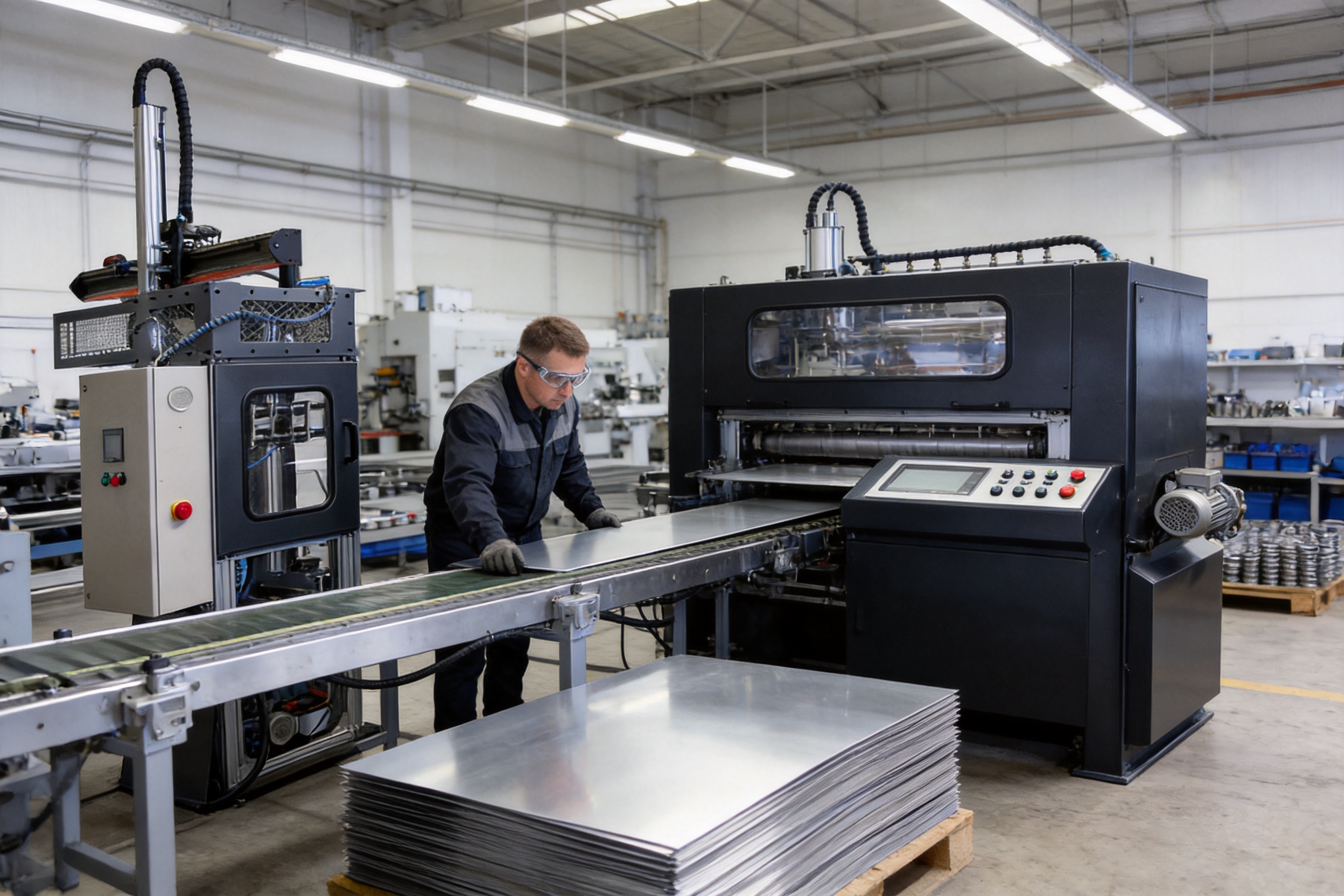
The GT10B-1 can be used as part of a broader production system. Depending on the product and line design, it may be connected with sheet cutting equipment, printing systems, forming machines, welding units, flanging equipment, seaming machines, testing systems, or packaging stations.
For food and beverage cans, the feeder may supply sheets to equipment that forms can bodies or other components. For chemical containers and aerosol packaging, it may support lines in which sheets move toward forming, welding, necking, or end-making processes. The exact configuration depends on the can design and the required production sequence.
When integrating the feeder, engineers should evaluate the speed of every connected machine. The rated capacity of one machine does not automatically mean that the complete line will achieve the same output. The material path, buffer capacity, changeover time, inspection frequency, and downstream cycle must all be considered.
Line integration should also include safety coordination. Emergency-stop functions, guarding, access doors, electrical controls, and pneumatic isolation should be designed to work with adjacent machines. Operators should be able to stop the relevant section quickly if a sheet becomes misaligned or another abnormal condition occurs.
A well-integrated feeding machine can help create a smoother production flow. It should be positioned so that material can be replenished safely, operators can observe key areas, and maintenance personnel can access components without unnecessary disassembly.
Food-can manufacturers require equipment that supports consistent output and repeatable material handling. The GT10B-1 can help feed sheets for lines producing cans for processed foods, preserved foods, ingredients, and other packaged products, subject to the specific material and line requirements.
Beverage packaging requires high productivity and careful process coordination. A reliable feeder can help supply material to high-speed operations and reduce interruptions caused by irregular sheet delivery.
Chemical containers may require stronger materials, different dimensions, or specialized forming processes. The feeder’s applicable size range makes it suitable for selected chemical tank and container applications when the sheet specifications are correctly matched.
Aerosol can production often involves forming, welding, cone and dome production, and other specialized processes. Automatic sheet feeding can provide a controlled supply of material to equipment used in these production lines.
Manufacturers producing general-purpose tinplate packaging can benefit from equipment that supports multiple sizes and continuous operation. The feeder may be used in a production line for containers used in household, industrial, promotional, or specialty applications.
Correct installation is essential for achieving the intended performance of the GT10B-1. Before delivery, the user should prepare a suitable installation area with adequate floor strength and sufficient space around the machine. The building should provide access for transporting the equipment to its final position.
Electrical requirements should be checked in advance. The machine is specified for 380 volts and 60 hertz, so the buyer should confirm that the local power supply is compatible. Where necessary, electrical protection, grounding, control interfaces, and line communication should be prepared according to the final project design.
The compressed-air system should be checked for pressure stability, cleanliness, moisture control, and available capacity. Air lines should be properly sized and fitted with suitable filtration and regulation equipment.
During commissioning, technicians should verify the feeding path, guide positions, drive operation, pneumatic actions, emergency-stop functions, and connection with the receiving machine. The machine should first be operated at a lower speed while engineers observe the movement of sheets. Speed can then be increased gradually after alignment and timing have been confirmed.
Operators should receive training in normal operation, product changeover, adjustment, cleaning, inspection, and emergency procedures. Training is particularly important for high-speed machinery because a small abnormality can become more serious if it is not identified quickly.
Preventive maintenance helps preserve feeding accuracy and reduce unplanned downtime. The maintenance schedule should follow the manufacturer’s recommendations and the actual production environment. High-dust conditions, long operating hours, frequent format changes, and abrasive materials may require more frequent inspection.
Operators should keep the sheet path clean and remove material fragments, dust, oil, and other contamination. Accumulated debris can affect separation and movement. Guides and contact surfaces should be checked for wear, damage, or incorrect adjustment.
Mechanical fasteners, bearings, drive components, and pneumatic connections should be inspected at suitable intervals. Any unusual noise, vibration, air leakage, or change in feeding rhythm should be investigated before it develops into a larger failure.
Electrical cabinets and control components should be maintained according to applicable safety procedures. Maintenance work should be performed only by trained personnel, with power and compressed air isolated when required.
When changing can sizes, operators should follow an organized setup procedure. The correct adjustment values should be recorded where possible, allowing future changeovers to be completed more quickly and consistently. A clean, documented, and repeatable setup process can reduce startup waste.
Can-making equipment buyers often require more than a standard machine. They may need a feeder adapted to a particular line layout, sheet specification, can format, electrical system, or production objective. The supplier’s OEM and ODM capabilities can support these project requirements.
OEM cooperation may involve manufacturing equipment according to customer specifications, including agreed technical parameters, branding arrangements, documentation, and delivery requirements. ODM cooperation may include support with product configuration, engineering adaptation, and development of a suitable solution based on the buyer’s application.
A supplier with experience in can-making machinery and molds can offer a broader perspective during project discussions. Instead of evaluating the feeder as an isolated unit, engineers can consider its relationship with presses, dies, welding equipment, end-making systems, and the complete production line.
The company supplies a range of equipment for food can production lines, beverage can production lines, can-lid production lines, chemical tank production lines, aerosol canister production lines, two-piece can production lines, and pop-can production lines. This broad product portfolio can make it easier to coordinate multiple machines through one experienced supplier.
Machinery performance depends on more than manufacturing quality. Installation, commissioning, training, spare-parts supply, and technical support also affect the long-term value of equipment. The company provides after-sales services that include installation, commissioning, technical guidance, operation training, and parts supply.
Installation support can help users place and connect the machine correctly. Commissioning support allows technicians to verify the operating sequence and make initial adjustments. Technical guidance can help production teams understand the relationship between the feeder and the rest of the line.
Operator training is valuable because the machine’s daily performance depends on correct loading, adjustment, cleaning, inspection, and response to abnormalities. Well-trained operators can identify issues earlier and avoid unnecessary damage caused by incorrect intervention.
Rapid spare-parts supply is another important consideration. Feeding systems operate at high speed, and worn or damaged components may affect the entire line. Having access to suitable replacement parts can reduce downtime and make maintenance planning easier.
The company’s equipment has been exported to countries and regions in Europe, Asia, Africa, North America, South America, and Oceania. Its reported export markets include Germany, Italy, the United Kingdom, Spain, Hungary, Russia, Australia, Jordan, Malaysia, the Philippines, Pakistan, Egypt, Algeria, Turkey, Mexico, Nigeria, and Iran.
International projects require attention to different electrical systems, factory conditions, safety practices, documentation standards, shipping requirements, and installation arrangements. Experience with overseas customers can help a machinery supplier prepare equipment and technical communication for a variety of project environments.
For international buyers, clear specification confirmation is essential. Before placing an order, the buyer and supplier should confirm the material type, sheet dimensions, output target, applicable can range, utilities, line direction, control requirements, spare parts, installation scope, and training arrangements.
The supplier’s location in Zhejiang provides access to an established manufacturing region with mechanical processing, engineering, logistics, and industrial supply capabilities. This supports the production and delivery of equipment for both domestic and international customers.
Buyers should consider several factors when comparing automatic feeding machines. Rated speed is important, but it should not be the only selection criterion. The machine must also match the product range, material characteristics, downstream equipment, operating environment, and service expectations.
The first factor is actual production capacity. Buyers should determine whether the stated output can be achieved with their sheet material and connected machinery. A machine rated at a high speed may not deliver the desired line output if the downstream equipment operates more slowly.
The second factor is size compatibility. The GT10B-1 supports can diameters from 52 to 99 millimeters and can heights from 95 to 220 millimeters. Buyers should compare these ranges with current and planned products.
The third factor is mechanical stability. A strong frame, suitable weight, accurate machining, and reliable adjustment systems can contribute to long-term performance, especially in continuous production.
The fourth factor is utility consumption. Electrical power and compressed-air requirements influence factory planning and operating cost. The GT10B-1 uses 2 kilowatts of total power and approximately 50 liters of air per minute according to the provided specifications.
The fifth factor is service capability. Installation, commissioning, training, documentation, and spare-parts availability can significantly affect the total cost of ownership.
The sixth factor is supplier experience. A manufacturer with a long history in can-making machinery may be better positioned to understand line integration and provide practical technical support.
| Evaluation area | Questions for the buyer |
| Product range | What are the required can diameters, heights, and sheet dimensions? |
| Production target | What is the required output per minute and per shift? |
| Material | What are the sheet material, thickness, coating, and surface conditions? |
| Line integration | Which machine will receive the sheets, and what is its operating speed? |
| Utilities | Are the required voltage, frequency, power, and compressed-air capacity available? |
| Factory layout | Is there enough space for installation, loading, operation, and maintenance? |
| Changeover | How frequently will the production format change? |
| Service | What installation, commissioning, training, and spare-parts support is required? |
| Compliance | What local safety, electrical, and documentation requirements apply? |
The GT10B-1 Automatic Feeding Machine offers a combination of high-speed sheet handling, broad can-size compatibility, stable industrial construction, and practical utility requirements. Its output capacity of 600 to 1,000 sheets per minute makes it suitable for demanding production lines, while its operating range supports multiple can formats.
Its value is strengthened by the manufacturing capabilities behind it. More than four decades of experience in can-making machinery, a team of more than 350 personnel, CNC precision machining, mechanical manufacturing resources, quality management certification, and international project experience provide a solid foundation for equipment production.
For manufacturers seeking to automate repetitive sheet handling, improve production consistency, and connect material preparation with downstream can-making processes, the GT10B-1 can be considered a practical industrial solution. Its final suitability should always be confirmed through a detailed technical discussion based on the buyer’s material, product size, line speed, factory utilities, and integration requirements.
The GT10B-1 is an automatic sheet-feeding machine used to supply metal sheets continuously to subsequent equipment in a can-making production line. It helps reduce manual handling and provides a more consistent material flow.
The stated output capacity is 600 to 1,000 pieces of sheet per minute. The actual operating rate should be selected according to the material, product format, connected machinery, and production conditions.
The machine is specified for can diameters from 52 to 99 millimeters and can heights from 95 to 220 millimeters. The buyer should also confirm sheet dimensions and other material parameters before ordering.
The total power is 2 kilowatts based on a 380-volt, 60-hertz supply. The stated air consumption is 50 liters per minute. Final utility requirements should be verified during technical specification and installation planning.
It can be used in suitable food can, beverage can, chemical container, aerosol packaging, and general tinplate can applications, provided that the can size, sheet characteristics, line connection, and process requirements are compatible.
Yes. It is designed to operate as part of a connected can-making line. It may be integrated with sheet preparation, forming, welding, pressing, end-making, seaming, inspection, and other equipment, depending on the product design.
The user should prepare a suitable foundation, adequate factory space, compatible electrical power, a clean compressed-air supply, safe material access, and connection points for adjacent machinery. Installation and commissioning planning should be completed before delivery.
The company provides installation, commissioning, technical guidance, operation training, and spare-parts support. The exact scope should be confirmed in the commercial and technical agreement for each project.
Feeding accuracy depends on correct installation, proper alignment, suitable guide adjustment, clean material paths, stable utilities, preventive maintenance, and operator training. Product changeovers should be completed according to a controlled setup procedure.
The manufacturer has specialized experience in can-making machinery and molds, a large engineering and production team, CNC machining equipment, a wide equipment portfolio, quality and environmental management certifications, and experience exporting equipment to multiple international markets.
Automatic sheet feeding is a fundamental requirement for efficient and consistent tinplate can production. The GT10B-1 provides a high-speed solution for manufacturers that need to reduce manual handling, stabilize material flow, and support connected production equipment.
With a capacity of 600 to 1,000 sheets per minute, compatibility with can diameters from 52 to 99 millimeters, support for can heights from 95 to 220 millimeters, 2-kilowatt power consumption, and a durable 1,300-kilogram structure, the machine is designed for industrial use. Its performance is supported by the manufacturer’s long-term experience in can-making machinery, precision machining capabilities, certified management systems, broad product range, and international service experience.
For a successful project, buyers should evaluate the feeder together with the entire production line. Correct product data, factory preparation, utility planning, installation, commissioning, operator training, and preventive maintenance all contribute to reliable performance. When these factors are properly coordinated, the GT10B-1 can help manufacturers build a more productive, stable, and adaptable can-making operation.
1. Product specification information for the GT10B-1 Automatic Feeding Machine, including output capacity, applicable can dimensions, utility requirements, machine weight, and overall dimensions.
2. Company manufacturing information concerning the production of can-making machinery and can-making molds since 1978.
3. ISO 9001 quality management system principles for manufacturing organizations.
4. ISO 14001 environmental management system principles for industrial enterprises.
5. General engineering practices for automatic material feeding, sheet handling, production-line integration, and preventive maintenance.
6. General technical principles for tinplate can production, metal packaging machinery, forming equipment, welding systems, and can-end manufacturing lines.
Related Products

Founded in 1978, the company is one of the largest can-making machinery well-known companies at home and abroad.
Product Categories
Contact Information
Zhongshatou Shenjiamen Zhoushan Zhejiang China
+86-580-3056646

 English
 中文简体
中文简体
 русский
 عربى
عربى
 Español