2026-09-03
Modern food and beverage packaging depends on more than accurate metal forming. A finished can or lid must also provide reliable sealing performance, safe product contact, consistent appearance, and efficient production at industrial scale. The lining operation is therefore a critical stage in the manufacture of general can lids and easy-open ends, commonly known as EOE lids. A high-quality lining machine applies a controlled compound or coating to the sealing channel of a lid so that the finished package can achieve dependable closure performance after seaming.
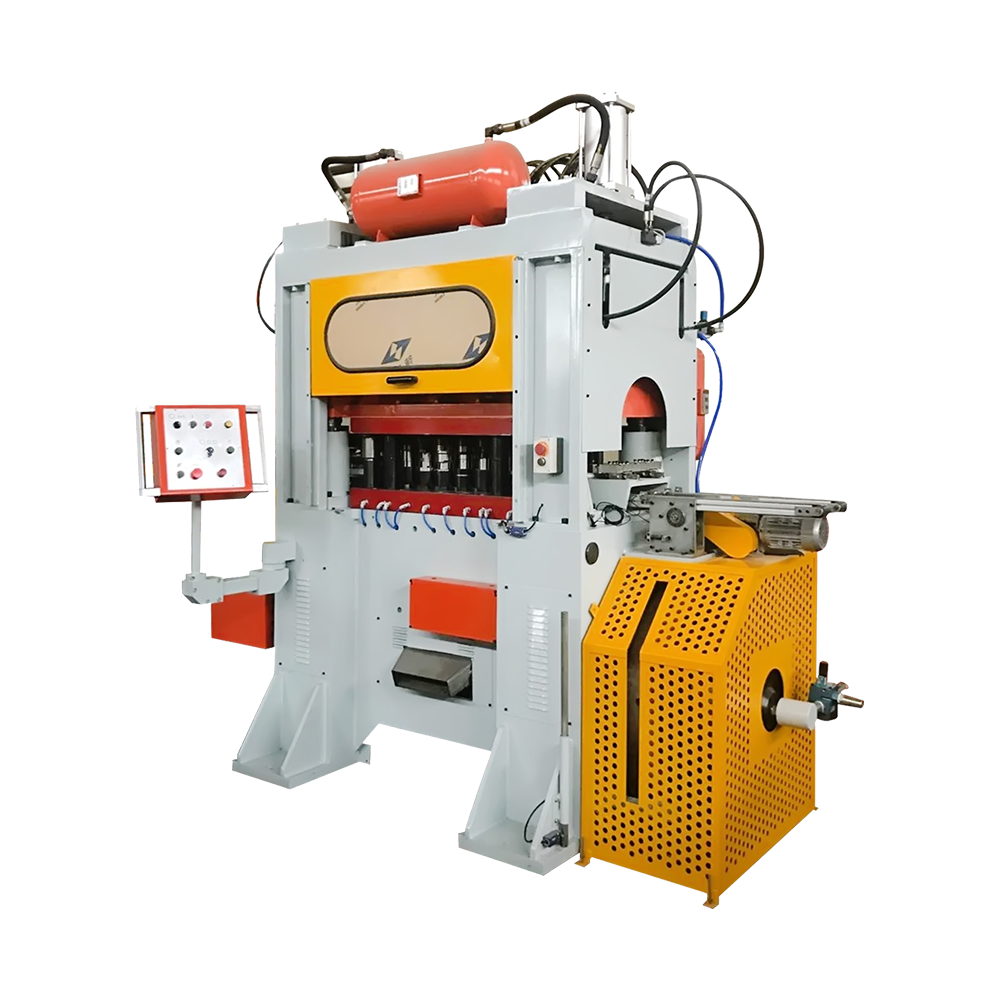
The GT3B51 high-speed rotary lining machine is designed for automatic lining of general lids and EOE lids. It is suitable for can-making factories, food packaging plants, beverage can producers, and manufacturers operating complete tinplate can production lines. With an output capacity of up to 1,200 cans or lids per minute, an eight-nozzle configuration, automatic operation, and support for several diameter ranges, the machine combines high productivity with flexible production capability.
Manufactured by Zhejiang Golden Eagle Food Machinery Co., Ltd., the rotary lining machine reflects the company’s long experience in can-making machinery, can-making molds, and complete packaging production systems. The company has operated in this field since 1978 and has developed equipment for food cans, beverage cans, can lids, chemical tanks, aerosol containers, two-piece cans, and other metal packaging applications.
This article examines the machine’s operating purpose, design characteristics, technical specifications, production advantages, manufacturing quality, maintenance requirements, and suitability for modern can-making operations. It also explains how the machine can offer practical advantages over slower, less integrated, or less adaptable lining solutions.
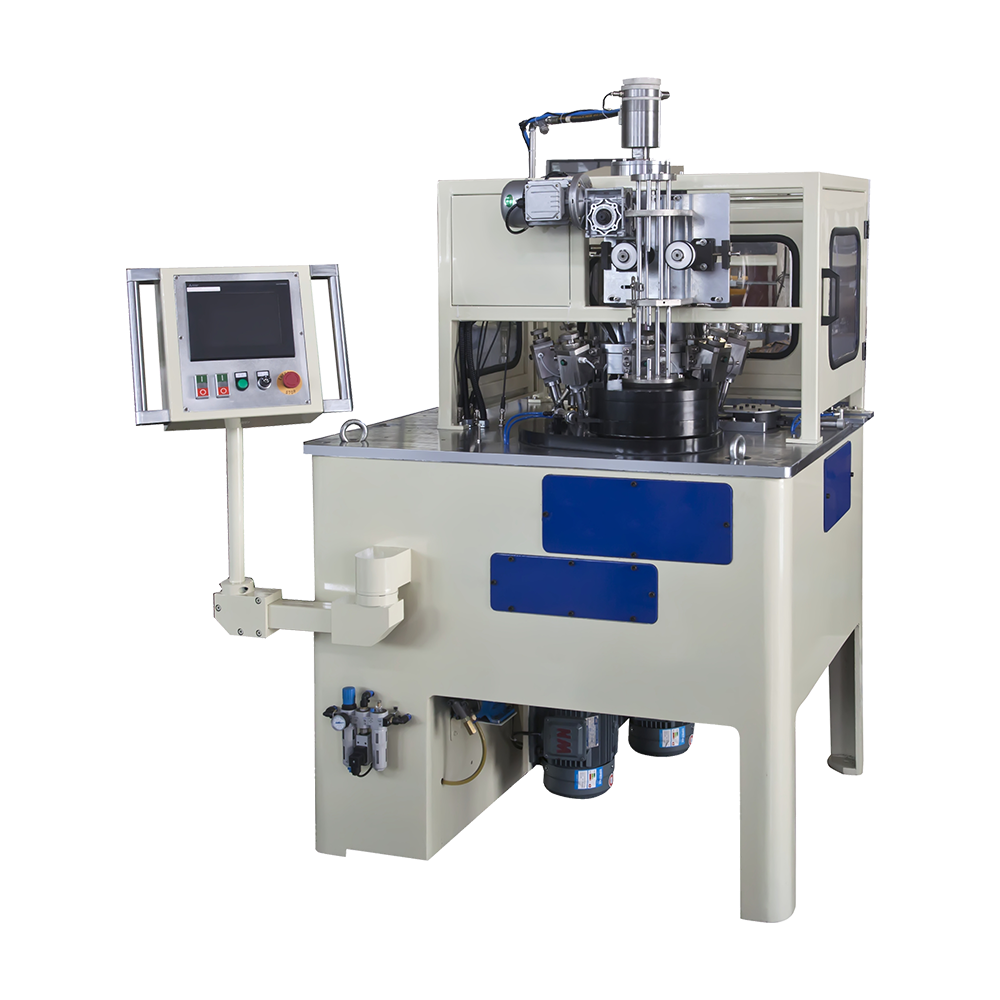
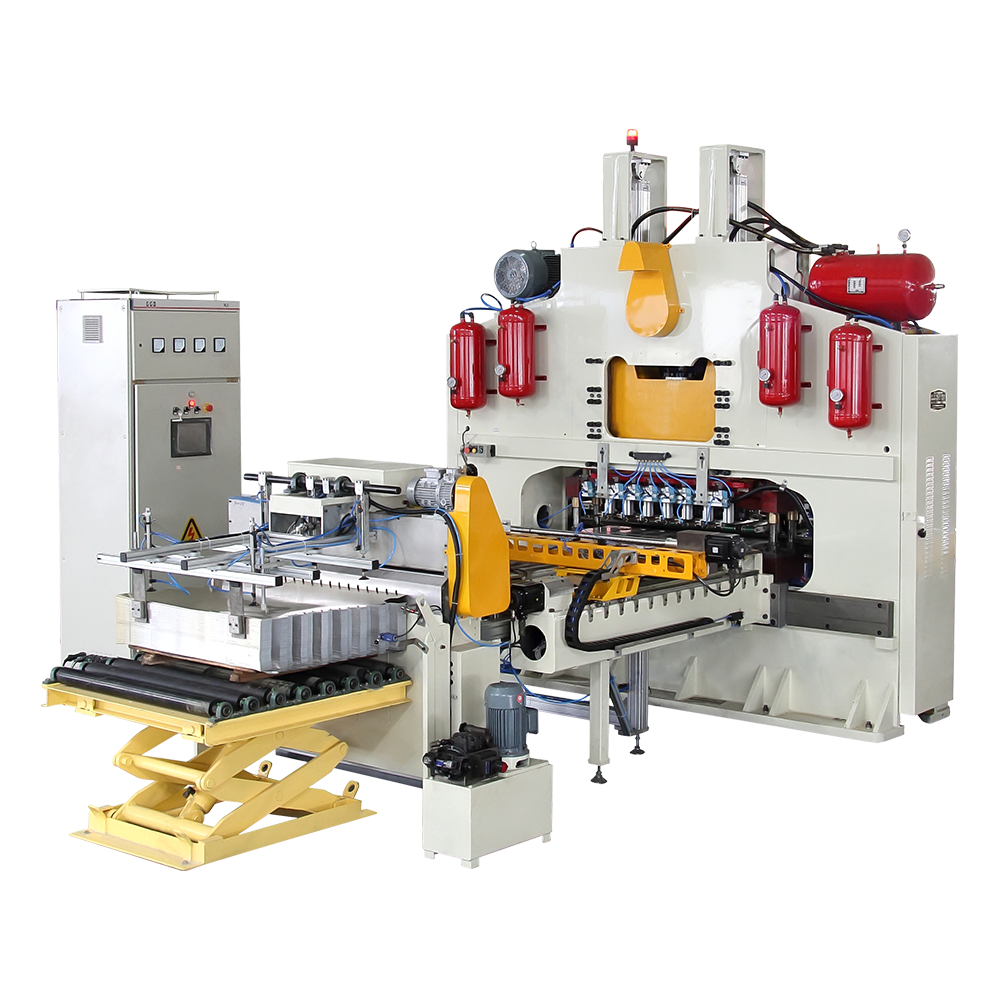
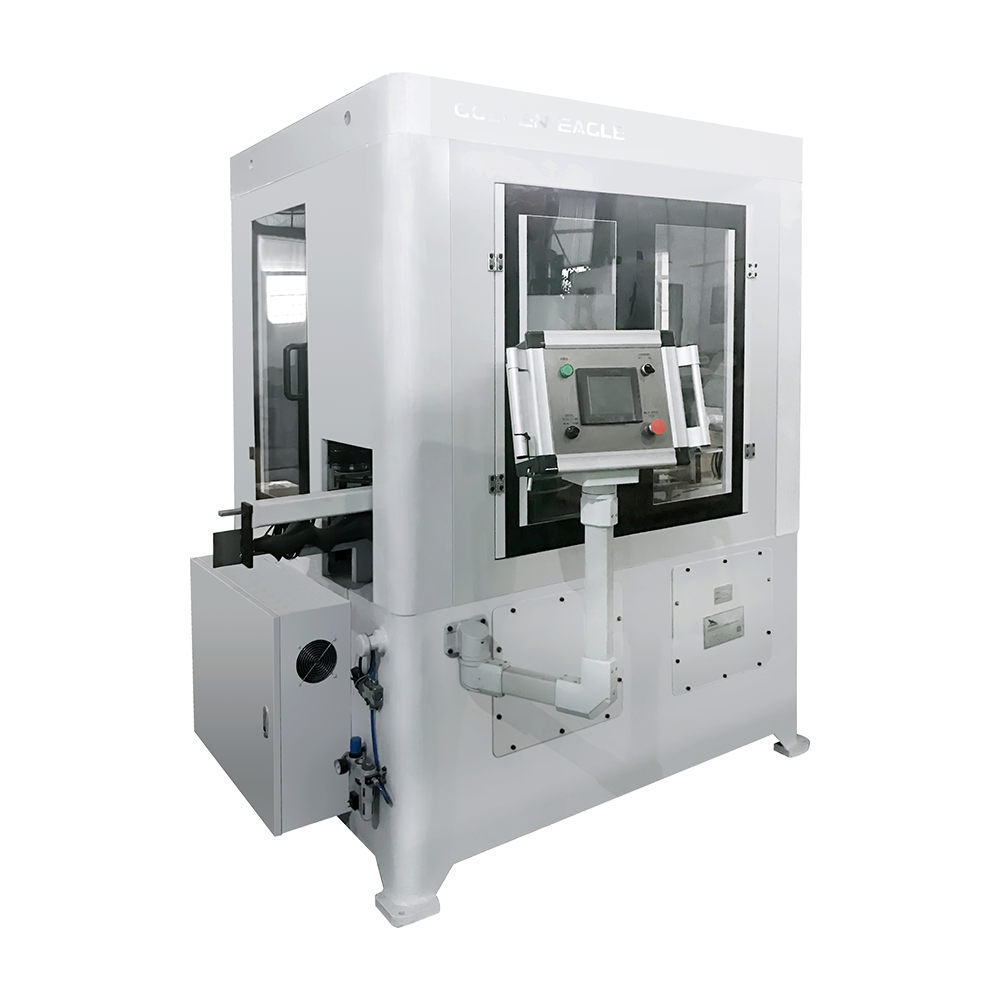
Rotary Lining Machine
Metal lids and ends are formed from tinplate or another suitable metal sheet. Although the metal provides strength and dimensional stability, the lid must normally include a sealing compound in the contact area between the lid and the can body. This compound helps close small surface irregularities and contributes to a hermetic or highly reliable seal after the lid is attached to the can.
For conventional food cans, the lining material is typically applied to the curl or sealing compound channel of the lid. For easy-open ends, the compound is applied around the sealing perimeter while preserving the design of the scored opening and pull-tab area. The lining process must be accurate because excessive compound can cause contamination, poor drying, or production waste, while insufficient compound may result in sealing defects.
A lining machine must perform several operations in a coordinated sequence. It receives or positions the lid, maintains its alignment, applies the compound through a controlled nozzle, rotates or indexes the lid as needed, and transfers the finished piece to the next production stage. At high speed, even small errors in synchronization can create uneven application or product rejection. For this reason, the machine’s mechanical structure, feeding system, nozzle arrangement, control system, and adjustment process all influence final quality.
The GT3B51 is developed specifically for this industrial requirement. Its rotary working principle allows multiple lids to pass through a repeated application cycle. The eight-head arrangement supports continuous output while distributing the work across multiple stations. This design is more suitable for high-volume production than a simple single-head or intermittently operated arrangement.
The GT3B51 high-speed rotary lining machine is an automatic machine for lining general lids and EOE lids used in food packaging. The standard model GT3B51-L-3 is designed for lids with diameters from 52 to 73 millimeters and offers an output capacity of approximately 800 to 1,200 pieces per minute.
Two additional configurations are available for broader can diameter requirements. The GT3B51-L-3A supports diameters from 52 to 99 millimeters and provides an output capacity of approximately 500 to 1,000 pieces per minute. The GT3B51-L-5 supports larger diameters from 83 to 153 millimeters and provides an output capacity of approximately 350 to 600 pieces per minute.
All three listed configurations use eight lining heads. Each machine has a rated machine power of 5.6 kilowatts, a listed weight of approximately 2,500 kilograms, and dimensions of approximately 1,100 by 1,250 by 2,000 millimeters. The common machine platform simplifies equipment planning for factories producing different lid sizes.
| Model | Output Capacity | Number of Nozzles | Can Diameter | Machine Power | Machine Weight | Dimensions |
|---|---|---|---|---|---|---|
| GT3B51-L-3 | 800–1,200 cpm | 8 heads | 52–73 mm | 5.6 kW | 2,500 kg | 1,100 × 1,250 × 2,000 mm |
| GT3B51-L-3A | 500–1,000 cpm | 8 heads | 52–99 mm | 5.6 kW | 2,500 kg | 1,100 × 1,250 × 2,000 mm |
| GT3B51-L-5 | 350–600 cpm | 8 heads | 83–153 mm | 5.6 kW | 2,500 kg | 1,100 × 1,250 × 2,000 mm |
The abbreviation “cpm” means cans or pieces per minute, depending on the customer’s production terminology. Actual output may vary according to lid dimensions, lining compound characteristics, feeding conditions, setup accuracy, operator skill, and the configuration of the complete production line.
The most visible advantage of the machine is its high operating speed. The GT3B51-L-3 can reach up to 1,200 pieces per minute under suitable production conditions. This capacity allows the lining operation to keep pace with high-output lid presses, shell presses, and other automated can-making equipment.
High speed can reduce the need for multiple parallel machines. A factory that uses a slower lining machine may need additional equipment, more floor space, more operators, and a larger inventory of spare parts. A high-speed rotary platform can concentrate output in a compact installation and help simplify production planning.
Speed alone, however, is not enough. The machine must maintain stable compound application while operating at high capacity. The rotary structure and multi-head arrangement are intended to support repeated, synchronized application rather than relying on a single point of intermittent operation.
The machine is equipped with eight lining heads or nozzles. Multiple heads allow the production cycle to be divided among several application positions. This arrangement supports continuous operation and can help reduce the mechanical stress associated with forcing one application unit to perform every operation in the line.
An eight-head system can also contribute to more consistent process timing. When the lid position, nozzle position, and rotary movement are correctly adjusted, each product receives the lining compound at a controlled point in the cycle. This repeatability is important for food packaging because the sealing compound must remain within the designed sealing area.
Automatic operation reduces the amount of manual handling required during normal production. Operators can focus on material supply, process supervision, inspection, compound management, and scheduled maintenance instead of manually positioning each lid.
Automation can improve workplace organization and help reduce handling-related contamination. It may also improve production records because operating conditions can be monitored and standardized more easily than with manual or semi-manual equipment. For factories seeking a complete automatic can-making line, an automatic rotary lining machine is an important connection between lid forming and downstream packaging operations.
The three listed models cover a broad range of lid diameters. The smallest model is intended for 52 to 73 millimeters, the intermediate configuration covers 52 to 99 millimeters, and the larger configuration covers 83 to 153 millimeters. This allows customers to select a machine according to their existing product portfolio rather than purchasing a single machine that is oversized or unsuitable for their target range.
Diameter flexibility is particularly valuable for contract manufacturers and packaging groups that produce different formats. It can also support gradual business expansion. A factory may begin with a narrow product range and later introduce larger lids without completely changing its equipment strategy.
Each listed model has dimensions of approximately 1,100 by 1,250 by 2,000 millimeters. Considering the output capacity, this is a practical footprint for an industrial production machine. Efficient use of floor space can be important where the lining machine must be installed between lid-making equipment, compound handling equipment, inspection systems, and packaging stations.
A compact footprint can also reduce the length of transfer conveyors and simplify operator access. The final installation must still provide adequate room for maintenance, material handling, electrical connections, safety guarding, and ventilation, but the listed dimensions provide a useful basis for factory layout planning.
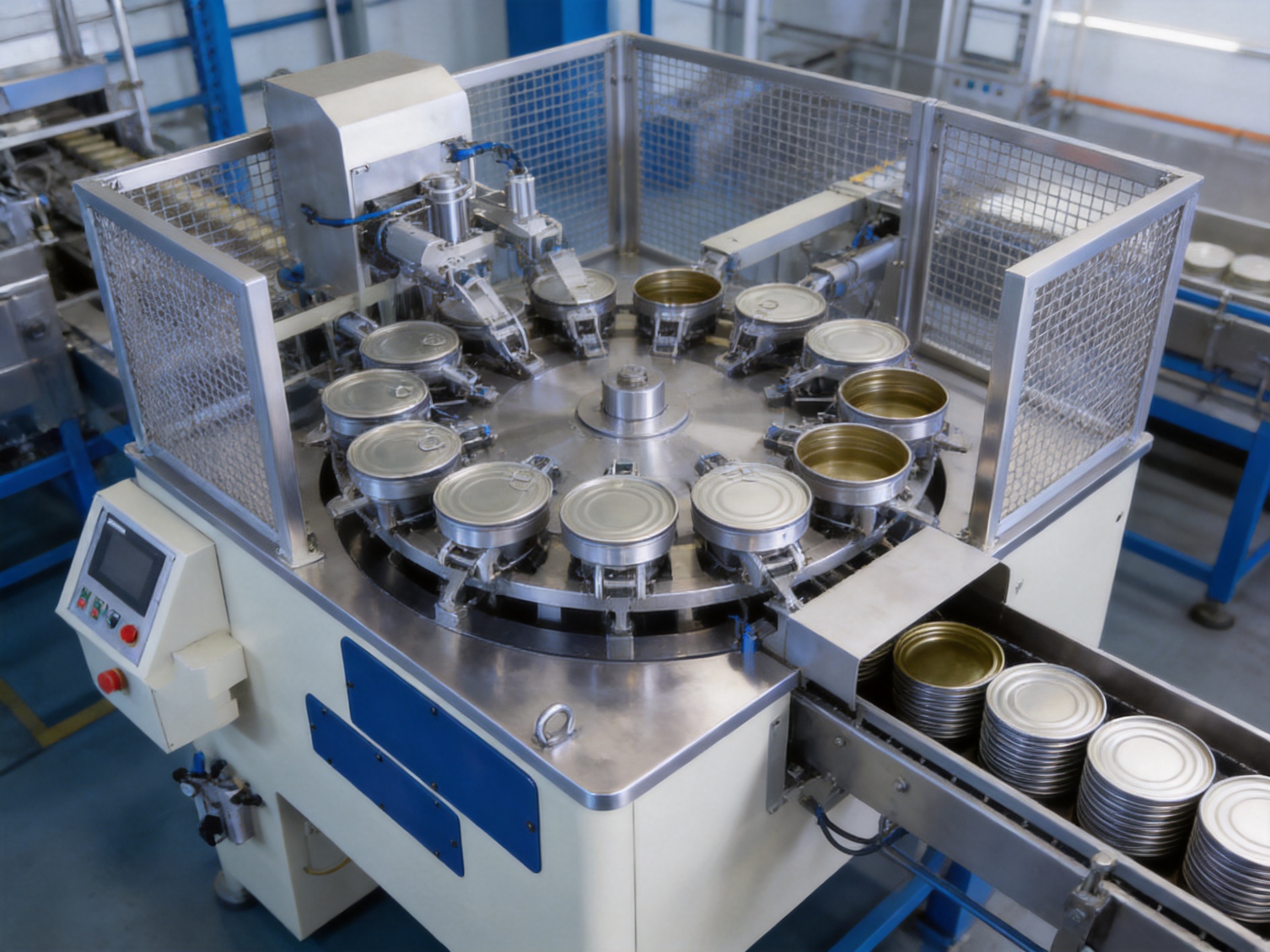
General can lids are used for many food products, including vegetables, fruits, sauces, seafood, meat products, and processed foods. The lining compound must be applied evenly around the sealing area to support the later seaming operation. The finished lid must remain clean, dimensionally stable, and suitable for contact with the package contents through the approved sealing system.
The GT3B51 is designed to support this type of continuous food can lid production. Its automatic feeding and rotary application concept make it suitable for integration into a production line in which shells are formed, lined, inspected, and transferred to further processing or packing.
Easy-open ends require special attention because their opening panel, score line, rivet, and tab must remain functional after forming and lining. The compound must be applied to the sealing perimeter without interfering with the opening mechanism. Stable positioning is therefore essential.
The machine’s application for EOE lids makes it relevant to modern convenience-food packaging. Easy-open ends are widely used for products where consumers expect convenient opening without a separate opener. The production equipment must combine speed with accuracy because EOE lids contain more functional features than a simple flat lid.
Food packaging machinery must be designed and operated with attention to cleanliness, controlled material flow, and repeatable process conditions. The lining machine itself does not replace a factory’s hygiene management system, but its automatic production concept can help reduce unnecessary manual contact with lids.
Customers should select lining compounds that are appropriate for the intended product, temperature, storage period, and regulatory market. Compound viscosity, curing or drying behavior, storage conditions, and compatibility with the lid material can all affect machine performance. The machine should be commissioned using the customer’s approved materials and production standards.
Consistent lining quality depends on the relationship between mechanical accuracy and process control. A lining machine may have high nominal speed, but the practical result depends on whether every lid reaches the nozzle in the correct position and whether the compound is delivered at the required rate.
The rotary structure provides a defined movement path for the lids. A properly adjusted transfer system can help maintain the position of each lid during application. The eight nozzle heads then repeat the application process over successive cycles. This reduces dependence on manual positioning and supports a standardized production method.
Several quality factors should be monitored during operation:
First, the application position should remain centered within the intended sealing area. A compound line that is too close to the inner edge or outer edge may affect seaming or sealing performance.
Second, the volume and continuity of compound should remain stable. Interruptions, thin sections, excessive build-up, or splashing may result in rejection.
Third, lid movement should remain smooth. Vibration, damaged tooling, worn guides, or poor feeding can disturb application accuracy.
Fourth, the compound supply should be clean and properly prepared. Contamination, air bubbles, unsuitable viscosity, or material that has exceeded its usable period can cause problems that are not caused by the machine’s mechanical design.
Fifth, production staff should inspect lined lids at regular intervals. Visual inspection, weight checks, dimensional checks, and functional sealing tests may be included in the customer’s quality program.
By combining automatic movement, multiple lining heads, and disciplined process control, the GT3B51 can help manufacturers establish a more repeatable lining operation than manual or low-capacity alternatives.
Manual lining may be suitable for prototypes, laboratory trials, or very small production quantities, but it is inefficient for industrial output. Manual methods typically require more operators, produce greater variation, and make it difficult to maintain a stable production rate. They can also increase direct contact with the lid and compound.
An automatic rotary machine provides a structured production cycle. The operator’s role changes from applying compound piece by piece to supervising the process, replenishing approved materials, checking quality, and responding to alarms or adjustments. This can improve labor productivity and provide a clearer basis for production planning.
A single-head lining machine may have a lower purchase cost, but it normally has limited output and may become a bottleneck when connected to a high-speed lid production line. The eight-head arrangement of the GT3B51 is better aligned with large-volume production and can reduce the number of machines needed to achieve a target capacity.
Multiple heads also provide a more balanced approach to continuous output. Instead of requiring one nozzle to handle every part at maximum intensity, the rotary system distributes the lining operation through multiple stations.
Some high-speed machines may be designed for only one narrow diameter range. If a manufacturer changes product sizes, the equipment may require extensive modification or may no longer provide efficient operation. The GT3B51 family offers three diameter configurations, allowing the equipment to be matched more closely with product requirements.
The correct model remains important. A customer producing 52 to 73 millimeter lids may benefit from the high-capacity GT3B51-L-3, while a manufacturer working with larger lids may require the GT3B51-L-3A or GT3B51-L-5. Selecting the correct configuration is more effective than expecting one machine to perform every size at the same speed.
When a factory purchases individual machines from many unrelated suppliers, integration, commissioning, training, and spare-parts management can become difficult. A manufacturer with experience in complete can-making systems can offer more coherent technical coordination between forming, feeding, lining, welding, seaming, and inspection equipment.
Zhejiang Golden Eagle Food Machinery Co., Ltd. supplies a broad range of can-making machinery and molds. This product knowledge can help customers discuss the lining machine in the context of a complete food can, beverage can, chemical tank, aerosol can, or two-piece can production line.
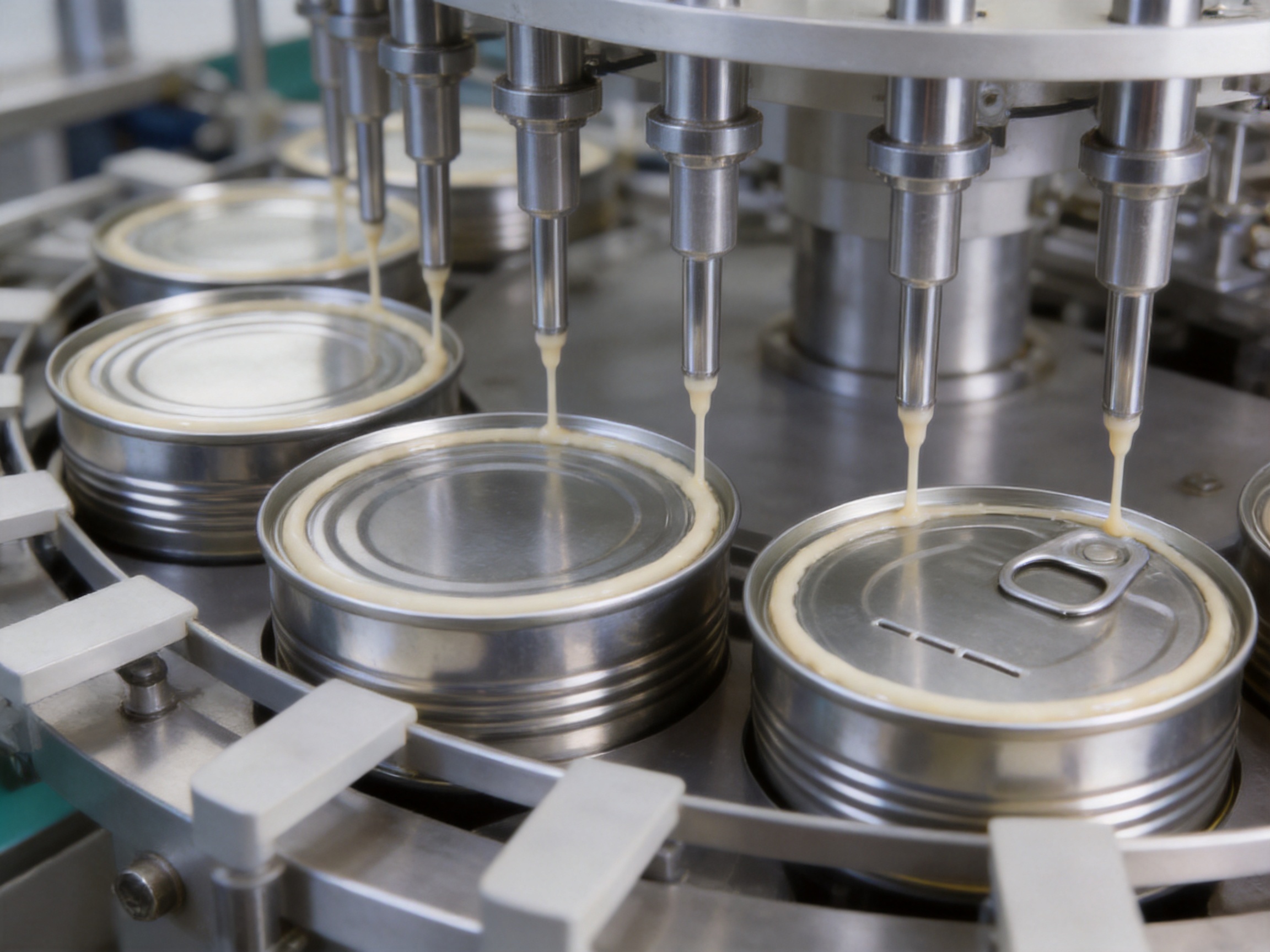
The performance of industrial machinery depends heavily on the manufacturer’s engineering experience and production capability. Zhejiang Golden Eagle Food Machinery Co., Ltd. was established in 1978 and has focused on can-making machinery and can-making molds for more than four decades.
The company has more than 350 trained personnel, including experienced design and development engineers. This combination of technical staff and manufacturing workers supports the development, production, assembly, testing, and service of specialized can-making equipment.
Over its operating history, the company has produced more than 10,000 pieces of can and can-lid equipment. This production experience provides practical knowledge of the problems that can occur in high-speed metal packaging operations, including alignment, feeding, tooling wear, compound application, changeover, and integration with upstream and downstream machinery.
The company uses CNC high-precision machining equipment together with a complete range of mechanical processing equipment. Precision machining is important for rotary lining equipment because the accuracy of shafts, fixtures, guides, nozzle mounts, and other mechanical components affects movement stability and repeatability.
High-precision machining can also support better interchangeability of components. When replacement parts are manufactured according to controlled drawings and machining standards, maintenance teams can install them with less adjustment. This can reduce downtime and help preserve the machine’s intended operating characteristics.
Precision equipment alone does not guarantee quality. It must be supported by appropriate design, inspection, assembly, and testing procedures. The manufacturer’s integrated capability in these areas is a significant advantage when producing machinery for continuous industrial service.
The company states that its product design principles are similar to those associated with established international manufacturers such as KRUPP, SOUDRONIC, and ALFONS-HAAR. This does not mean that the machine is identical to equipment from those companies. Rather, it indicates an effort to apply recognized industrial design concepts while incorporating the manufacturer’s own production experience and engineering improvements.
During practical production, the company has continuously combined operating experience with product development. This approach is valuable because can-making machinery must work reliably not only in theoretical calculations but also under real factory conditions involving long shifts, different materials, operator changes, environmental variations, and frequent production schedules.
The company has been certified to the ISO 9001 quality management system and ISO 14001 environmental management system. ISO 9001 provides a framework for controlled quality processes, documentation, responsibilities, and continual improvement. ISO 14001 supports systematic environmental management and encourages organizations to control environmental impacts associated with their activities.
For machinery customers, management-system certification can provide useful evidence that the supplier has established formal procedures. Customers should nevertheless review the specific inspection records, acceptance criteria, factory testing arrangements, and documentation applicable to their order.
A rotary lining machine is normally one part of a larger production system. For general food cans, the broader line may include tinplate cutting, shell pressing, curling, compound lining, drying or curing, inspection, stacking, and packing. For EOE lids, the line may also include scoring, tab forming, riveting, and other specialized operations.
The GT3B51 can be considered within a complete can-making machinery plan. Its automatic operation and compact dimensions make it suitable for connection to automated feeding and transfer equipment. The arrangement of the factory should ensure that lids enter the machine in a stable and controlled orientation.
For customers producing different types of metal packaging, the manufacturer’s broader product range may support coordinated sourcing. The company offers equipment associated with food can production lines, beverage can production lines, can lid production lines, chemical tank production lines, aerosol canister production lines, two-piece can production lines, and pop-can production lines.
Using a supplier with experience across these applications can simplify technical discussions. The customer can explain the final package, material, diameter, production speed, and downstream process, while the supplier evaluates how the lining machine should fit into the full system.
Integration planning should address the following issues:
The first issue is upstream capacity. The lid-forming or lid-feeding equipment should supply enough product to keep the lining machine operating without excessive interruptions.
The second issue is downstream handling. Lined lids may need drying, curing, inspection, stacking, or controlled transfer before being used in can assembly.
The third issue is control communication. Automatic machines may need coordinated start, stop, fault, and product-count signals so that one equipment failure does not cause unnecessary accumulation or damage.
The fourth issue is changeover. The customer should confirm which tooling, guides, nozzles, or settings must be changed when switching between lid diameters or lid designs.
The fifth issue is factory serviceability. Adequate space, lighting, lifting access, electrical supply, compressed air if required, and safe operator access should be included in the installation plan.
Reliable operation begins with correct installation and commissioning. The machine should be placed on a stable foundation and leveled according to the manufacturer’s requirements. Electrical connections, grounding, guarding, and auxiliary services should be checked before production begins.
During commissioning, operators should learn how to load approved lining compound, adjust the application process, set the lid size, inspect the nozzle condition, identify abnormal sounds, and respond to common alarms. Training should also cover safe shutdown, emergency-stop procedures, cleaning, and the handling of rejected products.
Daily maintenance may include cleaning compound residue from accessible areas, checking the condition of nozzles, inspecting lid guides, confirming the smooth operation of moving parts, and removing accumulated debris. Any material that has hardened in an application path should be removed according to the manufacturer’s instructions.
Operators should also check whether the lining pattern remains continuous and correctly positioned. Early detection of a drifting pattern can prevent a large quantity of defective lids from reaching the next stage.
Periodic maintenance should include inspection of bearings, drive components, fasteners, sensors, pneumatic or electrical elements where applicable, and wear surfaces. Lubrication should follow the specified schedule and use the correct lubricant. Over-lubrication can be as undesirable as insufficient lubrication in some machine areas.
Nozzles and precision contact components may require replacement after extended use. Replacement intervals should be determined by actual wear, compound characteristics, production hours, and quality results rather than by a fixed assumption alone.
Availability of spare parts is an important factor in the total value of high-speed equipment. A low-cost component that causes a long production stoppage can create a greater expense than the original purchase price difference. Customers should establish a spare-parts list for critical nozzles, seals, sensors, guides, fasteners, and other wear components.
Zhejiang Golden Eagle Food Machinery Co., Ltd. provides after-sales services including installation, commissioning, technical guidance, operation training, and parts supply. These services can help customers shorten the learning period and maintain production stability after delivery.
The choice among the three listed models should begin with the required lid diameter. The GT3B51-L-3 is appropriate for a diameter range of 52 to 73 millimeters and offers the highest listed speed. The GT3B51-L-3A covers 52 to 99 millimeters and is suitable for customers requiring a broader small-to-medium diameter range. The GT3B51-L-5 is designed for larger lids from 83 to 153 millimeters.
The customer should then consider the required production output. It is not always advisable to choose the fastest available machine if the rest of the line cannot supply or receive products at the same rate. Balanced line capacity generally provides better overall efficiency than maximizing one isolated machine.
Compound requirements should also be evaluated. Different food products, closure designs, storage conditions, and regulatory markets may require different lining materials. The customer should provide the supplier with details of the compound, lid material, lid thickness, product diameter, and intended production conditions before final configuration.
| Selection Factor | Recommended Evaluation |
|---|---|
| Lid diameter | Match the product range to the operating range of the selected model. |
| Required capacity | Compare the lining speed with upstream lid production and downstream handling capacity. |
| Lid type | Confirm whether the application includes general lids, EOE lids, or both. |
| Compound material | Provide compound viscosity, curing, storage, and application information. |
| Factory layout | Allow room for the listed footprint, maintenance, access, safety, and material flow. |
| Automation level | Define feeding, transfer, inspection, counting, and control-system requirements. |
| Service plan | Prepare training, spare-parts, installation, and preventive-maintenance arrangements. |
A detailed technical discussion before purchase can prevent problems related to unsuitable diameter ranges, incorrect compound settings, insufficient feeding capacity, or inadequate downstream handling.
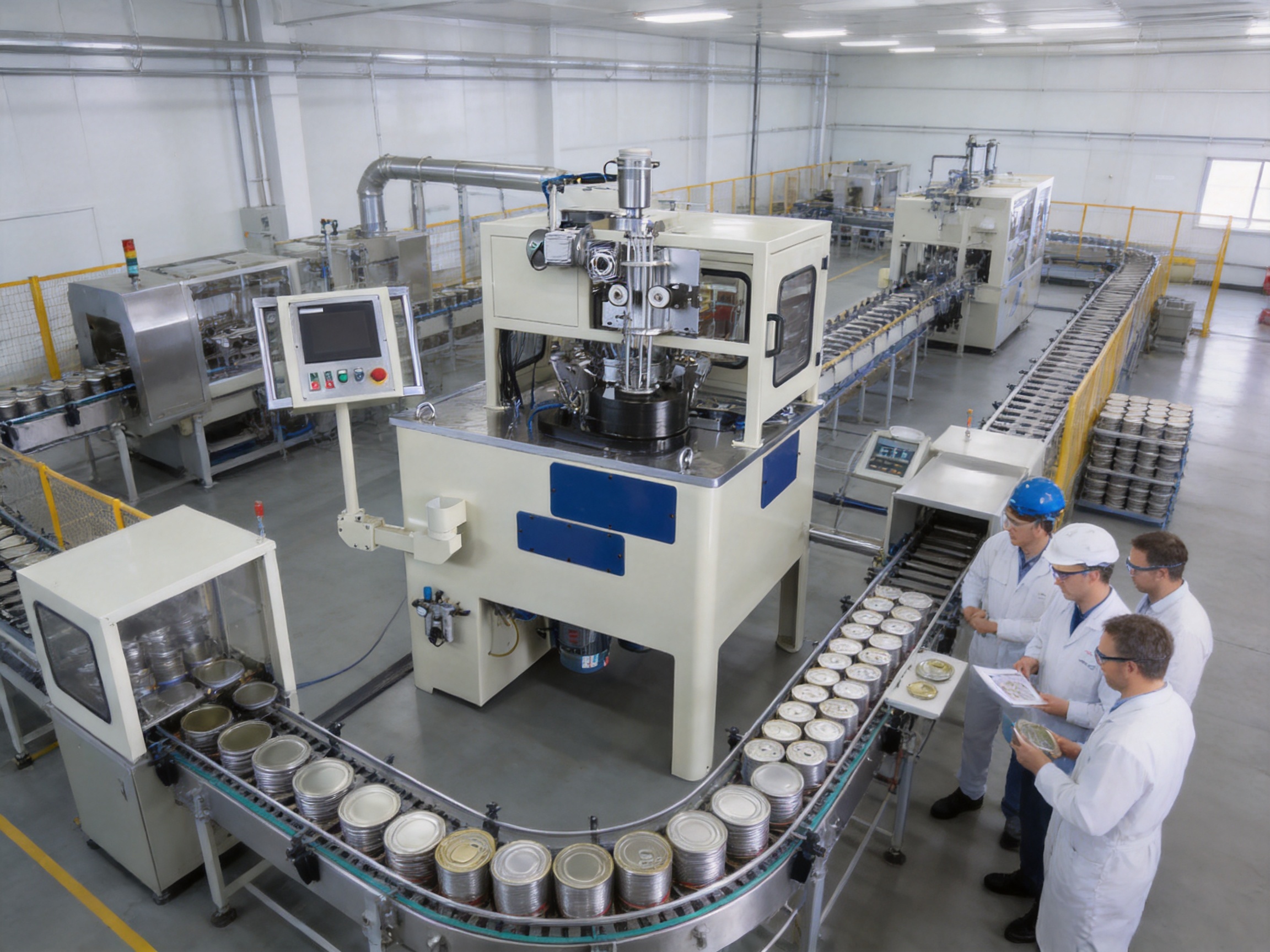
Can-making machinery is a specialized field in which equipment must combine speed, precision, durability, and process knowledge. A manufacturer that produces only general-purpose machinery may not fully understand the interaction between tinplate forming, lid geometry, sealing compound, EOE design, and high-speed transfer.
Zhejiang Golden Eagle Food Machinery Co., Ltd. has concentrated on can-making machinery and molds since its establishment. Its history includes the development and manufacture of equipment for several packaging sectors. This specialization supports a deeper understanding of production-line requirements than a supplier with no experience in metal packaging.
The company’s more than 350 employees include professional engineers and experienced design personnel. Its manufacturing facilities use CNC high-precision equipment and complete mechanical processing resources. The company’s history of producing more than 10,000 pieces of can and can-lid equipment also indicates substantial exposure to different customer requirements and operating environments.
International market experience is another useful strength. The company reports that its products have been exported to Europe, Asia, Africa, North America, South America, and Oceania. Equipment supplied to different regions must often satisfy varying electrical standards, documentation expectations, production habits, and service requirements.
Its products have been used in countries including Germany, Italy, the United Kingdom, Spain, Hungary, Russia, Australia, Jordan, Malaysia, the Philippines, Pakistan, Egypt, Algeria, Turkey, Mexico, Nigeria, and Iran. A broad export experience can help a manufacturer understand the importance of clear technical communication, packing, installation support, and remote service.
For a food packaging manufacturer, the GT3B51 can provide several practical benefits. Its high output can support large orders and reduce the risk that lid lining becomes a production bottleneck. Its automatic operation can reduce repetitive manual work. Its eight-head design supports continuous processing, while its three model options provide flexibility for different lid diameters.
The machine can also contribute to more consistent product quality when it is correctly installed, adjusted, and maintained. A stable lining pattern may reduce defects at the seaming stage and help the factory maintain more predictable packaging performance.
From a factory-management perspective, a dedicated rotary lining machine can make production responsibilities clearer. Operators can follow established setup and inspection procedures, maintenance personnel can use a defined preventive-maintenance program, and quality personnel can track lining results by batch, shift, product size, and compound lot.
For companies planning expansion, the machine can be incorporated into a broader production strategy. A customer may purchase one configuration for current products and later add another model for larger or different diameter ranges. This staged approach can be more practical than replacing a complete line every time the product portfolio changes.
Like any industrial machine, the GT3B51 must be selected and operated within its intended conditions. The stated output capacity is a reference range, not a guarantee for every material, lid shape, compound, or factory layout. Actual performance should be confirmed through technical evaluation and, where appropriate, sample testing.
The machine cannot compensate for poor-quality lids, unstable feeding, incorrectly prepared compound, damaged tooling, or inadequate downstream handling. The best results require coordination among the lid-forming process, lining process, drying or curing process, and final sealing operation.
Customers should also consider applicable food-contact requirements and local safety regulations. The selected compound must be approved for its intended use, and the production area should maintain appropriate hygiene, ventilation, guarding, and operator-protection measures.
A responsible purchasing decision should therefore include a review of technical specifications, production samples, acceptance standards, installation requirements, training scope, warranty conditions, spare parts, and service response procedures.
A quality-control program for lined lids should begin with incoming-material verification. Tinplate, lid shells, EOE components, and lining compound should be checked against approved specifications. Material variation can influence the machine’s feeding behavior and the final sealing result.
During production, operators should inspect the compound pattern at defined intervals. Inspection frequency may be increased during startup, changeover, compound replacement, or after maintenance. Products should be checked for incomplete lining, excessive compound, off-center application, contamination, scratches, deformation, or other visible defects.
Statistical records can help identify gradual changes. If the lining pattern becomes progressively thinner or moves from its specified position, the factory may need to inspect nozzle wear, compound supply, lid alignment, guides, or rotary timing.
Final validation should include tests relevant to the customer’s packaging process. These may include seaming trials, seal integrity checks, pressure or vacuum testing, compound adhesion evaluation, and storage simulation. The appropriate tests depend on the product and the applicable technical standards.
When the lining machine is part of a complete production line, quality results should be reviewed together with the performance of the lid press, feeder, seamer, dryer, and inspection equipment. This approach helps prevent one process from being blamed for a defect caused elsewhere.
Professional installation and commissioning are especially important for high-speed rotary equipment. The machine must be leveled, connected, synchronized with surrounding equipment, and adjusted for the customer’s lid dimensions and compound. Small installation errors can become more noticeable as production speed increases.
Commissioning should include no-load checks, low-speed operation, gradual speed increases, application-pattern verification, product sampling, and coordination with upstream and downstream machines. Operators should be trained to recognize the difference between a material problem, a feeding problem, a nozzle problem, and a mechanical alignment problem.
Training should cover normal startup, product changeover, safe shutdown, emergency procedures, cleaning, lubrication, inspection, and basic troubleshooting. Maintenance personnel should receive additional instruction on component replacement, adjustment points, spare-parts identification, and preventive-maintenance records.
The manufacturer offers installation, commissioning, technical guidance, and operation training. These services can be especially valuable for overseas customers who may be installing the machine in a new factory or adding it to an existing automated line.
The GT3B51 high-speed rotary lining machine is designed to provide automatic, high-capacity lining for general food can lids and EOE lids. Its principal strengths include an output range of up to 1,200 pieces per minute, an eight-head configuration, support for multiple lid diameter ranges, a compact industrial footprint, and compatibility with automated can-making production.
Compared with manual, single-head, or poorly matched lining solutions, the machine offers a more productive and structured approach to high-volume lid manufacture. Its value is increased when it is integrated with suitable feeding, forming, inspection, drying, and downstream packaging equipment.
The machine is supported by the manufacturing experience of Zhejiang Golden Eagle Food Machinery Co., Ltd., a specialist can-making machinery and mold producer established in 1978. The company combines professional engineering personnel, CNC precision machining, mechanical manufacturing resources, ISO 9001 and ISO 14001 management systems, extensive equipment output, international export experience, and after-sales technical support.
For manufacturers evaluating a rotary lining solution, the most important steps are to confirm the lid diameter, required production capacity, lining compound, EOE or general-lid design, factory layout, automation level, and service requirements. With the correct model and disciplined process management, the GT3B51 can support efficient, consistent, and scalable food can lid production.
The machine applies lining compound to general lids and easy-open ends used in food packaging. The compound supports sealing performance when the lid is later attached to the can body.
Yes. The GT3B51 is designed for automatic operation, reducing manual handling and supporting continuous production when connected to appropriate feeding and transfer equipment.
The GT3B51-L-3 has a listed output capacity of approximately 800 to 1,200 pieces per minute. Actual output depends on lid size, compound properties, material quality, setup, and line conditions.
Each of the three listed configurations has eight lining heads or nozzles.
The GT3B51-L-3 is designed for lid diameters from 52 to 73 millimeters and provides the highest listed output range among the three configurations.
The GT3B51-L-5 is designed for lid diameters from 83 to 153 millimeters, with a listed output capacity of approximately 350 to 600 pieces per minute.
It is designed for lining general lids and EOE lids. The exact compatibility should be confirmed according to the lid structure, dimensions, compound, and customer production requirements.
The listed machine power for all three configurations is 5.6 kilowatts.
The listed dimensions are approximately 1,100 by 1,250 by 2,000 millimeters, and the listed weight is approximately 2,500 kilograms for each model.
The main considerations are lid diameter, required output, lid design, lining compound, upstream supply, downstream handling, factory layout, automation requirements, and future product plans.
The company provides after-sales services including installation, commissioning, technical guidance, operation training, and spare-parts supply.
Rotary lining equipment must coordinate precision movement, compound application, lid geometry, feeding, and high-speed operation. A manufacturer specializing in can-making machinery and molds is more familiar with these packaging-specific requirements.
The company has been certified to ISO 9001 quality management and ISO 14001 environmental management systems.
Yes. It can be planned as part of a broader food can, beverage can, can lid, or other metal packaging production line, subject to suitable upstream and downstream integration.
No. The stated capacity is a reference range. Actual performance may vary according to product dimensions, lining compound, feeding stability, machine setup, operator practices, and the rest of the production line.
1. Product technical information for the GT3B51 high-speed rotary lining machine, including model capacities, lid diameter ranges, machine power, dimensions, and weight.
2. General engineering principles for lining and sealing compound application in metal food can and easy-open-end production.
3. ISO 9001, Quality Management Systems — Requirements.
4. ISO 14001, Environmental Management Systems — Requirements with Guidance for Use.
5. Industrial practices for tinplate can manufacturing, lid forming, EOE production, seaming, inspection, and packaging-line integration.
6. Manufacturer information concerning can-making machinery, can-making molds, precision machining, international supply, installation, commissioning, training, and after-sales service.
Related Products

Founded in 1978, the company is one of the largest can-making machinery well-known companies at home and abroad.
Product Categories
Contact Information
Zhongshatou Shenjiamen Zhoushan Zhejiang China
+86-580-3056646

 English
 中文简体
中文简体
 русский
 عربى
عربى
 Español