2026-08-28
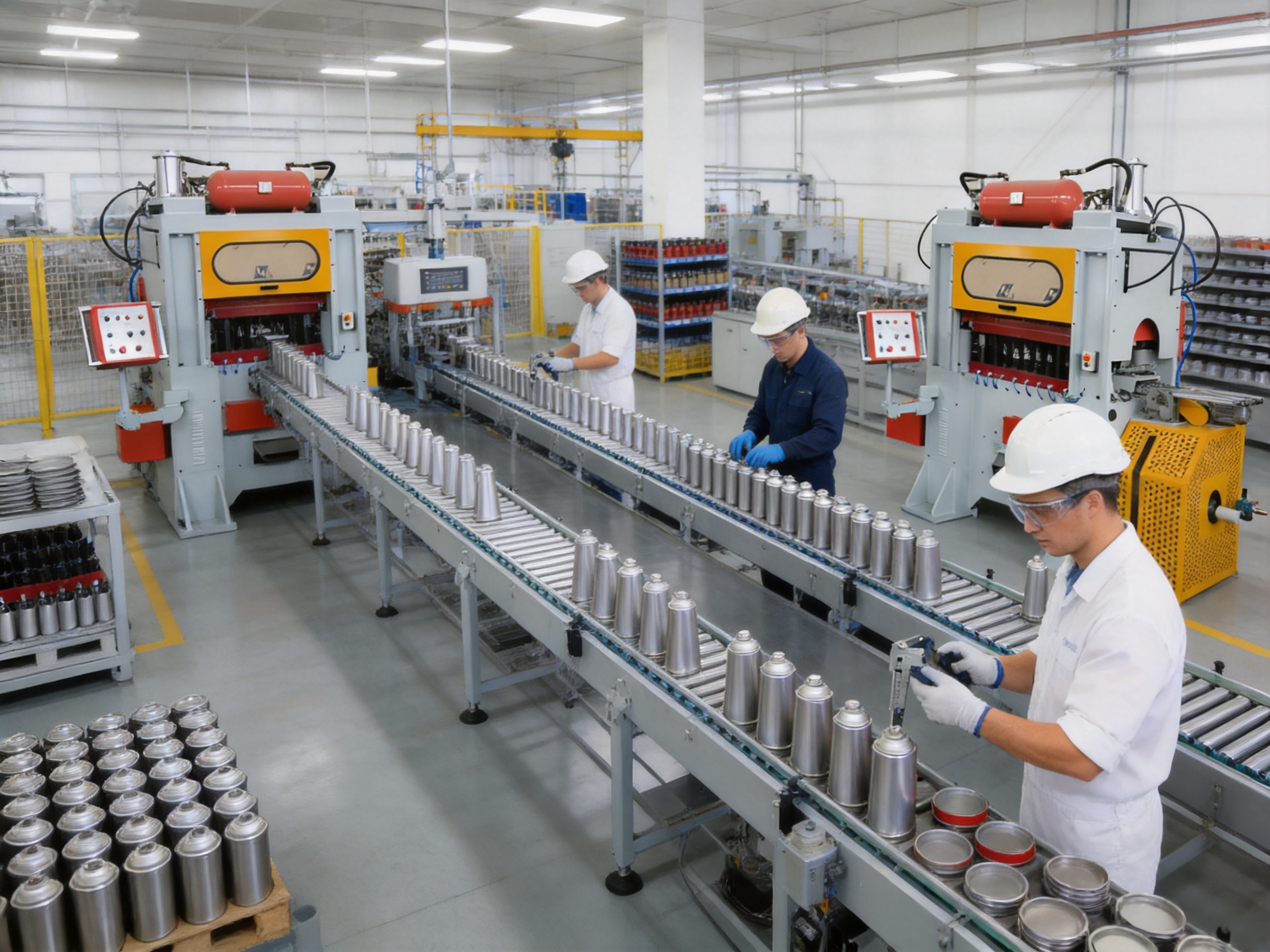
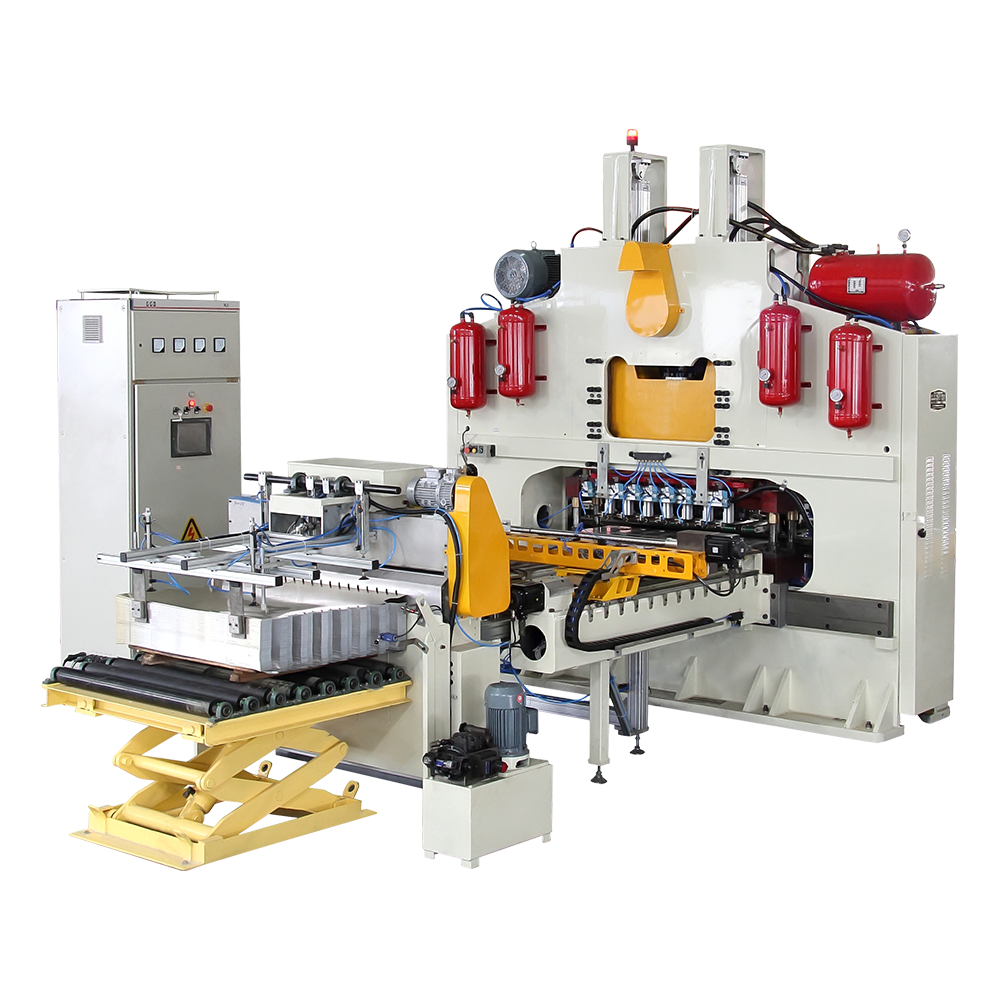
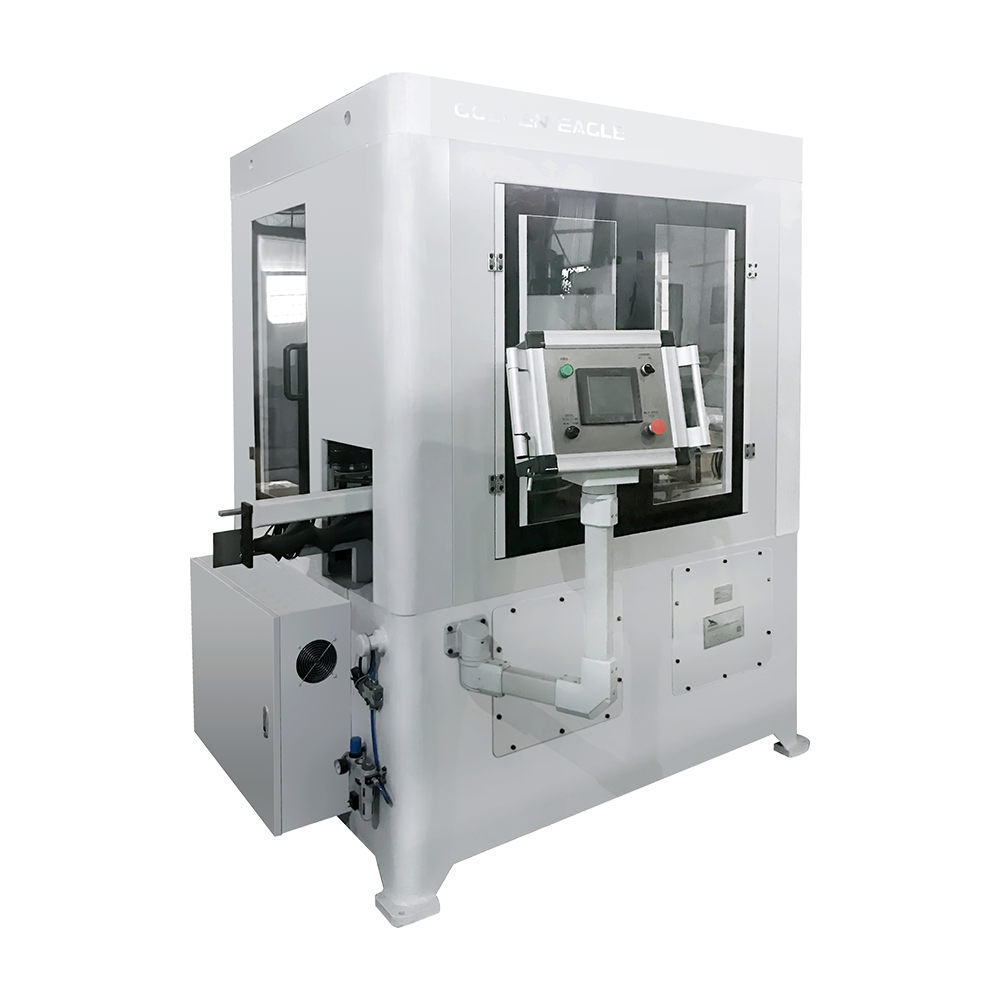
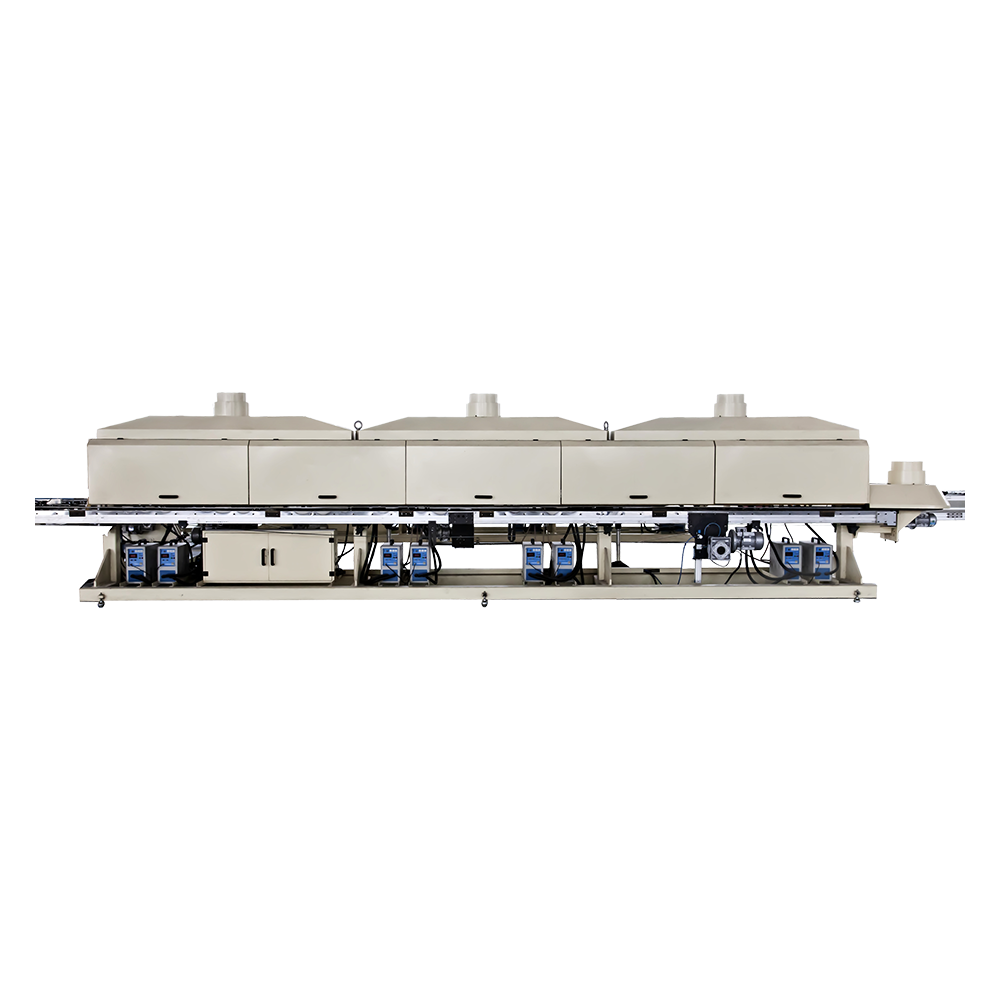
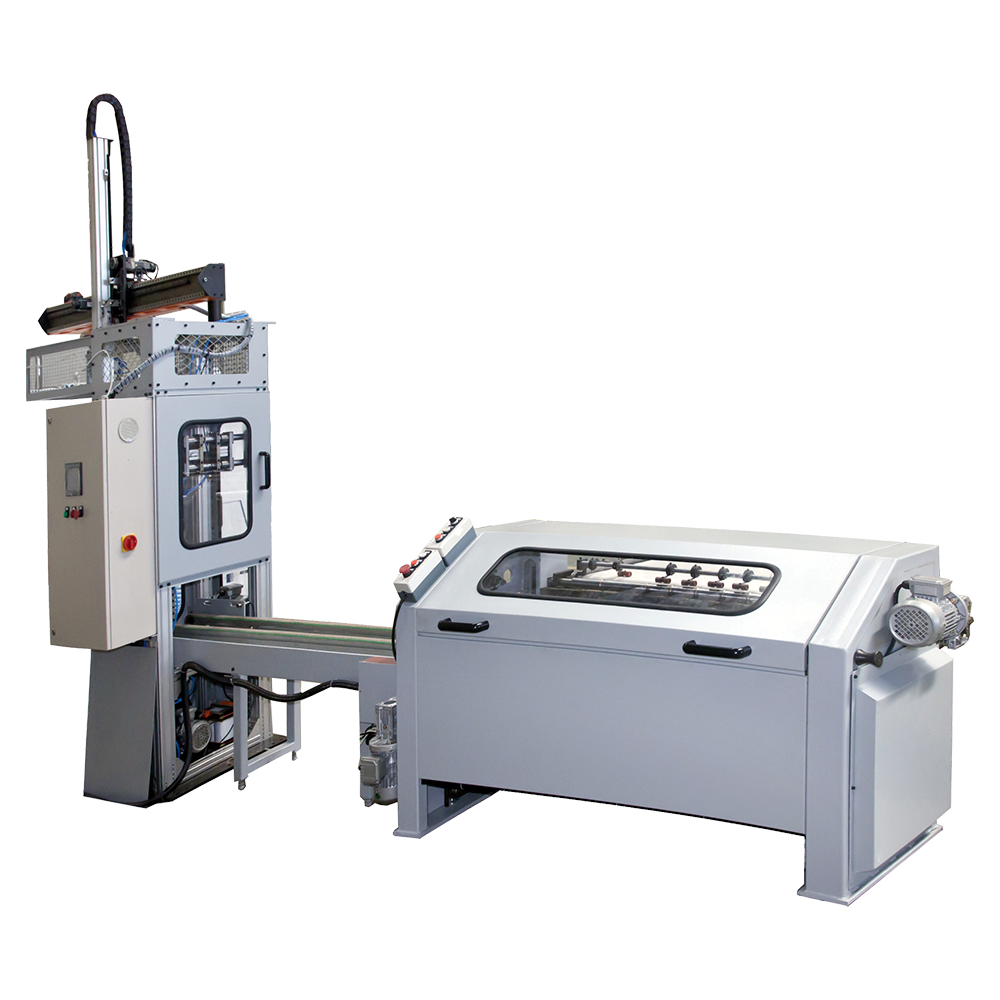
The 2-lane D109-D211 Aerosol Cone Lid Line is an automatic production solution designed for the high-speed manufacture of aerosol can cones, domes, and top covers. It is developed for manufacturers that need dependable output, repeatable forming quality, efficient material utilization, and a production system suitable for continuous industrial operation.
Designed for aerosol containers with diameters from 45 to 65 millimeters, the line combines two production lanes with a rated output of up to 240 ends per minute. Its configuration is suitable for demanding aerosol packaging applications in personal care, household products, industrial products, automotive products, coatings, and other pressurized packaging sectors.
The equipment is engineered around a 100-millimeter stroke, a maximum operating rate of 120 strokes per minute, and a die configuration of six to nine dies. With a die gap of 110 millimeters, a maximum closed height of 400 millimeters, and a 22-kilowatt power system, the line provides a balanced combination of speed, forming capability, structural strength, and production flexibility.
Manufactured by Zhejiang Golden Eagle Food Machinery Co., Ltd., the line benefits from decades of experience in can-making machinery, can-end equipment, aerosol production equipment, and precision molds. The manufacturer’s capabilities include product design, mechanical processing, mold manufacturing, assembly, commissioning, technical service, and complete production-line support.
Aerosol cans require accurately formed top components to create a secure, pressure-resistant package. The cone or dome must be produced with consistent geometry, stable material thickness, dependable dimensional accuracy, and a suitable surface condition for subsequent operations such as valve-hole forming, curling, seaming, coating, printing, or assembly.
The 2-lane D109-D211 Aerosol Cone Lid Line is intended to manufacture these components automatically from tinplate or other suitable metal sheet. Its production arrangement allows material and formed parts to move through an organized sequence of operations while maintaining a high level of repeatability.
In practical production, the line can be integrated into an aerosol can manufacturing plant as part of a larger process. Depending on the final product design, the formed cone or lid may proceed to additional operations, including trimming, beading, curling, piercing, embossing, valve-seat preparation, inspection, and packaging. The line therefore serves as an important component in a complete aerosol canister production system.
The equipment is especially suitable for factories that need to produce large quantities of aerosol ends while maintaining stable product quality. Two lanes allow the manufacturer to increase output without relying solely on a significantly higher speed in a single lane. This arrangement can help distribute production activity, reduce excessive loading on individual forming stations, and provide a practical balance between capacity and operating stability.
| Item | Specification |
| Operation | Automatic |
| Applicable can diameter | 45–65 mm |
| Stroke | 100 mm |
| Maximum stroke rate | 120 strokes per minute |
| Production lanes | 2 lanes |
| Output capacity | 240 ends per minute |
| Die quantity | 6–9 dies |
| Die gap | 110 mm |
| Maximum closed height | 400 mm |
| Material thickness | 0.17–0.40 mm |
| Material hardness | T3–T4 |
| Main power | 22 kW |
These specifications indicate that the line is designed for a wide range of common aerosol can dimensions and material conditions. The supported diameter range of 45 to 65 millimeters gives users flexibility when producing different container formats. The material thickness range of 0.17 to 0.40 millimeters also allows the system to accommodate multiple tinplate requirements, subject to the exact product design, tooling, and process conditions.
The T3–T4 hardness range is relevant to forming performance. Metal hardness influences how the sheet responds during drawing, pressing, shaping, curling, and other forming operations. A machine designed for this range can support the material specifications commonly selected for aerosol packaging, while appropriate tooling and process adjustment remain essential for achieving the desired result.
One of the most important advantages of the D109-D211 line is its two-lane production configuration. At a maximum rate of 120 strokes per minute, two lanes provide a rated output of 240 ends per minute. This gives the line a substantial production capability while maintaining a moderate stroke rate for each individual lane.
Compared with a single-lane system operating at the same stroke rate, a two-lane arrangement can nearly double theoretical output. This is valuable for aerosol manufacturers that need to fulfill large orders, maintain a continuous supply of components for downstream assembly, or reduce the number of forming machines required on the factory floor.
The two-lane structure may also provide operational advantages. Production loads can be divided across two parallel paths, making it easier to manage the forming process and reduce the pressure associated with extreme single-lane speeds. When supported by correctly adjusted dies, feeders, sensors, and transfer components, the configuration can help maintain smooth movement and consistent cycle timing.
For manufacturers comparing production-line alternatives, rated capacity should always be considered together with actual product quality, changeover requirements, scrap levels, maintenance needs, and operator workload. A high nominal speed is not sufficient if it causes unstable feeding, frequent stoppages, excessive tooling wear, or inconsistent dimensions. The D109-D211 design emphasizes a coordinated production system in which capacity and reliability are considered together.
Automatic operation reduces the need for constant manual intervention during normal production. Once the line has been correctly installed, adjusted, and supplied with suitable material, the operator can supervise feeding, forming, transfer, inspection, and output collection rather than manually handling every individual piece.
Automation provides several benefits in aerosol component production. First, it helps maintain consistent timing between stations. Second, it reduces the risk of variation caused by manual positioning. Third, it can improve workplace efficiency by allowing one operator or a small operating team to supervise a more productive line. Fourth, automatic movement can reduce the likelihood of handling marks, deformation, and contamination caused by unnecessary manual contact.
The effectiveness of an automatic line depends on the coordination of several subsystems. Material must enter the forming area at the correct position and timing. Dies must close and open accurately. Formed components must be transferred without distortion. Sensors and control elements must respond to abnormal conditions. The mechanical structure must remain stable under repeated operation. The D109-D211 line is designed as an integrated system rather than as a collection of unrelated machines.
For production managers, this coordination is important because the real value of automation lies in repeatable operation. A machine that can run quickly but requires frequent manual correction may not provide the expected economic benefit. An appropriately configured automatic line can improve the relationship between labor cost, output volume, and product consistency.
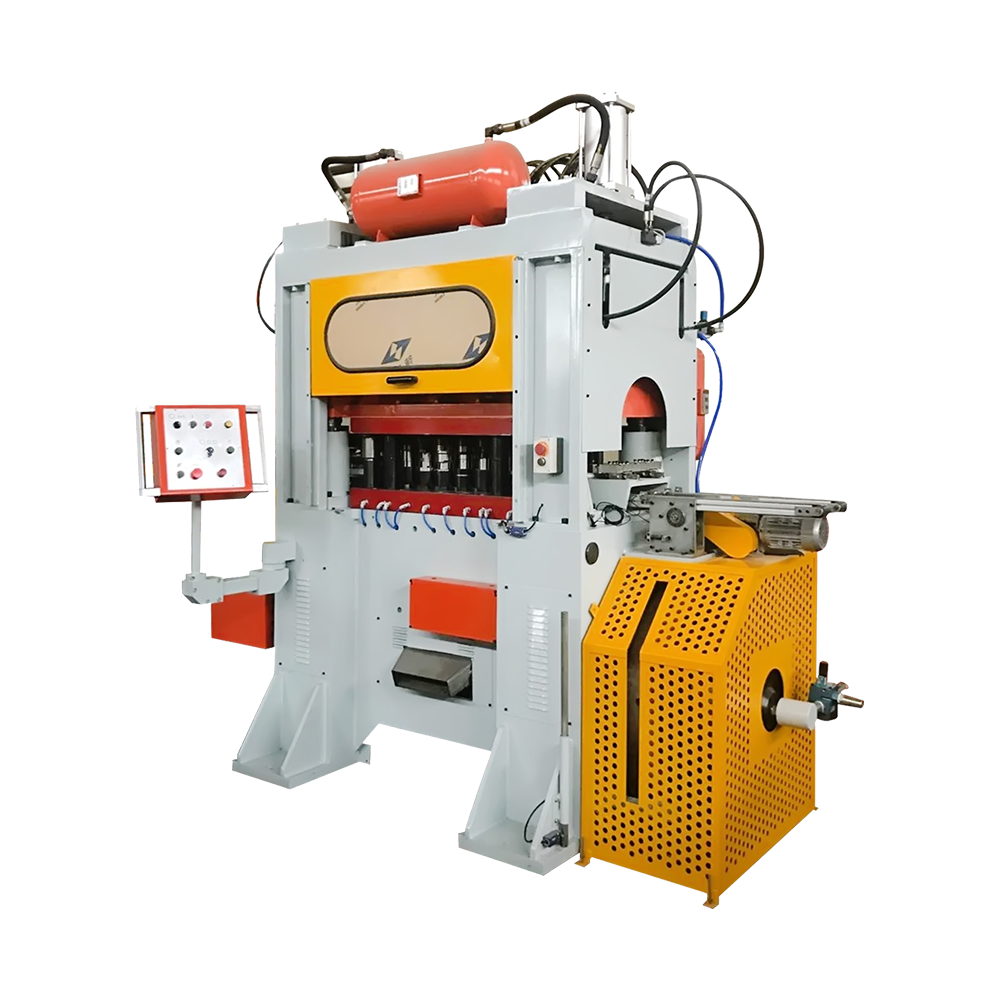
2-lanes D109-D211 Aerosol Cone Lid Line
Aerosol cones and top lids are precision metal components. Their shape must be sufficiently accurate to support later assembly and sealing operations. Even small variations in height, angle, diameter, edge condition, or concentricity can affect the fit of a valve, the quality of a seam, the appearance of the finished can, or the pressure performance of the package.
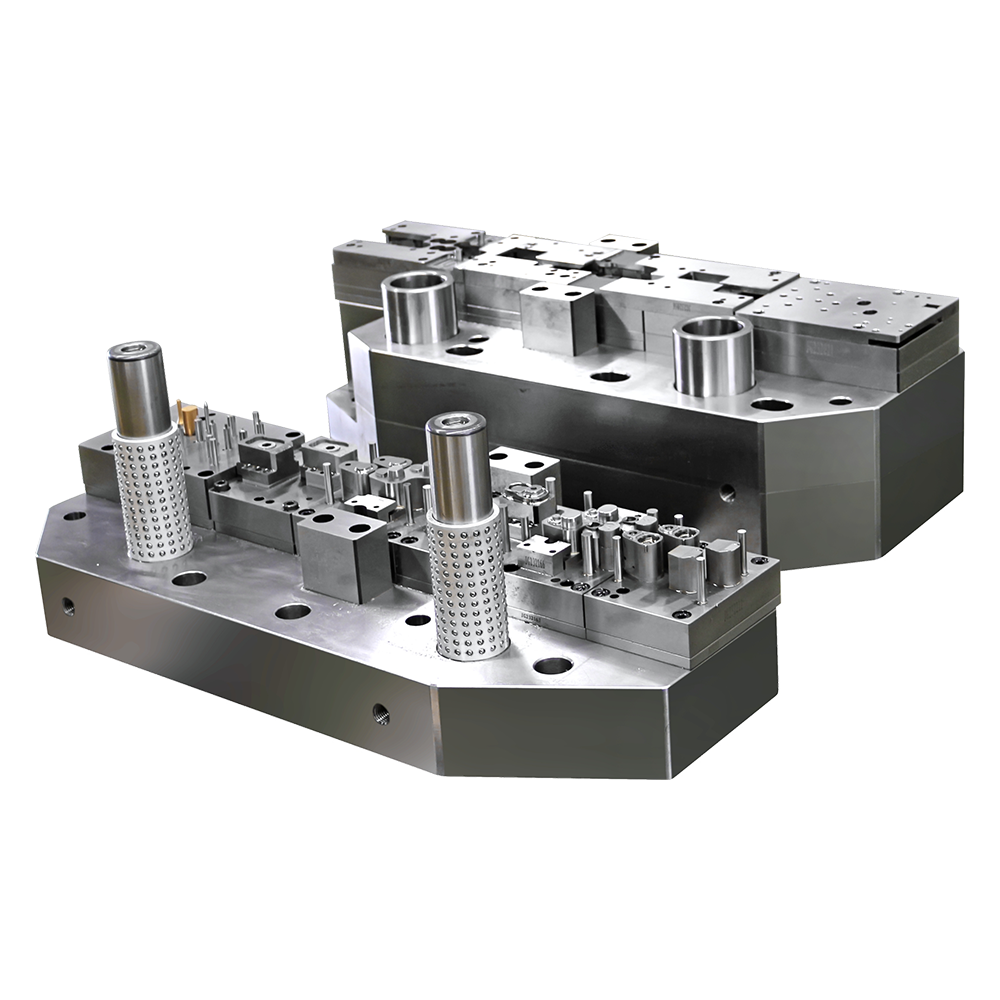
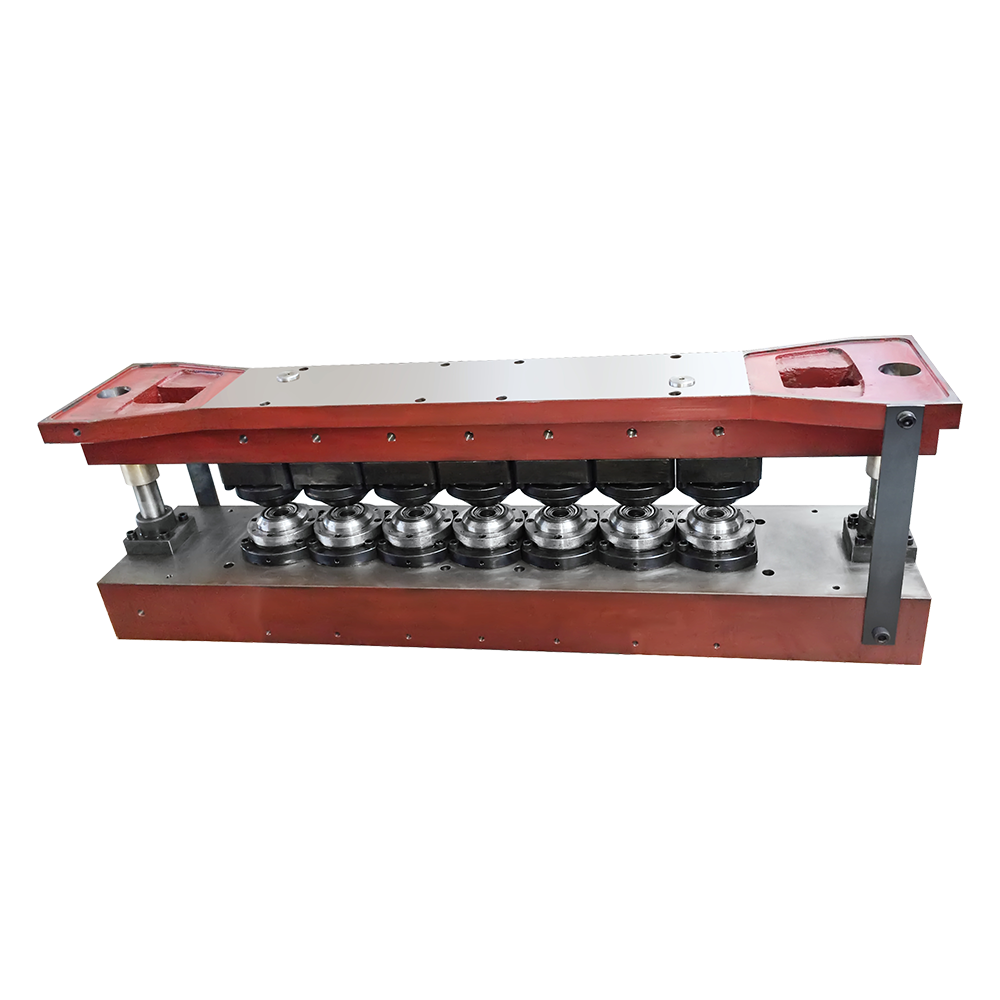
The D109-D211 line uses a die-based forming arrangement with six to nine dies. The number of dies can be selected according to the product design and process requirements. Multiple dies allow the forming sequence to be distributed across suitable operations instead of forcing all deformation into one stage. This can help control material flow and reduce the risk of wrinkling, cracking, tearing, or excessive work hardening.
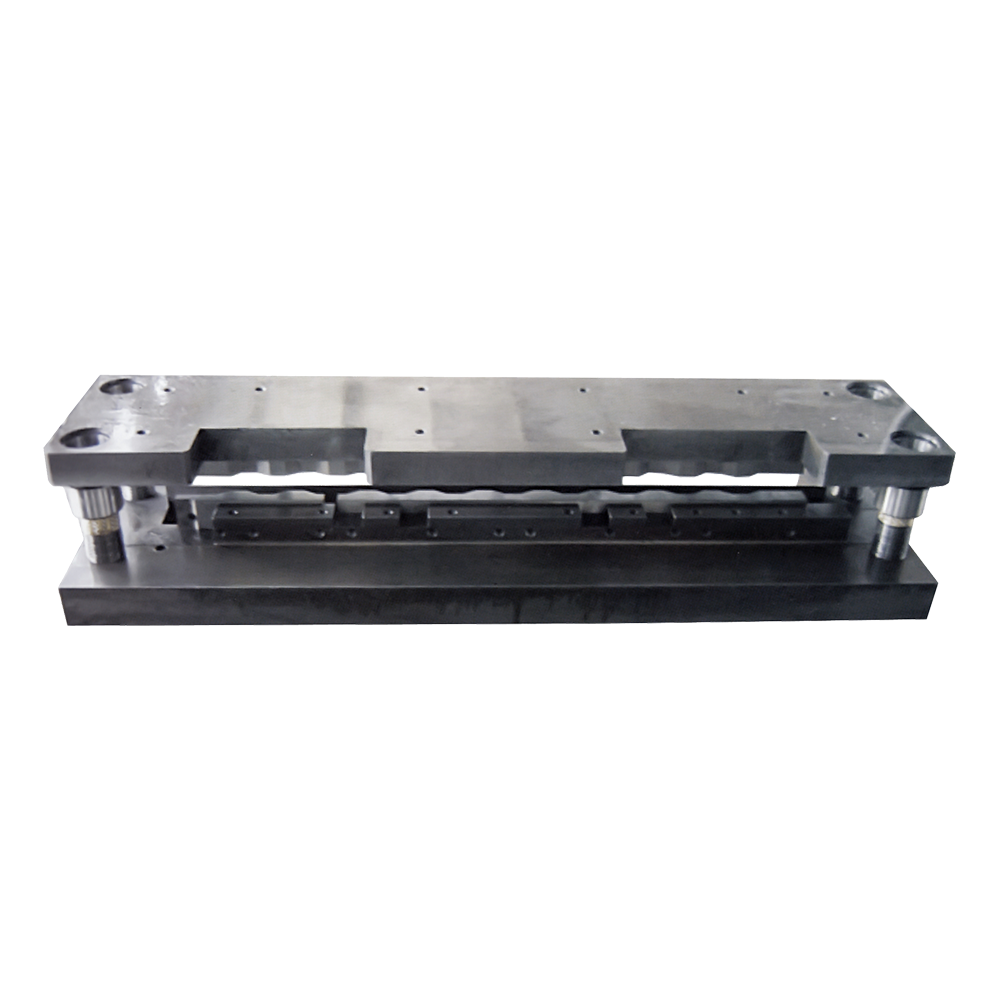
The 110-millimeter die gap and maximum closed height of 400 millimeters provide important working dimensions for tooling design and machine setup. These dimensions must be considered when selecting dies, guides, punches, forming rings, transfer components, and auxiliary equipment. Correct tooling design is essential because the machine’s performance depends not only on its frame and drive system but also on the precision of the dies used for each component.
The 100-millimeter stroke provides a defined forming movement that can be matched with the required depth and shape of the aerosol component. A controlled stroke helps create stable forming conditions and allows the tool designer to establish appropriate clearance, forming radii, material flow, and release movement.
Because different aerosol products may have different top profiles, neck arrangements, valve openings, beads, or decorative details, tooling must be manufactured and adjusted for the intended component. The manufacturer’s experience in both can-making machines and molds is therefore a significant advantage. Machine and mold development can be considered together, helping users obtain a more compatible production system.
The line is specified for iron thicknesses from 0.17 to 0.40 millimeters and material hardness grades from T3 to T4. This range covers many materials used for aerosol packaging components, although final suitability must be confirmed through product drawings, material certificates, forming trials, and tooling evaluation.
Material flexibility is important because can manufacturers may use different grades or thicknesses depending on pressure requirements, package size, corrosion protection, customer specifications, weight reduction targets, and local material availability. A production line with a suitable operating range can support a broader product portfolio and reduce the need to dedicate a separate machine to every material specification.
However, flexible material compatibility does not mean that every material can be processed with identical settings. Operators may need to adjust feed timing, forming pressure, die clearance, lubrication, speed, and inspection limits. A professional installation and commissioning process helps establish practical parameters for each product and material combination.
The T3–T4 hardness specification also supports the production of components that require controlled deformation. Softer or harder materials may respond differently during pressing and drawing. The correct relationship between material hardness, thickness, die geometry, and operating speed is necessary to achieve a stable production result.
By combining a suitable forming range with interchangeable or product-specific tooling, the line can be used as a platform for multiple aerosol cone and lid designs. This can be particularly valuable for contract manufacturers and packaging companies that serve customers in several market segments.
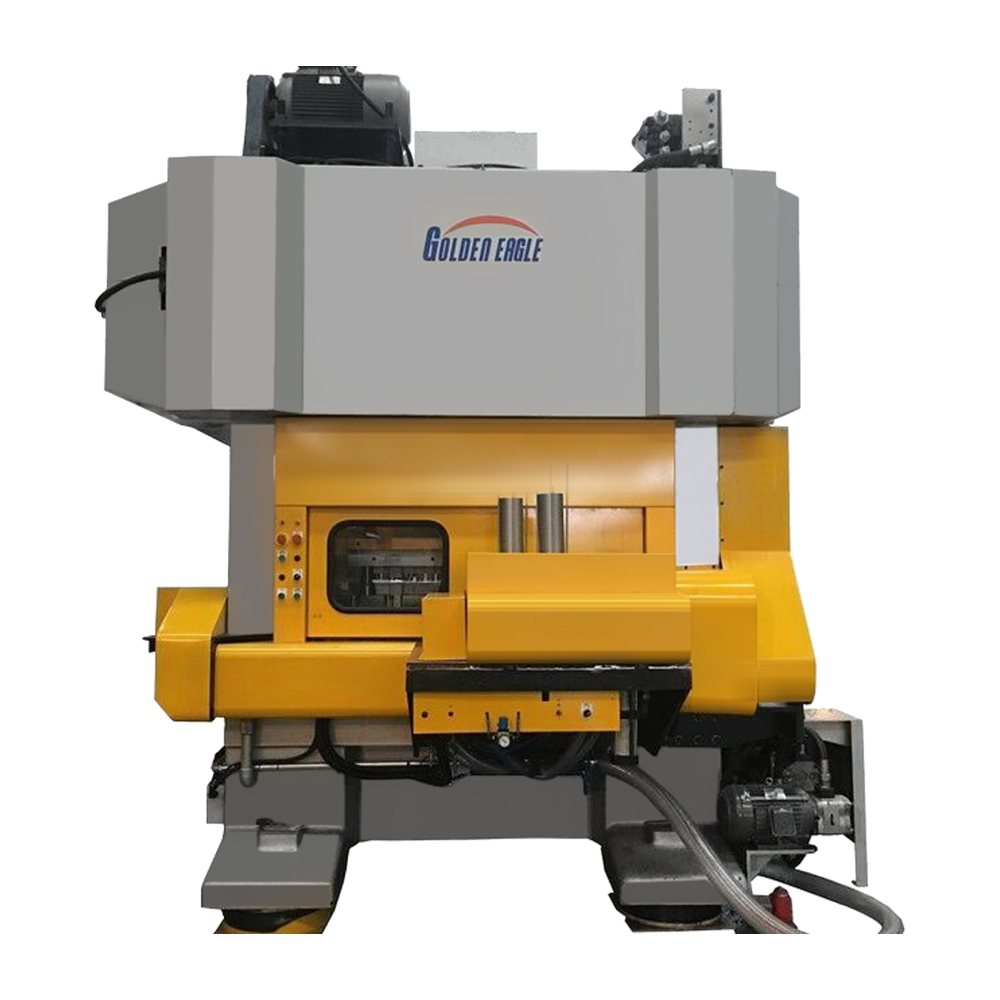
High-speed forming equipment must maintain structural stability throughout thousands or millions of operating cycles. The machine frame, drive components, guides, shafts, bearings, connecting elements, and die supports must work together under repeated dynamic loads.
A rigid machine structure helps limit unwanted vibration and movement. Excessive vibration can affect dimensional accuracy, accelerate wear, create noise, reduce tool life, and cause transfer problems. Stable mechanical support also helps the dies maintain their relative position during the forming cycle.
The D109-D211 line is built for continuous automatic production, so the mechanical design must address both performance and durability. Production equipment in this category is expected to operate for extended periods, often in multiple shifts. Its components therefore require appropriate strength, alignment, lubrication, protection, and access for maintenance.
The 22-kilowatt power system provides the main drive capacity required for the machine’s operating cycle. Actual energy use will vary according to speed, material, tooling, production conditions, auxiliary equipment, and operating schedule. Even so, the stated motor rating gives users an important basis for factory planning, electrical design, and production-line integration.
Mechanical stability is also connected to product quality. When the forming movement remains controlled, the machine is better able to maintain consistent component geometry. This can reduce dimensional variation and support more reliable downstream operations such as trimming, curling, valve assembly, and seaming.
The quality of a can-making machine depends heavily on the accuracy of its manufactured parts. A machine may have a strong overall design, but poorly machined dies, shafts, guides, or mounting surfaces can prevent it from achieving the required production result. Precision processing is therefore a central part of the manufacturer’s strength.
Zhejiang Golden Eagle Food Machinery Co., Ltd. uses CNC high-precision machining equipment together with complete mechanical processing equipment. CNC machining supports repeatable production of complex components and helps control important dimensions, profiles, hole positions, and surface conditions. It also provides a practical foundation for producing replacement parts and product-specific tooling with consistent specifications.
Mechanical processing is followed by inspection, fitting, assembly, adjustment, and testing. Each stage contributes to final machine performance. Accurate parts must be assembled with correct alignment. Moving mechanisms must be checked for smooth operation. Tooling must be installed and adjusted according to production requirements. Electrical and control systems must be tested before delivery or commissioning.
Quality control should include checks of raw materials, machined parts, assemblies, operating performance, safety functions, and output samples. For aerosol component equipment, sample products can be evaluated for dimensions, shape, edge quality, surface condition, and compatibility with the customer’s downstream process.
The company’s ISO9001 quality management system supports a structured approach to manufacturing and quality control. While certification alone does not replace product testing, a documented quality system can help standardize procedures, define responsibilities, manage records, and encourage continual improvement.
The manufacturer was established in 1978 and has developed more than 46 years of experience in can-making machinery and can-making molds. This long operating history is relevant to the D109-D211 line because aerosol cone production requires knowledge of both mechanical equipment and metal-forming tooling.
According to the supplied company information, the manufacturer has more than 350 trained personnel, including experienced design and development engineers. A multidisciplinary team can support the design of machine frames, transmission systems, forming mechanisms, feeders, molds, control systems, and auxiliary equipment.
The company has produced more than 10,000 pieces of can and can-lid equipment. This installed production experience provides opportunities to learn from different factory environments, materials, product designs, and operating conditions. Field experience can help identify practical maintenance requirements and improve equipment details that may not be apparent from theoretical design alone.
The company also manufactures complete product categories, including food can production lines, beverage can production lines, can-lid production lines, chemical tank production lines, aerosol canister production lines, two-piece can production lines, and pop-can production lines. This broad product scope gives the manufacturer a wider understanding of metal packaging processes and line integration.
Experience across related product categories can be especially useful when a customer wants more than one machine. A supplier capable of supporting aerosol cones, aerosol bodies, lids, and related can-making processes can help coordinate production-line layouts, material handling, tooling, spare parts, and technical training.
When comparing aerosol cone and lid equipment, buyers often focus on rated speed. Speed is important, but it should be evaluated together with automation, tooling support, structural quality, service capability, and the supplier’s manufacturing resources.
The two-lane arrangement is one clear advantage over a basic single-lane line with a similar stroke rate. It increases nominal output while keeping each lane within a controlled operating range. For manufacturers with high demand, this can improve production efficiency and reduce the number of separate machines needed.
The automatic operating mode offers another advantage over manually assisted or semi-automatic equipment. Automated feeding and forming can improve repeatability, reduce handling labor, and support more consistent cycle timing. It also makes the machine more suitable for organized, continuous production environments.
The combination of machine manufacturing and mold production is an additional strength. Some equipment suppliers provide a press but rely on external sources for all tooling. A supplier with internal mold-making experience can better coordinate die geometry, machine capacity, die gap, stroke, and product requirements. This does not eliminate the need for customer approval and product trials, but it can simplify technical communication.
The stated material range provides flexibility compared with equipment designed around only one narrow sheet specification. Manufacturers can potentially use different tinplate thicknesses and hardness conditions for different aerosol products, subject to engineering confirmation.
Precision CNC processing and a documented quality management system can also distinguish the line from low-cost equipment manufactured without consistent process control. Stable machining and assembly practices contribute to reliable alignment, repeatable tooling installation, and improved long-term maintainability.
Finally, the manufacturer provides installation, commissioning, technical guidance, operation training, and spare-parts support. These services are important because the performance of a high-speed production line depends on correct installation and adjustment. A machine that is technically capable but poorly commissioned may not achieve its expected capacity.
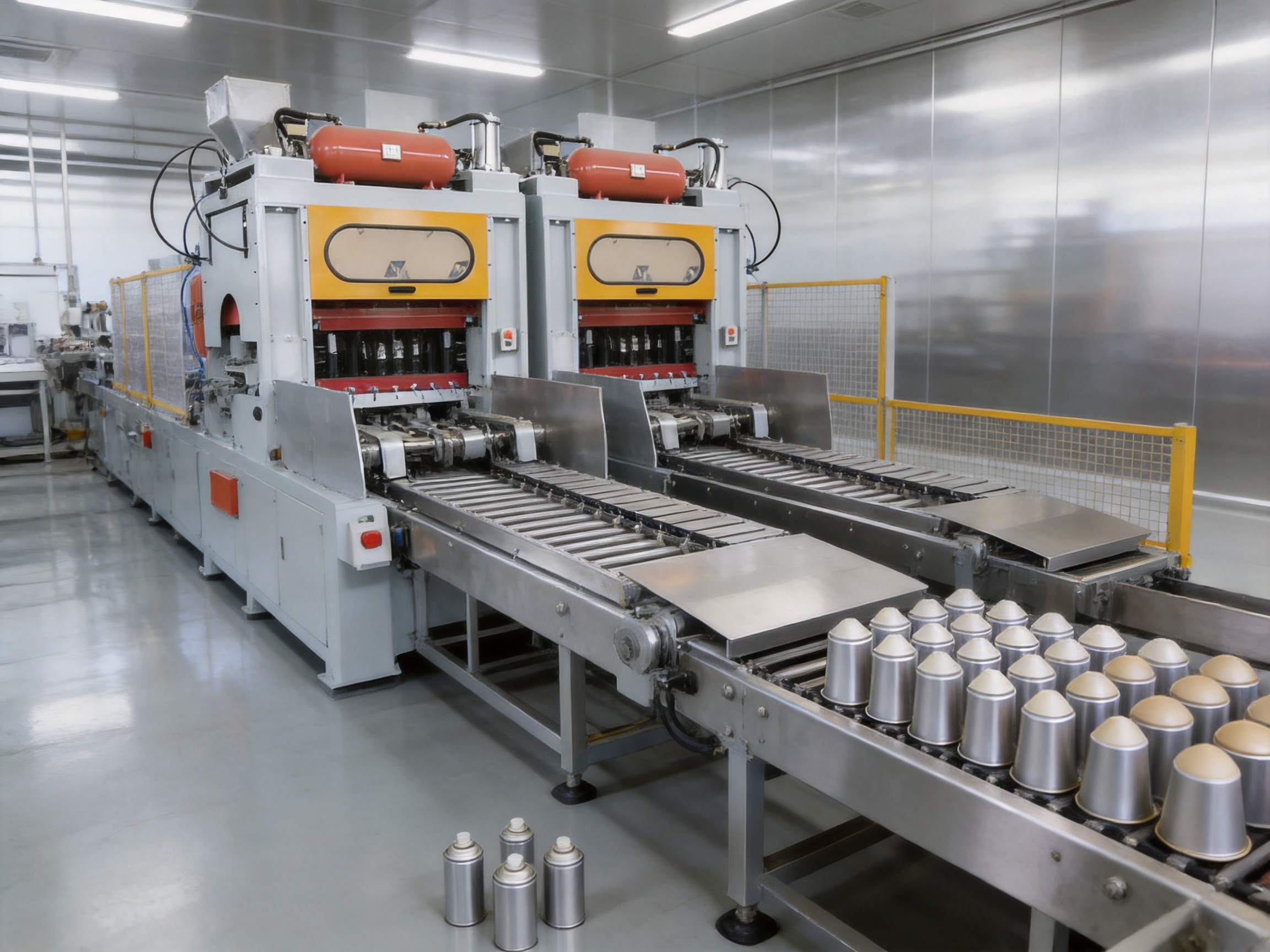
A typical production workflow begins with the preparation of suitable metal sheet or coil material. The material must meet the specified thickness, hardness, surface, and dimensional requirements. It may then be cut, fed, positioned, and transferred into the forming area according to the selected production arrangement.
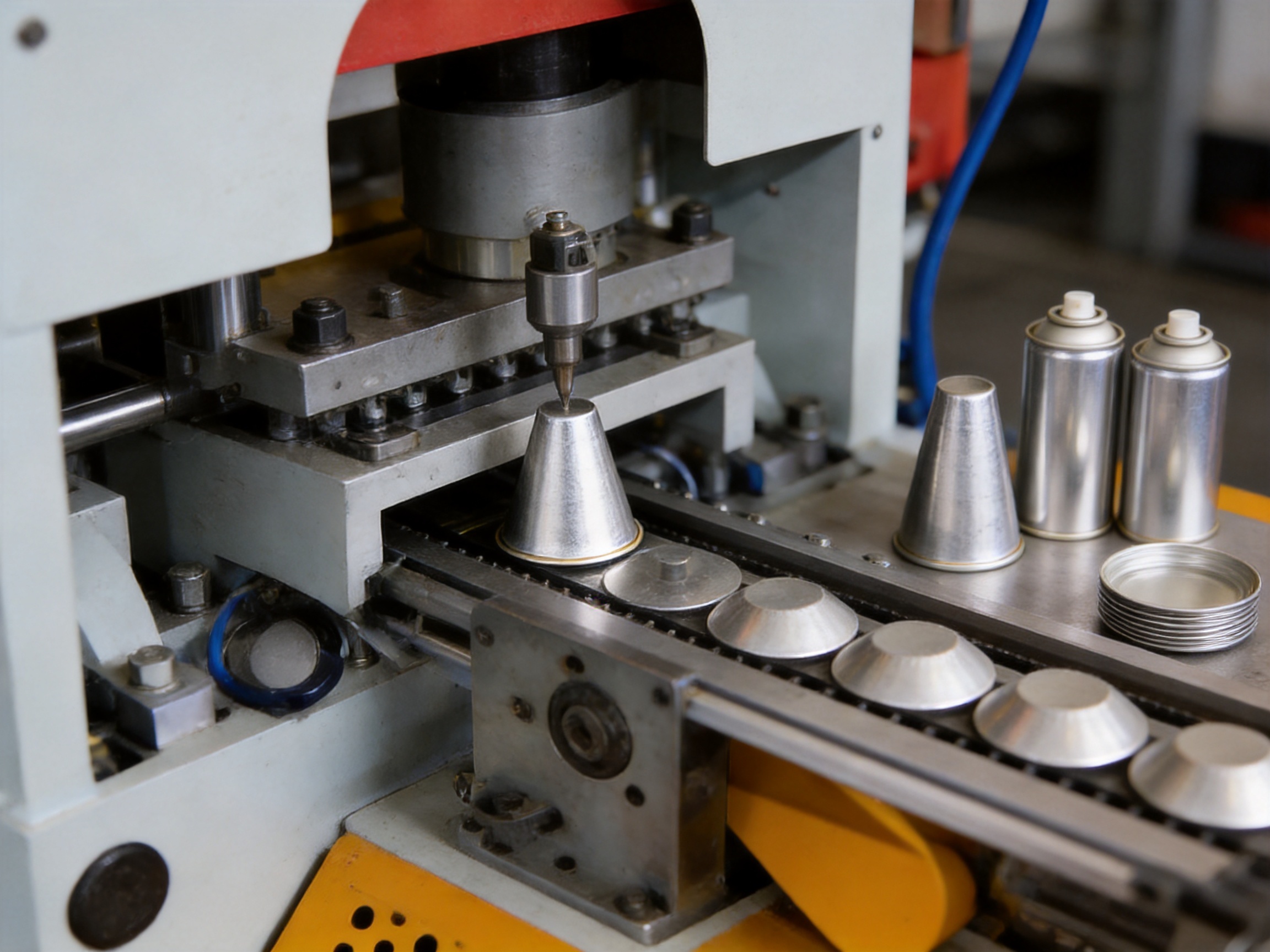
In the forming section, the blank passes through a sequence of die operations. The exact sequence depends on the final aerosol component design. Operations may include drawing, pressing, shaping, contour forming, edge preparation, and other product-specific steps. Six to nine dies can be arranged to distribute these operations in a controlled manner.
After forming, the components are transferred toward collection or subsequent processing. Depending on the complete line configuration, downstream operations may include trimming, curling, beading, piercing, embossing, coating, inspection, and packaging. The D109-D211 line can therefore be installed as a dedicated cone and lid system or coordinated with other aerosol can-making machines.
Integration planning should consider material flow, operator access, floor space, electrical supply, ventilation, noise control, maintenance clearance, and the location of downstream equipment. The maximum closed height of 400 millimeters and the machine’s working dimensions should be included in the factory layout. Adequate space around the line is needed for die changes, cleaning, lubrication, troubleshooting, and safe access.
Production planning should also consider the relationship between the 240-ends-per-minute capacity and the speed of downstream operations. If the cone line produces more components than the next process can accept, accumulation or buffering may be required. If downstream equipment is faster, the cone line may become a bottleneck. A complete production assessment helps ensure that the line capacity is properly matched to the full aerosol canister manufacturing system.
Quality inspection is essential for aerosol cones and lids because these components contribute to the safety, appearance, and functional performance of the finished package. Inspection criteria should be established before production begins and should be based on technical drawings, customer requirements, applicable packaging standards, and downstream assembly conditions.
Dimensional inspection may include outer diameter, height, wall profile, opening dimensions, flange dimensions, curl dimensions, and concentricity. The exact measurements depend on the product design. Consistent dimensions help ensure that formed parts fit properly into subsequent equipment.
Visual inspection can identify wrinkles, cracks, dents, scratches, incomplete forming, material tearing, excessive burrs, and surface contamination. These defects may be caused by material quality, improper die adjustment, incorrect lubrication, worn tooling, feeding errors, or excessive operating speed.
Functional inspection may include test assembly with valves, bodies, or other components. For aerosol packaging, the formed component may eventually be part of a pressure-containing container, so its compatibility with seaming and sealing operations must be confirmed. The forming machine itself does not replace final package testing, but it plays a major role in producing parts suitable for those tests.
Statistical process control can be applied to critical dimensions and defect rates. Regular sampling allows operators to identify gradual changes before they become major production problems. Records of tooling adjustments, material batches, machine speed, maintenance work, and inspection results can help production teams trace causes and improve process stability.
Tooling is one of the most important elements in aerosol cone and lid production. The die determines the shape and quality of the formed component, while the machine provides the movement, force, timing, and support required to operate that die accurately.
The D109-D211 line supports six to nine dies, allowing the forming sequence to be adapted to the product. A simple component may require fewer operations, while a more complex profile may require additional forming stages. The tooling arrangement should be selected through engineering analysis and confirmed by production trials.
Die materials, surface treatments, clearances, radii, and lubrication conditions influence tool life and product quality. Properly designed forming radii can reduce localized stress. Correct clearance can help control material flow. Suitable surface finishing can reduce friction and minimize marks on the component. Regular inspection is necessary to identify wear before it affects a large quantity of products.
Changeover procedures should be planned for factories that produce multiple aerosol sizes. Operators need clear instructions for removing, installing, aligning, and testing dies. Changeover time can be reduced through organized tooling storage, standardized fixtures, accessible adjustment points, and documented setup parameters.
Although the line supports a diameter range of 45 to 65 millimeters, every product within that range may require different tooling. Product changeover should therefore be treated as an engineering activity rather than a simple size adjustment. Trial pieces should be inspected before the line returns to full-speed production.
The 22-kilowatt power rating provides a reference for electrical planning and machine selection. Manufacturers should evaluate the total energy demand of the complete line, including feeders, conveyors, lubrication systems, controls, inspection equipment, and auxiliary machines.
Automatic operation can help reduce direct labor requirements compared with manually operated presses. Operators can focus on supervision, material preparation, quality checks, replenishment, and maintenance tasks. Labor savings depend on the factory layout, local working practices, automation level, and number of machines managed by each operator.
High output can also improve the utilization of factory space. A two-lane machine may produce the required quantity within a smaller footprint than several lower-capacity machines. However, layout decisions should consider maintenance access, material storage, safe operating zones, and future expansion rather than relying only on floor-space calculations.
Efficient production is not simply a matter of running at maximum speed. The best operating point is usually the speed at which output, quality, tool life, energy use, and maintenance requirements are balanced. Some products or materials may run most reliably below the maximum stroke rate, while others may be suitable for full rated operation after successful trials.
Reducing scrap is another important efficiency objective. Stable feeding, correctly adjusted dies, timely maintenance, and effective inspection can reduce the quantity of rejected components. Since metal material represents a significant production cost, controlling scrap can have a direct effect on manufacturing economics.
The manufacturer’s production capabilities extend beyond final assembly. Advanced manufacturing equipment is used to produce machine parts and molds with controlled accuracy. CNC high-precision machining is particularly valuable for components that require repeatable profiles, close alignment, or complex geometry.
A complete mechanical processing capability allows more stages of production to be coordinated within the same organization. This can improve communication between design, machining, assembly, and service departments. It may also help shorten response times when modifications, replacement parts, or product-specific tooling are required.
Design and development engineers contribute to the continuous improvement of machinery. Their work may include evaluating forming mechanisms, improving transmission structures, optimizing material flow, refining die arrangements, enhancing safety features, and adapting equipment to customer requirements.
The company reports that its product design principles are similar to those associated with established international manufacturers such as KRUPP, SOUDRONIC, and ALFONS-HAAR. This indicates an effort to apply recognized mechanical design concepts while incorporating the manufacturer’s own experience from practical production applications. Any equipment comparison should still be based on verified specifications, sample production, service terms, and total ownership cost.
ISO9001 quality management certification provides a framework for documenting manufacturing activities and maintaining consistent procedures. The company also reports ISO14001 environmental management certification, reflecting attention to environmental management within its organizational and manufacturing practices.
More than 46 years of development provide a substantial foundation for understanding the requirements of metal packaging machinery. The company’s export experience in Europe, Asia, Africa, North America, South America, and Oceania also indicates familiarity with different customer expectations, factory conditions, technical communications, and service requirements.
Correct installation is essential for the performance of a high-speed forming line. The foundation, machine leveling, electrical connection, material flow, tooling alignment, safety protection, and auxiliary equipment must all be addressed before production begins.
Commissioning normally includes mechanical inspection, dry running, low-speed testing, material feeding, die adjustment, sample production, and gradual speed increases. The purpose is to confirm that the machine operates correctly under actual production conditions and that the customer’s materials and tooling are compatible with the intended process.
Training should cover machine operation, startup and shutdown procedures, product changeover, die installation, lubrication, routine inspection, troubleshooting, and safety. Operators should understand how to recognize abnormal noise, vibration, feeding errors, forming defects, and other signs that require attention.
Maintenance personnel should receive information about wear parts, lubrication points, adjustment procedures, electrical components, sensors, and recommended inspection intervals. Preventive maintenance is generally more effective than waiting for a failure to stop production. Regular checks can help extend tool life, protect moving components, and preserve product consistency.
The manufacturer provides installation, commissioning, technical guidance, operation training, and spare-parts support. These services can be particularly valuable for international customers that are installing an aerosol production line for the first time or expanding an existing factory.
Routine maintenance should be organized according to operating hours, production volume, material conditions, and the recommendations supplied with the machine. Cleaning is important because metal particles, lubricants, dust, and residue can affect feeding and forming accuracy.
Lubrication should be applied only at specified points and with suitable lubricants. Excess lubricant can contaminate products or attract debris, while insufficient lubrication can accelerate wear and create heat. Maintenance records should document lubrication, inspections, adjustments, replacements, and unusual operating conditions.
Tooling should be inspected for wear, damage, changes in surface finish, and loss of dimensional accuracy. Dies that are not maintained may produce increasing levels of wrinkles, cracks, scratches, or dimensional variation. Early repair or replacement can prevent extended production of defective components.
Spare-parts planning should focus on components that may affect production availability. These can include selected bearings, sensors, seals, fasteners, tooling elements, electrical components, and other wear parts. The exact spare-parts list should be developed with the supplier based on the machine configuration and the customer’s expected production schedule.
For overseas installations, holding critical spare parts locally can reduce downtime caused by shipping delays. A clear parts identification system and technical documentation can also help maintenance teams order the correct components quickly.
Metal-forming equipment contains moving mechanisms, dies, transmission components, and automatic material-handling systems. Operators must follow all safety instructions, use guards correctly, and avoid reaching into the forming area during operation.
Before maintenance or die changes, the machine should be stopped and isolated according to the factory’s lockout and energy-control procedures. Electrical, mechanical, pneumatic, and other stored energies must be controlled before personnel enter hazardous areas.
Operators should be trained to identify emergency-stop functions and understand the correct response to material jams, abnormal noise, broken tooling, sensor alarms, or unexpected movement. Safety devices should never be bypassed for convenience.
Factory managers should also assess noise, lighting, ventilation, housekeeping, access routes, and material-handling practices. A clean and organized production area supports both safety and quality. Specific safety requirements may vary by country and should be reviewed against applicable regulations before installation.
Potential buyers should begin by defining the aerosol component specifications. Important information includes the cone or lid drawing, can diameter, forming depth, material thickness, material hardness, surface requirements, production volume, downstream processes, and inspection criteria.
The customer should then confirm whether the proposed die arrangement can produce the required geometry. Product samples, drawings, and material samples may be needed for engineering review. If necessary, forming trials can be conducted to confirm the design before final tooling manufacture.
Capacity should be evaluated realistically. The rated output is 240 ends per minute under specified operating conditions. Actual production may depend on product design, material quality, setup time, stoppages, inspection requirements, maintenance, operator experience, and the availability of downstream equipment.
The factory should also confirm utilities and installation requirements, including electrical capacity, floor conditions, machine dimensions, lifting access, environmental conditions, and compressed-air or other auxiliary requirements if applicable to the complete line configuration.
Commercial evaluation should include the initial machine price, tooling, shipping, installation, commissioning, training, spare parts, maintenance, energy use, labor, expected service life, and potential production losses. Comparing total cost of ownership can provide a more useful result than comparing purchase price alone.
The D109-D211 line is suitable for manufacturers producing aerosol cones and lids for a variety of packaging sectors. Personal-care products such as deodorants, hair products, shaving products, and fragrances may use aerosol containers with carefully formed top components.
Household products, including air fresheners, cleaning agents, insect-control products, and surface treatments, also rely on aerosol packaging. Industrial and automotive products such as lubricants, paints, coatings, cleaners, and maintenance sprays may require durable aerosol cans with reliable pressure-resistant construction.
The line can also serve contract packaging companies that produce multiple can formats for different customers. Its diameter range and multi-die configuration provide a basis for product variety, while the two-lane structure supports higher-volume orders.
For factories developing a complete aerosol canister manufacturing capability, the line can be combined with body-making, welding, necking, testing, coating, valve assembly, and packaging equipment. The final configuration should be adapted to the customer’s product portfolio and required production volume.
The line is designed to manufacture aerosol cones, domes, lids, and related aerosol top-cover components. The exact product range depends on the dies, tooling, material, and component drawings selected for the project.
The rated output is up to 240 ends per minute. This capacity is achieved through two production lanes operating at a maximum stroke rate of 120 strokes per minute.
The specified can diameter range is 45 to 65 millimeters. Product-specific tooling and engineering confirmation are required for each component design within this range.
Yes. The equipment is described as automatic and is intended for coordinated, continuous production with reduced manual handling during normal operation.
The line supports six to nine dies. The appropriate number depends on the forming sequence, component shape, material condition, and required production result.
The stated iron thickness range is 0.17 to 0.40 millimeters. The material should also meet the specified T3–T4 hardness range and be confirmed as suitable for the selected product and tooling.
The specified power is 22 kilowatts. The complete factory electrical requirement may be higher depending on auxiliary equipment and the final production-line configuration.
It can support different products within the applicable diameter and forming range, but each product may require dedicated or adjusted tooling. Changeover procedures and trial production should be completed before full-speed operation.
Two lanes increase production capacity while allowing each lane to operate at a moderate maximum speed. This can improve throughput and may reduce the need for multiple single-lane machines.
The manufacturer provides installation, commissioning, technical guidance, operation training, and spare-parts support. The specific service scope should be confirmed in the purchase agreement.
The die directly determines the shape and quality of the aerosol cone or lid. A supplier with experience in both machine construction and mold manufacturing can coordinate tooling design with the machine’s stroke, die gap, forming sequence, and mechanical capacity.
Acceptance testing should include machine operation, safety functions, material feeding, production speed, sample dimensions, forming quality, output stability, and compatibility with downstream processes. The final acceptance criteria should be agreed upon before production and delivery.
The 2-lane D109-D211 Aerosol Cone Lid Line is a high-capacity automatic solution for producing aerosol cones, domes, and top-cover components in the 45–65 millimeter diameter range. Its two-lane configuration provides a rated output of 240 ends per minute, while the 100-millimeter stroke, 120-stroke-per-minute maximum rate, six-to-nine-die arrangement, 110-millimeter die gap, and 22-kilowatt power system support demanding industrial production.
The line’s principal advantages include high throughput, automatic operation, material flexibility, compatibility with multi-stage forming, and the ability to integrate with broader aerosol can manufacturing systems. Its value is strengthened by the manufacturer’s experience in can-making machinery and molds, CNC precision machining capabilities, quality-management systems, international service experience, and complete technical support.
For buyers, the most important step is to match the machine with the exact aerosol component design, material specification, production target, tooling arrangement, and downstream process. When properly configured, installed, commissioned, and maintained, the D109-D211 line can provide a productive and repeatable foundation for aerosol cone and lid manufacturing.
1. Product technical specifications for the 2-lane D109-D211 Aerosol Cone Lid Line, including capacity, stroke, die arrangement, material range, and power rating.
2. Manufacturer-provided company information concerning organizational history, engineering personnel, production experience, certifications, product categories, and technical services.
3. General principles of metal forming and sheet-metal production for aerosol packaging components.
4. Quality-management principles based on ISO9001-oriented manufacturing practices.
5. Environmental-management principles based on ISO14001-oriented industrial practices.
6. General production and inspection considerations for tinplate aerosol cans, cones, domes, lids, and pressure-packaging components.
7. General industrial guidance on machine installation, preventive maintenance, tooling management, operator training, and safe operation of automatic metal-forming equipment.
Related Products

Founded in 1978, the company is one of the largest can-making machinery well-known companies at home and abroad.
Product Categories
Contact Information
Zhongshatou Shenjiamen Zhoushan Zhejiang China
+86-580-3056646

 English
 中文简体
中文简体
 русский
 عربى
عربى
 Español