2026-09-24
Walk into a factory that wants to start making aerosol cans, and the first question is never about press tonnage. It is about product mix. Will the line run one can size for years, or switch between 45 mm, 52 mm and 65 mm bodies several times a week? The answer determines which of the two main aerosol can making routes you choose: two-piece aluminum impact extrusion or three-piece welded tinplate. It also decides capital cost, tooling inventory, floor space, labor levels, and changeover strategy.
After years of observing can-making operations, I can state the conclusion directly: for most industrial, household and automotive aerosol products, a three-piece welded tinplate line is the practical, cost-effective starting point. Aluminum two-piece lines win where seamless appearance and lightweight matter more than cost per can. Understanding this contrast before you talk to any machinery supplier saves weeks of evaluation time.
Aerosol cans are pressure vessels, and the material decision affects both safety and cost. Two-piece aluminum cans are produced by feeding a slug or coin into a high-speed press that backward extrudes the metal into a thin-walled, seamless shell. This process gives excellent dimensional accuracy, smooth decoration surfaces, and no side seam. Yet it requires special alloys, multiple press operations, and expensive tooling; aluminum can costs per can are higher than tinplate at most diameters.
Three-piece tinplate cans are made from flat tinplate or ECCS (electrolytic chromium coated steel). A body blank is cut from coil or sheet, rolled into a cylinder, and welded along the side seam. The side seam receives a protective repair coating, then the bodies move through a curing oven. After flanging, necking and beading, a bottom end and a top dome are double-seamed to the body. The line is more complex than impact extrusion, but material costs are lower, and tinplate gives the can a rigid body that withstands high internal pressure.
Below is a comparison that I use with plant managers when they are deciding between the two routes.
| Characteristic | Two-Piece Aluminum | Three-Piece Welded Tinplate |
|---|---|---|
| Raw material | Aluminum slugs or coins | Tinplate or ECCS coils/sheets |
| Side seam | None (seamless) | Welded seam with repair coating |
| Pressure rating | Good | Excellent |
| Wall thickness uniformity | Very good | Good |
| Decoration surface | Excellent | Good |
| Typical can cost | Higher per can | Lower per can |
| Typical applications | Cosmetics, pharma | Industrial, household, automotive |
| Equipment footprint | Compact but press-heavy | Longer line with ovens and transfer |
Once you choose tinplate, the line has a clear sequence: blank feeding, rolling and welding, side-seam repair coating, curing, flanging and necking, bottom seaming, top formation, testing, and packaging. Each station influences the next. For example, if the flanging machine uses a worn die, the subsequent seaming operation cannot recover a poor flange shape; it only reveals the defect. This is why experience shows that buying matched equipment avoids many problems that appear later as mysterious leak failures.
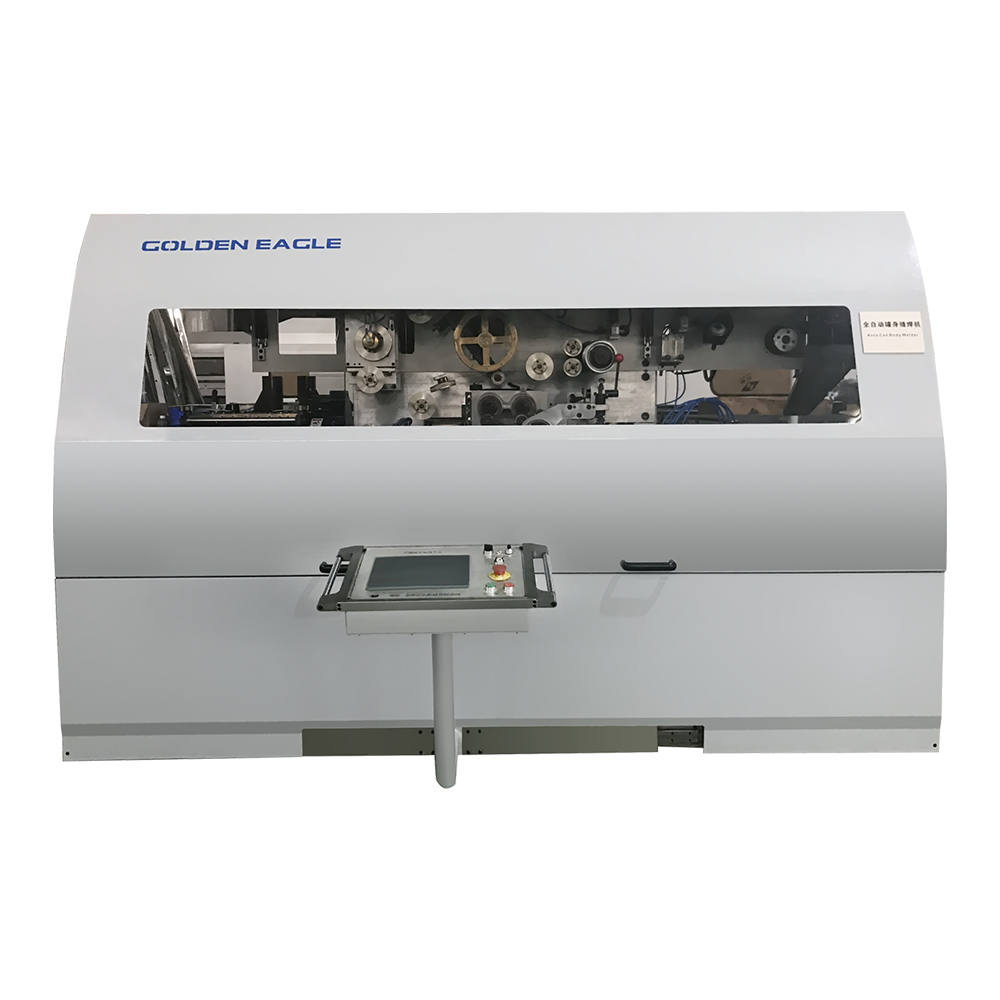
A well-matched aerosol can making machine series integrates these stations with transfer systems that protect the coated seam during transport. That may sound trivial, but I have seen lines where scratched side-seam coatings caused reject rates above 5% until the transfer rails were adjusted. Equipment design has to consider the coating as part of the product, not just the metal.
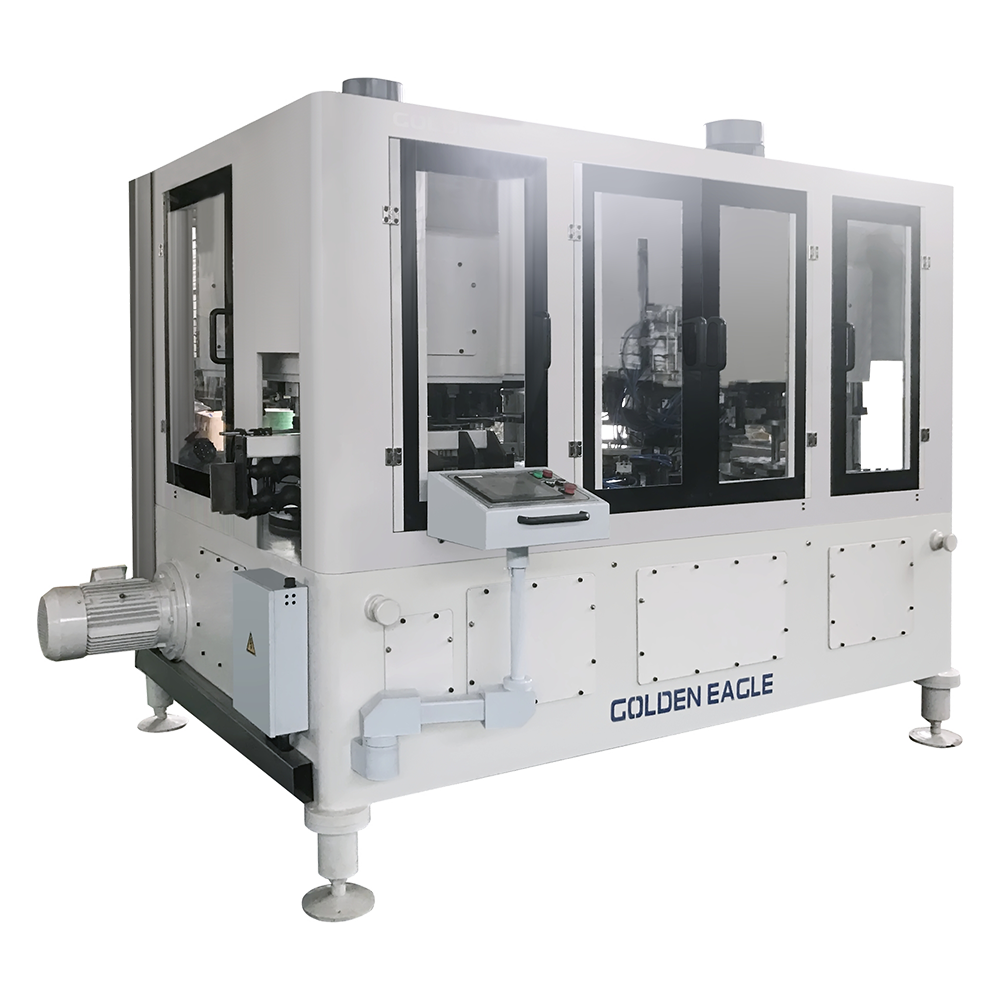 Integrated Aerosol Can Making Machine SeriesThis series covers necking, flanging, beading, and seaming stations with automatic operation and adjustable can heights, supporting balanced line speeds and protecting coated seams.View Product →
The margin between a profitable line and a troublesome one is often in the nesting of these stations. If each unit runs at the same practical speed, the line is far easier to balance. If one station is 30% faster than the rest, that speed is theoretical; the line will still run at the slowest station.
The top of an aerosol can is not a simple lid. It has a dome shape that must resist internal pressure, and it has a circular orifice that later receives the valve mounting cup. During filling, the valve cup is crimped into the dome, and the joint must hold the propellant for months or years. If the top dome is stamped with uneven stretching, micro-cracks appear at the plate thickness transition; they do not show as visible defects but cause weeping valves long after the can has left your factory.
For this reason, the aerosol top cover punch machine needs rigid construction, accurate stroke control, and stable die setup. I pay attention to three practical features when evaluating a top cover press: clearance between punch and die, the blank holder system, and the ability to maintain consistent dome height over long production runs. Many failures in the field trace back to pressure fluctuations in the press cycle, not to the metal itself. Following the entire can making process from raw material to finished product makes the role of this station clearer.
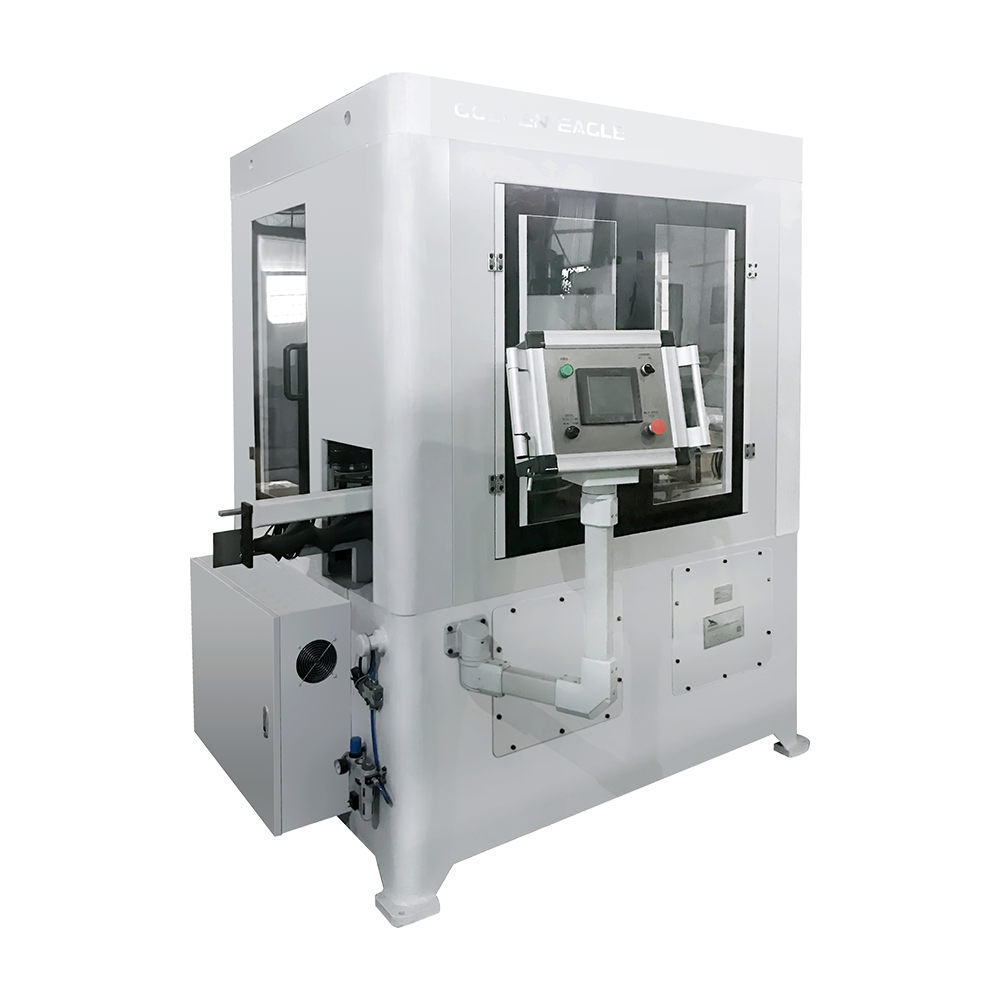
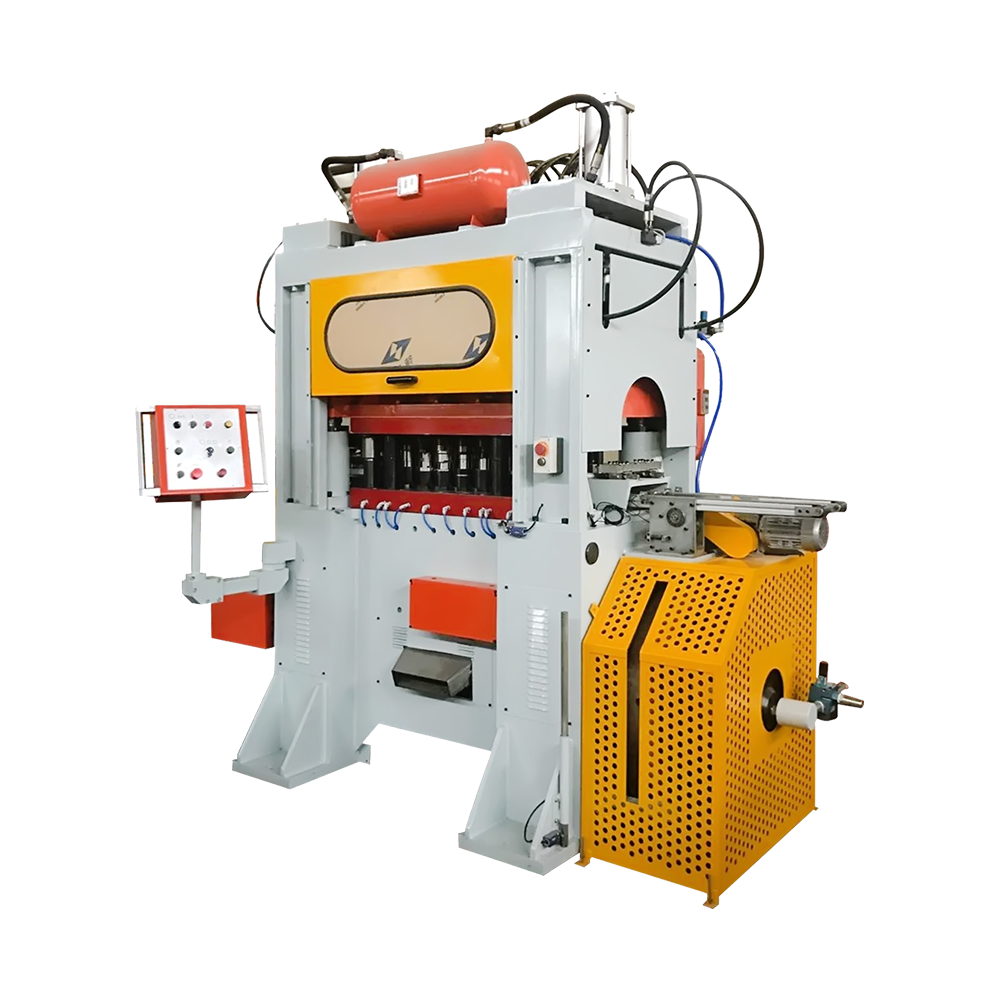 Aerosol Top Cover Punch PressA CNC gantry press for top domes and EOE lids, built with rigid construction and stroke control to ensure consistent dome geometry for reliable crimping and fewer rejects.View Product →
A reliable top dome press also reduces downstream problems. When the dome geometry is consistent, the mounting cup crimping operation produces repeatable results and leak testing finds few rejects.
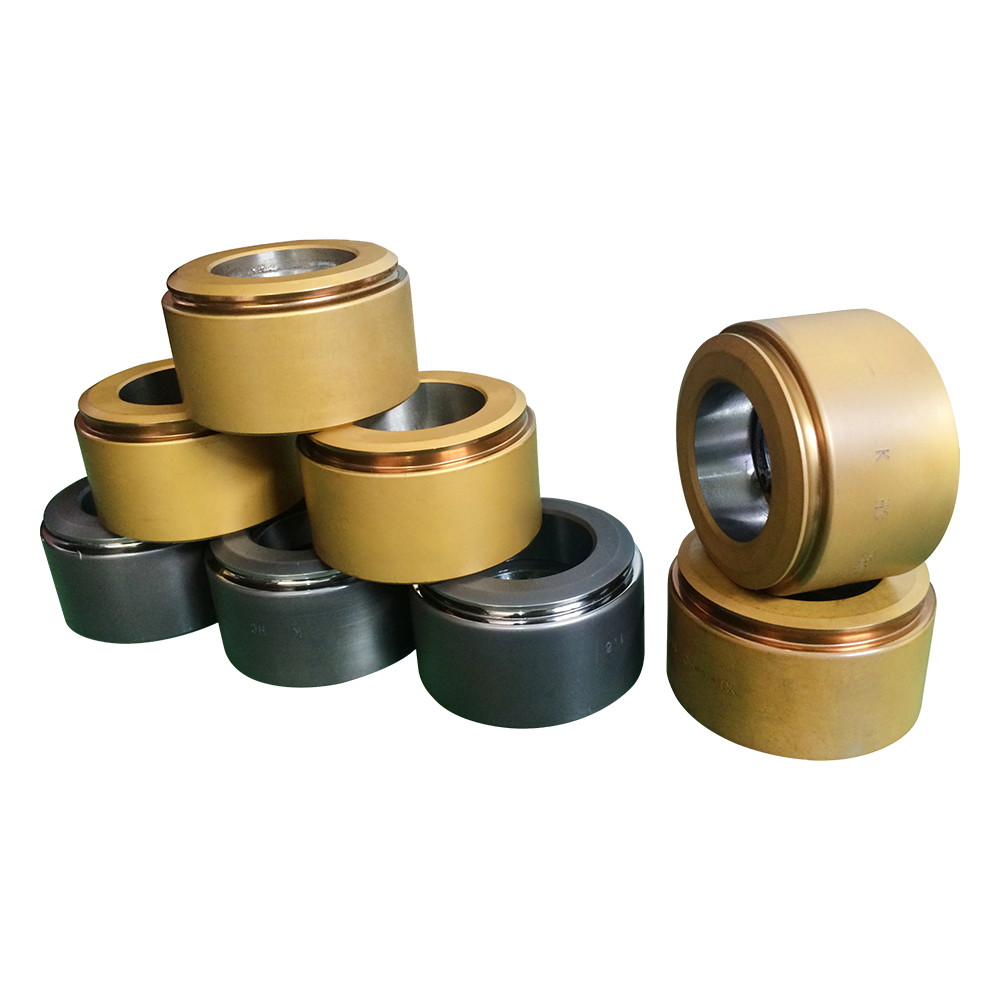
Every can diameter and height combination requires a separate set of tooling: scroll shear dies, forming dies for the body, flanging tooling, necking dies, seaming rolls, and cover dies. If your product range includes 45 mm, 52 mm and 65 mm diameters, plan for changeover time from the beginning. A line with quick tooling carts and programmable press settings can change over in 30 to 45 minutes; a line without them may need an entire shift.
The most practical advice I give to buyers is to order spare tooling for high-wear stations at the same time as the machine order. Crash damage to a forming die can stop production for weeks if you wait for a new one. The cost of extras is small compared with lost output. When comparing quotes, ask the supplier to list the estimated life of each die in number of strokes and the replacement cost. That information tells you more than the nominal line speed. This is one of the key points described in how to choose an aerosol can making machine for your particular product plan.
Aerosol can quality cannot be achieved by final inspection alone. If a welding parameter drifts, hundreds of cans can pass before the leak tester catches one. Stable process control matters far more than sampling rate.
The table below lists the measurements that every three-piece aerosol can line should monitor.
| Parameter | Test method | Typical target | Failure risk |
|---|---|---|---|
| Weld strength | Tensile or shear peel test on samples | Tear in base material, not weld | Bursting under pressure |
| Side-seam repair coating | Continuity test after curing | No exposed metal at the weld | Inside corrosion, early failure |
| Seam thickness of top and bottom | Seam projection or cutting inspection | Within supplier tolerance | Leakage, weak curl |
| Dome geometry | Profile gauge and height measurement | Dome height within +/- 0.1 mm | Poor valve crimping, weeping |
| Coating continuity | Electric spark or copper sulfate test | No spark or penetration | Corrosion and product spoilage |
In my experience, the best lines have measurement points at the weld exit, after the repair coating cure, and after seaming. Operators receive feedback quickly, adjust the process, and the final leak tester confirms the result. If a proposed line only offers an end-of-line pressure test, keep investigating.
When you look at total cost, the obvious unit price of a machine can be misleading. You need to include tooling, changeover labor, maintenance, energy, and the cost of rejects. For an output forecast under 10 million cans per year, a very fast continuous line may be the wrong choice; a semi-automatic line with short changeover times could deliver lower cost per good can. Above 50 million cans per year, full automation of feeding, transfer, and palletizing becomes financially attractive.
Many factories also separate the top-dome press and the end-cover line from the main body line. This gives flexibility: you can run body sizes independently, schedule cover production for exact demand, and avoid binding one line to another's speed. The end cover station plays a bigger role than its small footprint suggests.
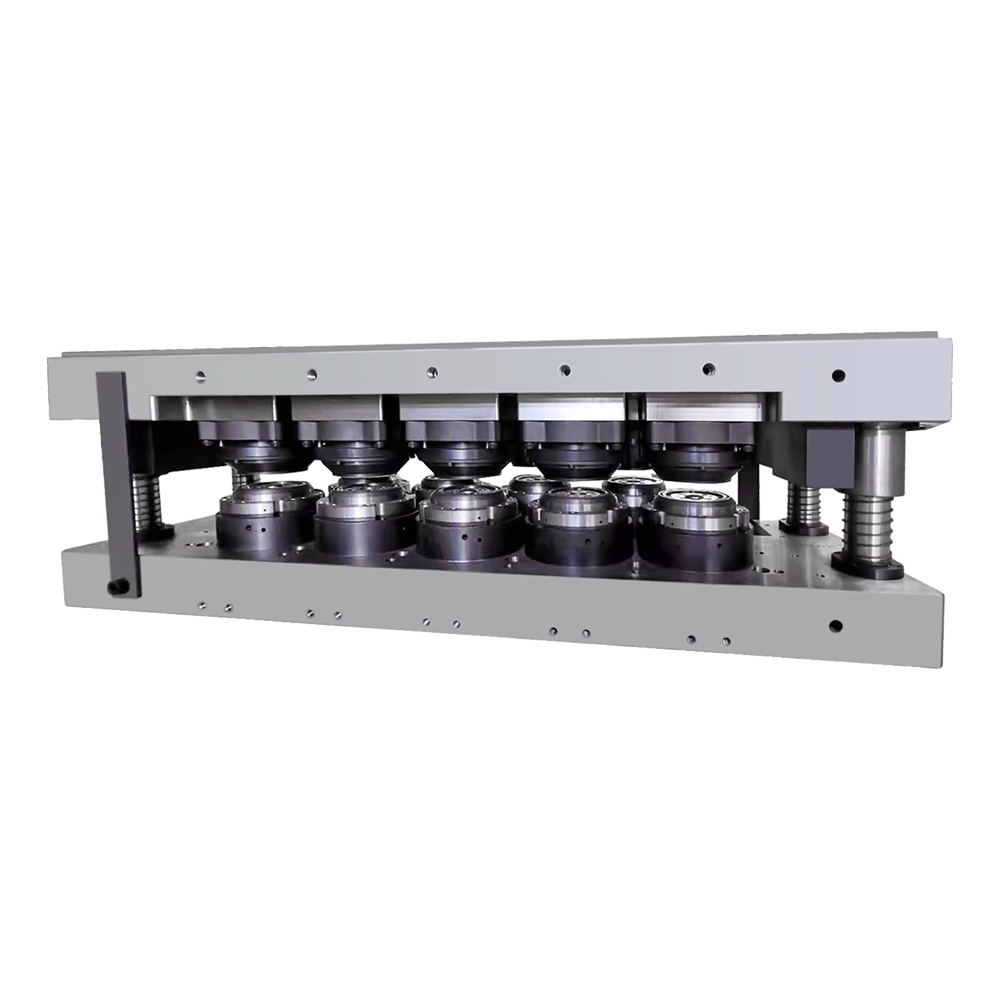
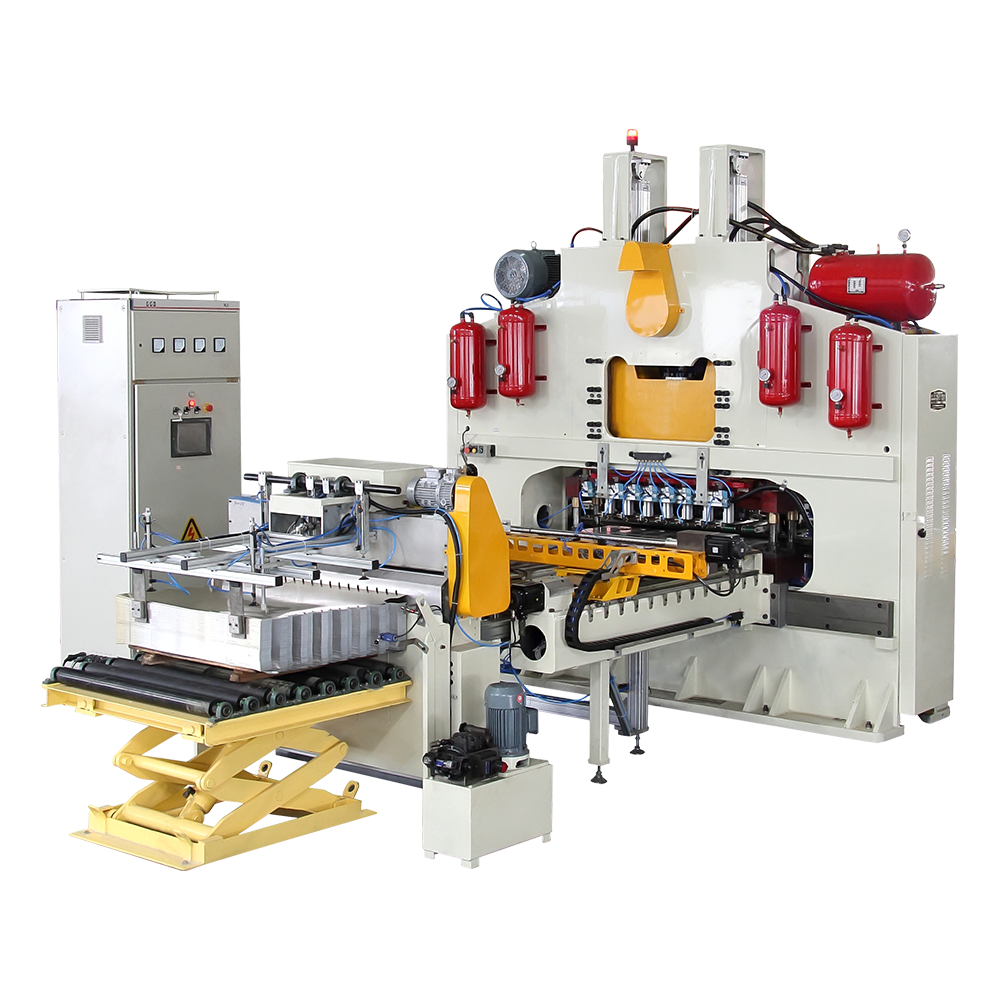 CNC Automatic Digital Punch PressAn automatic press for pressing end covers with 1-15 mold heads, PLC control, double-sheet detector, and overload protection, suitable for varied end sizes and flexible scheduling.View Product →
Looking at the complete equipment picture, body welding line, top dome press, and end cover line, I recommend evaluating suppliers on their ability to explain the integration logic, not just to quote a price. A supplier that has built can-making equipment for decades can point out details that become clear only after years of operation.
In summary, aerosol can making is not a single machine decision. It is a material route decision, a tooling strategy, a quality-control plan, and an integration project. Choose the tinplate route for pressure resistance and cost, plan tooling before purchasing, and monitor quality at every process step. With those foundations, the line you build will produce reliable aerosol cans and deliver the long-term value you planned for.
Related Products

Founded in 1978, the company is one of the largest can-making machinery well-known companies at home and abroad.
Product Categories
Contact Information
Zhongshatou Shenjiamen Zhoushan Zhejiang China
+86-580-3056646

 English
 中文简体
中文简体
 русский
 عربى
عربى
 Español