2026-10-29
A can making machine is rarely a single piece of equipment. It is a coordinated group of forming, welding, coating, and sealing stations that convert coiled tinplate or aluminum into finished metal containers. In practical terms, the term covers everything from a compact single-station body former to a complete food can line with an end cover press. The machine family you choose depends on the can diameter, material thickness, production volume, and how often you need to change formats.
The broad phrase “can making machine” covers several distinct equipment categories. Food can lines focus on welded three-piece bodies with safe internal coatings. Beverage can lines add necking, flanging, and beading for thin-walled containers. Aerosol can machines include cone or dome forming to carry a valve mounting cup. Chemical and pail lines handle heavier tinplate and require robust seaming. End cover and easy-open end equipment often runs at much higher stroke rates than body-making machinery.
| Machinery type | Typical product | Key processes |
|---|---|---|
| Food and beverage can machines | Fruit, vegetable, meat, and drink cans in round, oblong, or irregular shapes | Body welding, seam coating, flanging, seaming bottom ends |
| Aerosol can machines | Spray cans, deodorant cans, household aerosol containers | Cone/dome forming, cylinder welding, necking, pressure testing |
| Milk powder can machines | Wide-mouth cans for dairy formula and nutritional powder | Multi-stage body forming, beading, rim curling, bottom seaming |
| End cover and easy-open end lines | Flat ends, ring-pull ends, scoreline easy-open ends | Scroll shearing, conversion pressing, tab forming, compound lining |
For round food cans, three-station and four-station combiners are common because they combine body forming, edge straightening, flanging, and seaming in one indexed cycle. This design reduces handling while keeping format changes planned rather than random. A four-station combiner suits plants that need predictable output for round bodies.
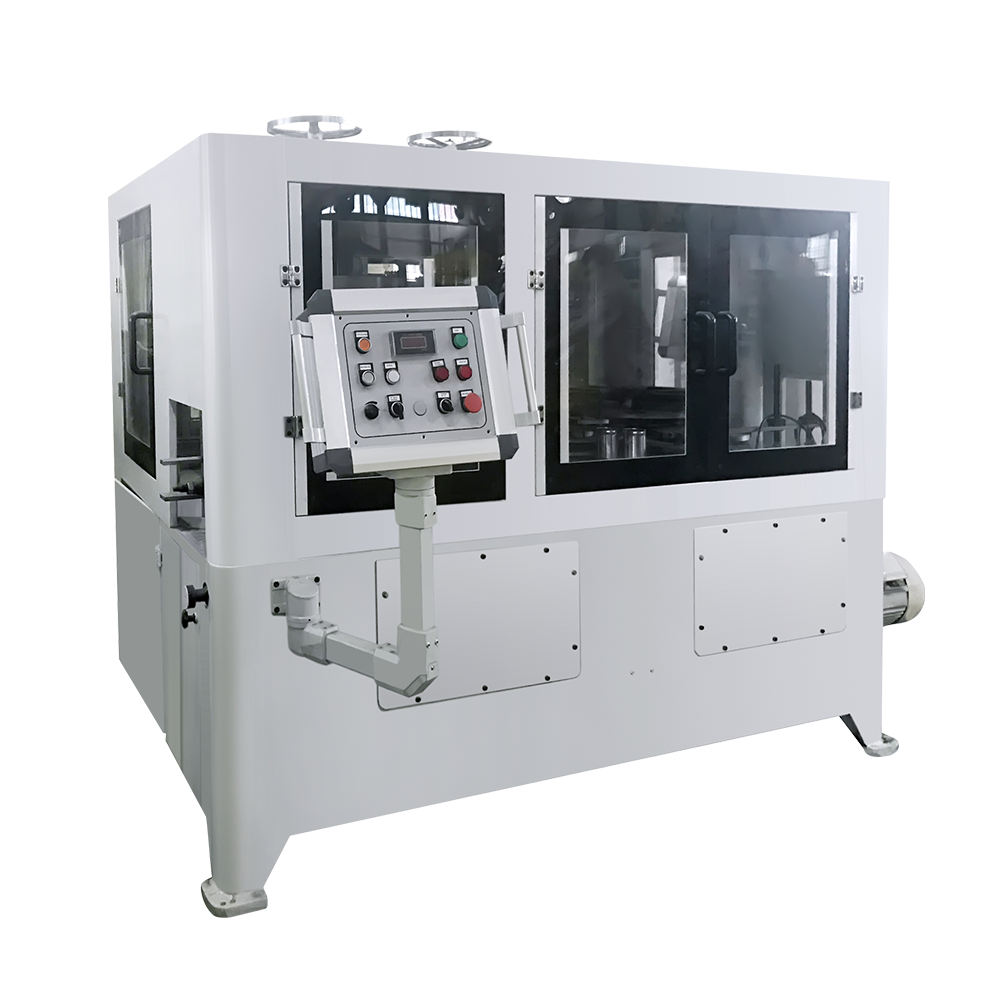
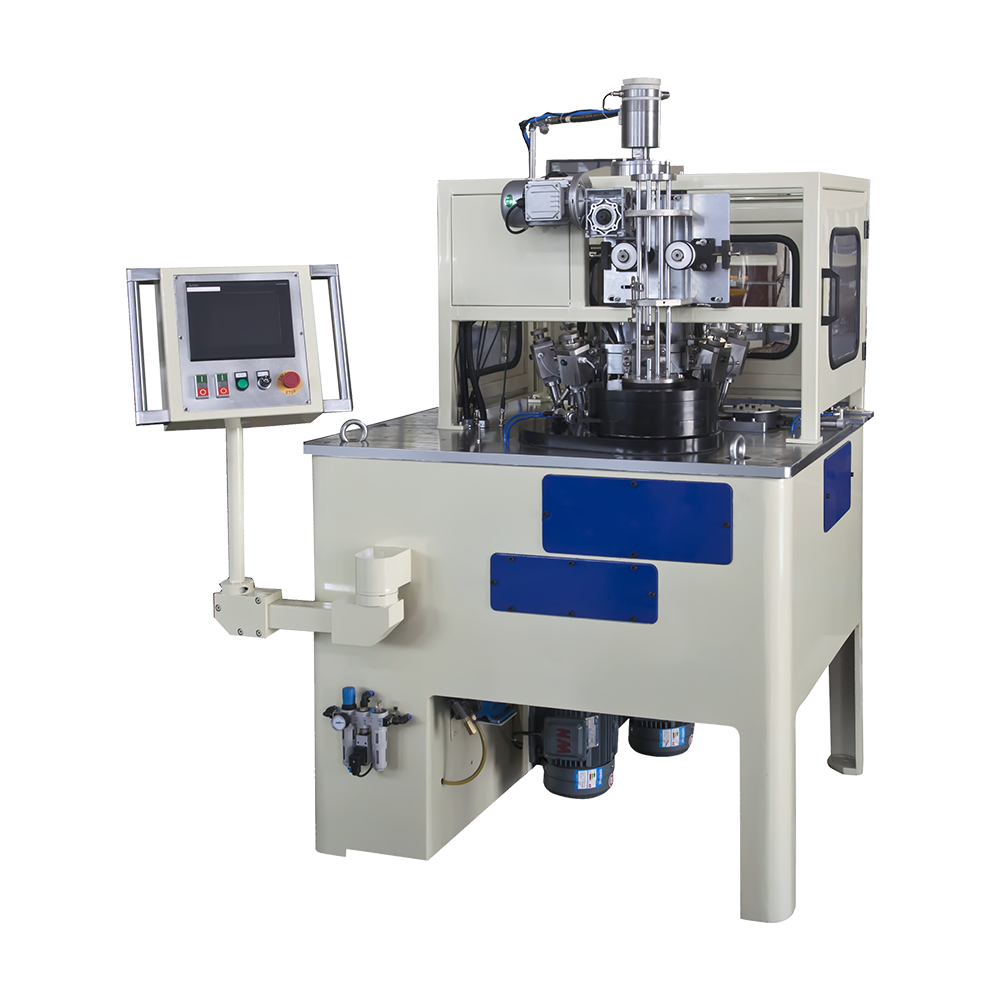
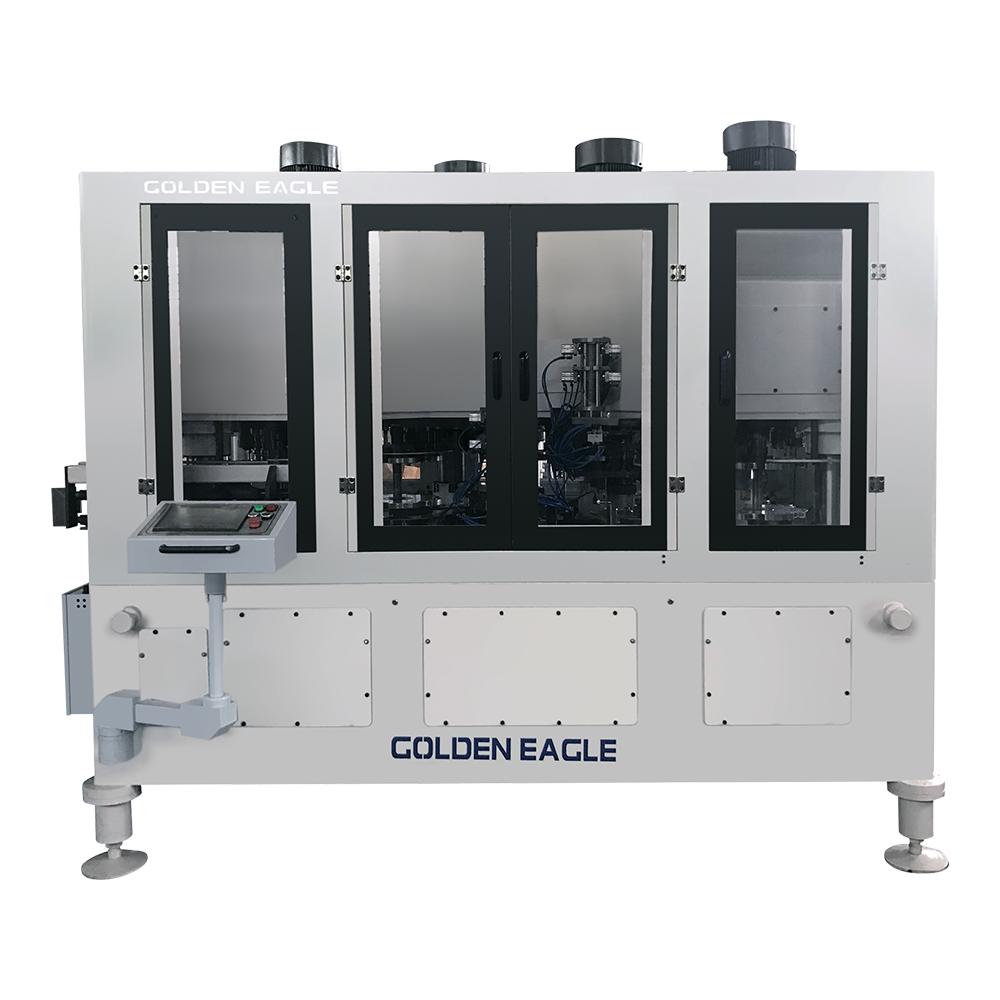 Four-Station Necking Flanging Beading Seaming Can Making MachineThis integrated four-station machine combines body forming, flanging, and seaming in one cycle, offering predictable output for round food can lines and reducing handling between operations.View Product →
Aerosol can production adds an upper cone or dome that must hold a valve cup under pressure. The extra pressing and heat-treatment steps mean aerosol machines are normally bought as a complete package, not as loose units. Chemical and pail lines operate in a similar way but are built for thicker sheet and stronger side seams.
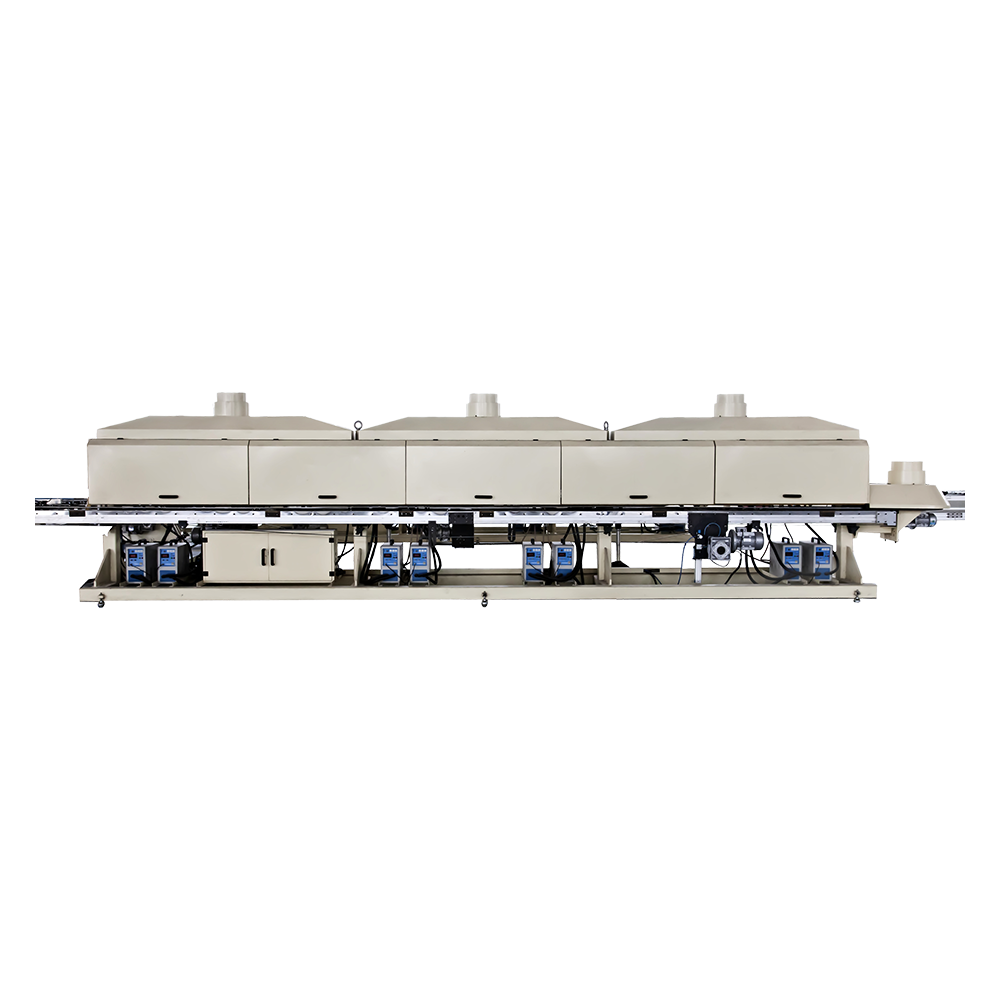
Many can plants keep the end cover line separate from the body line. A conversion press takes pre-scrolled shells and converts them into ring-pull or full-panel easy-open ends. After conversion, a compound feed station applies the lining compound that will form a leak-tight seal against the can rim.
Whatever the final can size, a three-piece line follows the same logical order. Each station depends on the previous one, so timing and material control are as important as the press motion itself.
A dedicated can body welder is the heart of this sequence because it controls seam quality, welding heat, and travel speed. When the machine is not integrated into a multi-station combiner, it is often placed as a separate station to allow different body heights to be processed without changing tooling.
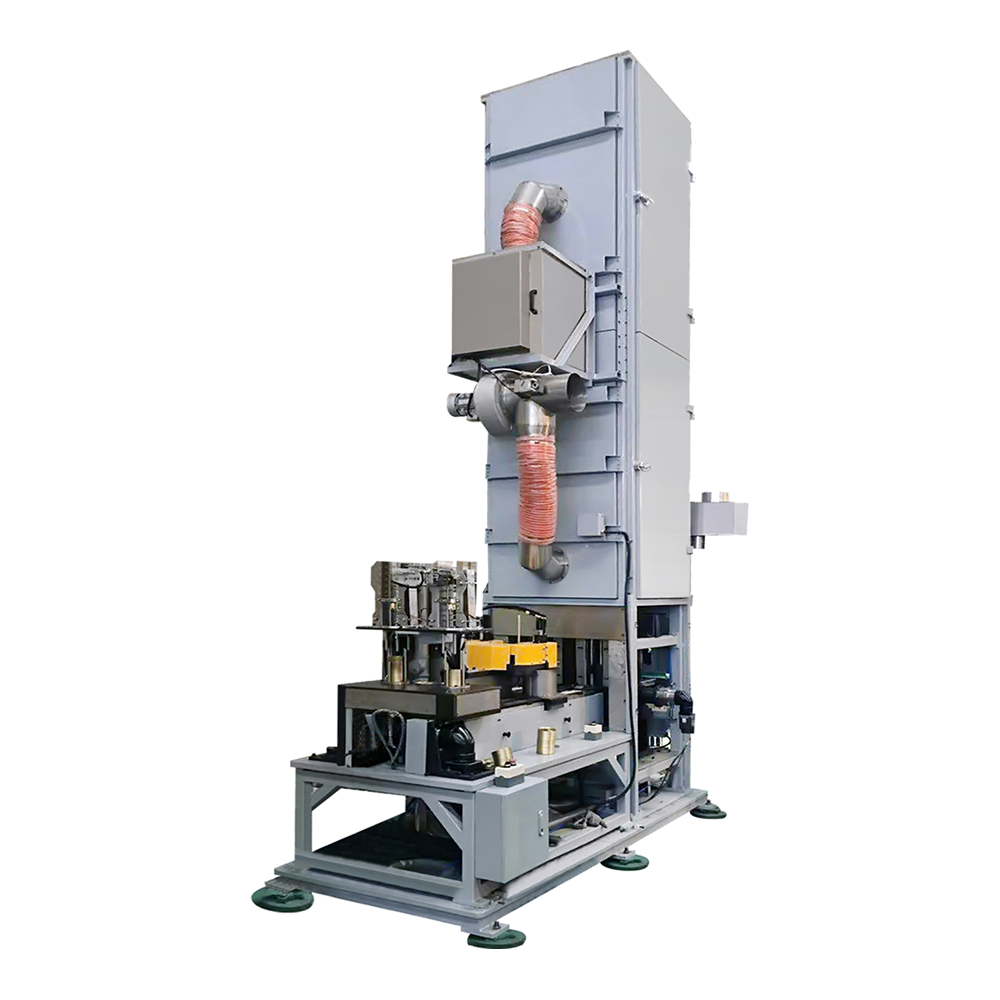
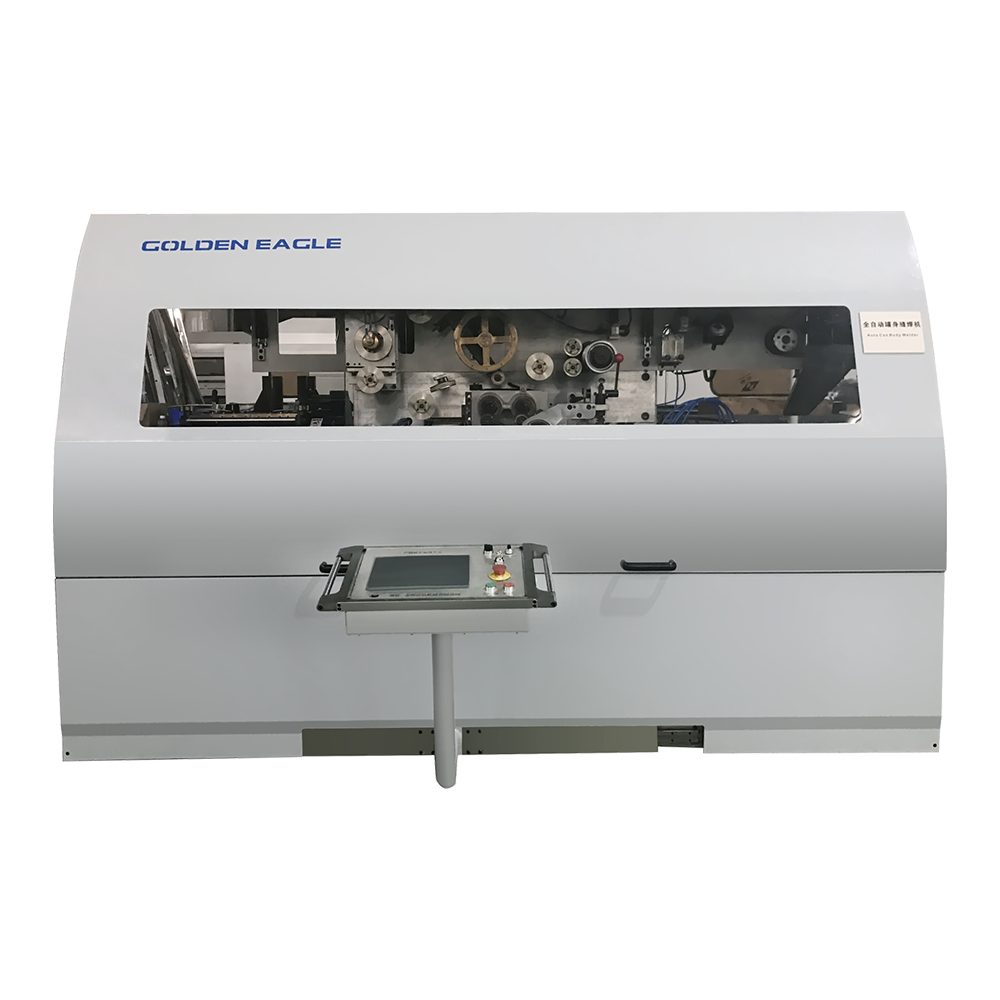 Automatic Can Body Welder for Reliable Seam QualityAs a dedicated welder, it controls seam quality and welding heat, and can stand alone to process various body heights without tooling changes, ideal for food, beverage, and aerosol cans.View Product →
For a more detailed description of the workflow, see the article on how a can making machine works.
When buyers ask what a can making machine can produce per minute, they should separate three numbers: body forming strokes per minute, end or lid strokes per minute, and integrated line output after rejects. A useful reference point is the speed the machine maintains continuously at a given material thickness, not a maximum test speed.
The bar lengths are indicative; actual throughput depends on can size, material thickness, feed system, and tool count. Always ask for a production test with your own tinplate and your target can profile before signing a contract.
| Indicator | What it tells you | Common pitfall |
|---|---|---|
| Strokes per minute | The mechanical cycle rate of the forming or conversion press | Maximum speed is rarely sustainable with thick material or complex shapes |
| Changeover time | How quickly you can switch can height or diameter | Die cost and setup labor are often underestimated |
| Seam integrity | Leak rate, weld consistency, and seam thickness | Visual inspection alone misses micro-leaks |
| Tool life | Production count before edge wear affects quality | Lower-cost tools can raise downtime and scrap |
| Material range | Acceptable sheet thickness and width | Feeding 0.20 mm material into a line set for 0.30 mm will cause buckling |
End cover lines deserve a separate performance review because they combine a conversion press, tab dies, scroll shearing, and coating equipment. The line is often faster than the body machine, but it also has more stations where misalignment can appear.
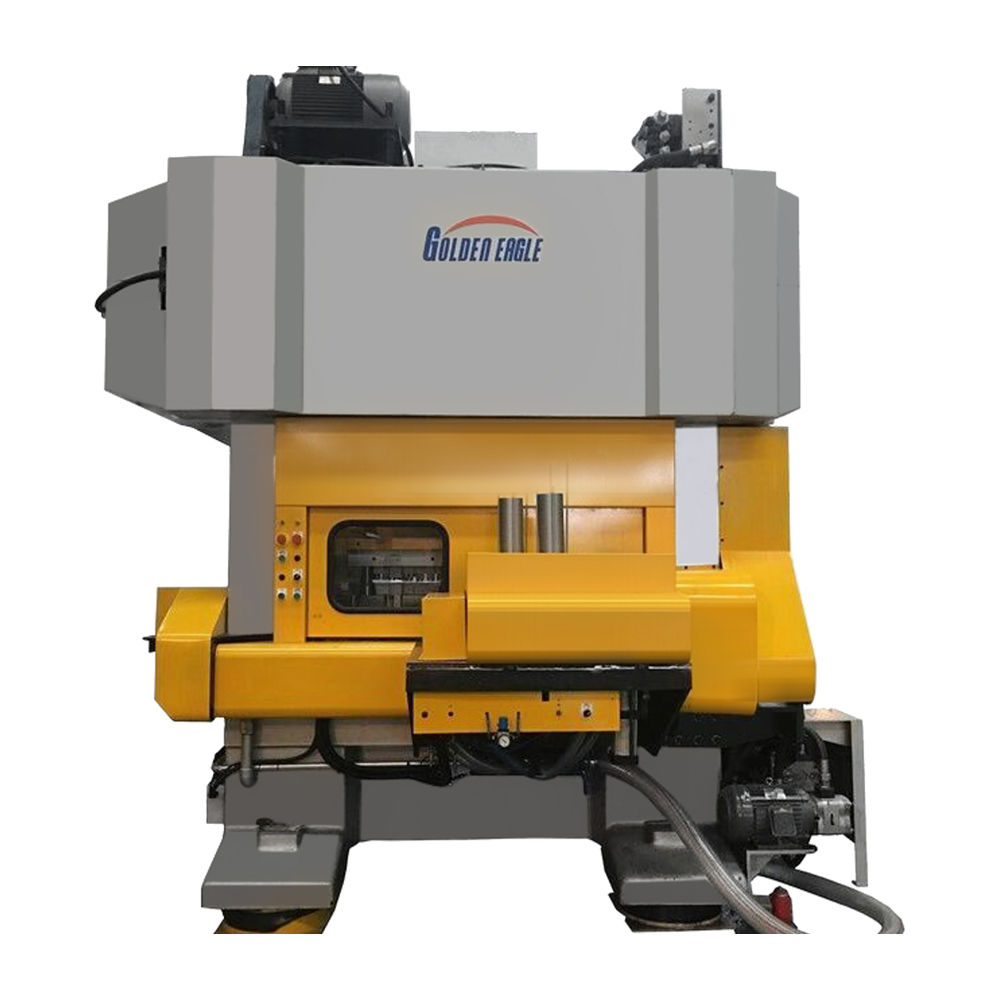
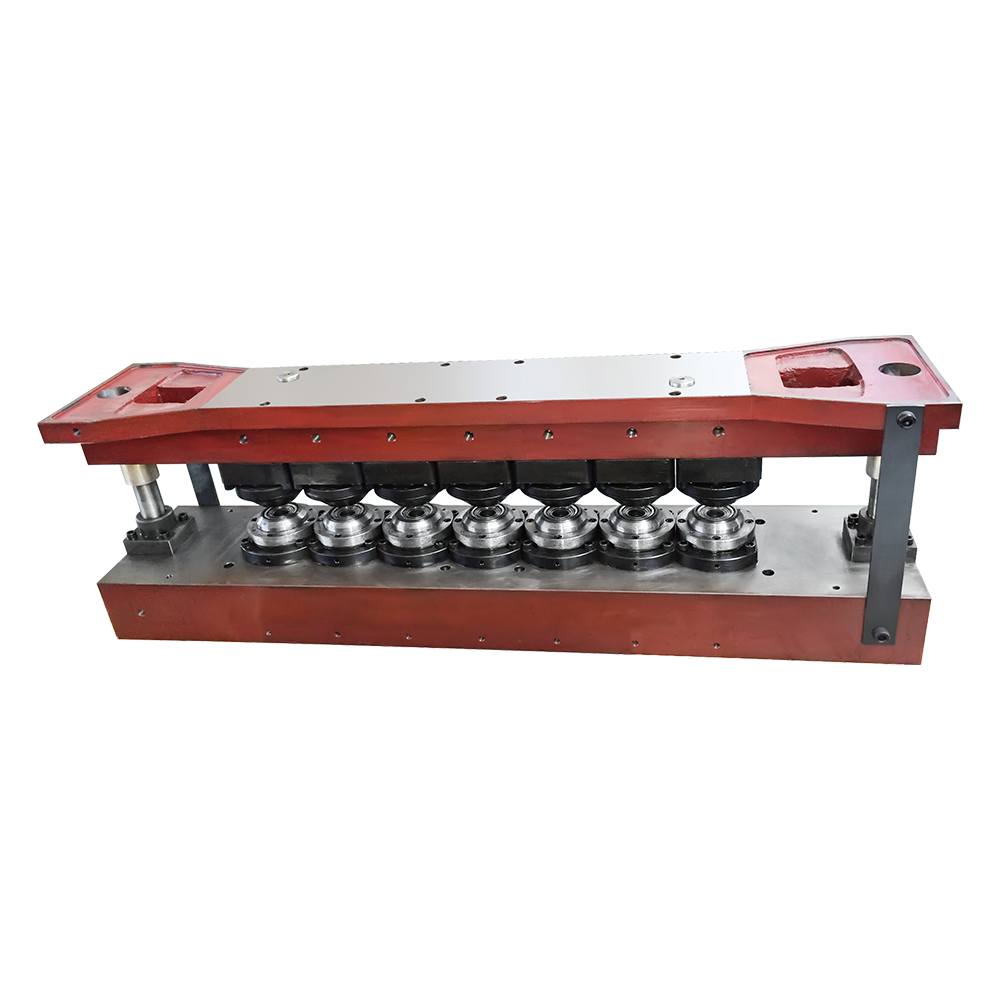
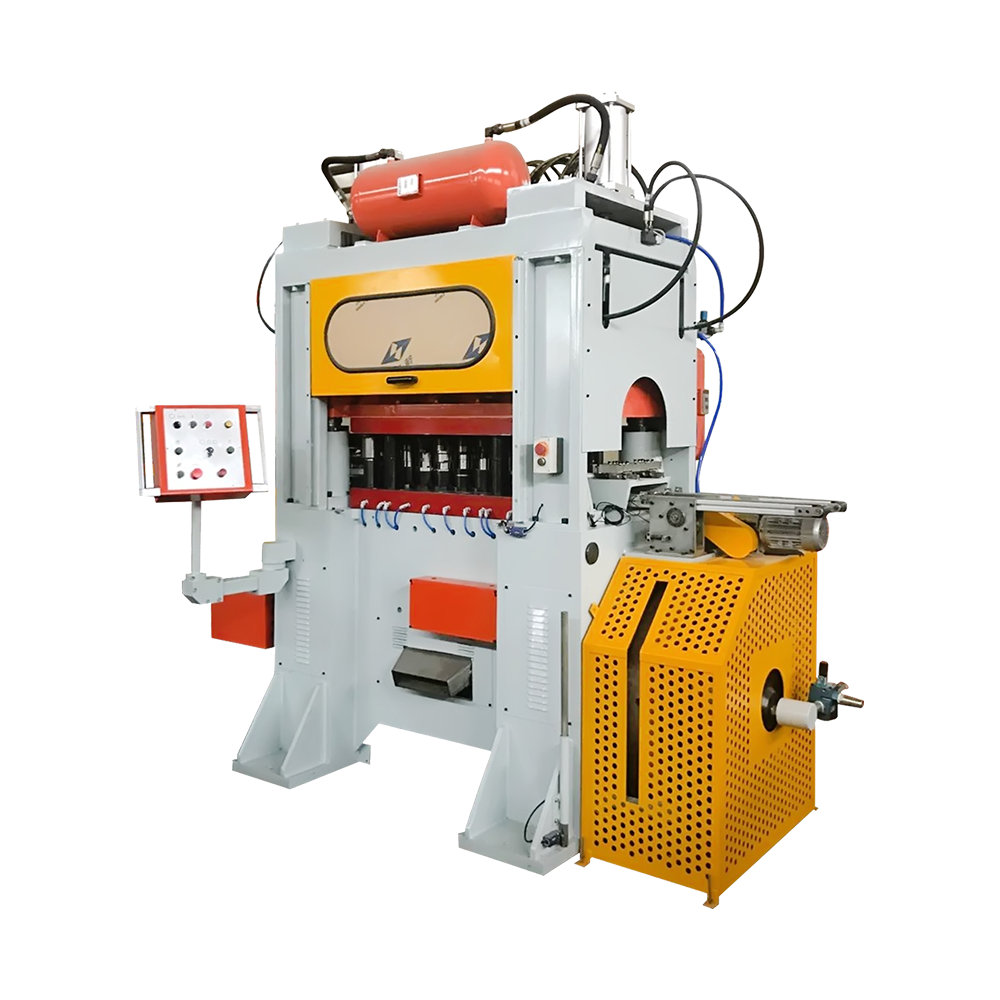
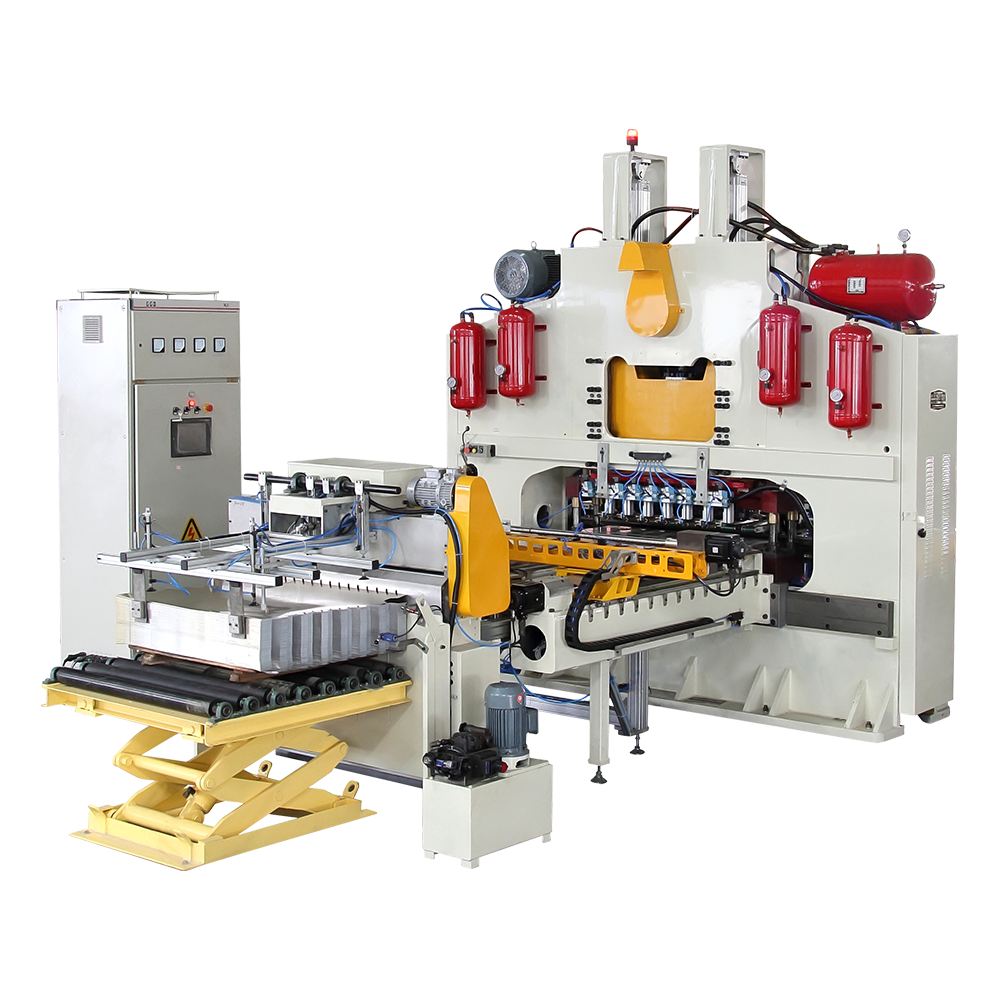 CNC Automatic Digital Punch for End Cover PressingThis PLC-controlled press automates sheet pressing for end covers, saving material and improving efficiency. With multiple models and high tonnage, it suits various lid sizes in can lines.View Product →
Choosing a can making machine is not only about price per unit. The hidden costs are tooling, maintenance, rework, and format change losses. Start from the can specification and work backward to the machine arrangement.
For a deeper advice on comparing specifications, read the guide on how to choose the right can making machine.
Our selection approach is described in more detail in how to choose the right can making machine.
Can making lines run for years and must keep producing within tight tolerances. A manufacturer with long production history is more likely to have stable castings, proven dies, and a technician who knows exactly where a commonly overlooked adjustment should be made. This practical depth reduces commissioning time and prevents small problems from becoming recurring stoppages.
When a builder has already delivered equipment to canneries in Asia, Europe, Africa, and the Americas, the line has usually been refined through repeated installations. The same cannot be said for an isolated machine sold only on sample drawings.
In summary, a can making machine should be evaluated as a complete system: feeding, welding, coating, forming, seaming, and end cover production must work together. Define your production scenario first, test the machine with your own material and can profile, and then choose the line whose practical output and changeover flexibility match your plant.
Related Products

Founded in 1978, the company is one of the largest can-making machinery well-known companies at home and abroad.
Product Categories
Contact Information
Zhongshatou Shenjiamen Zhoushan Zhejiang China
+86-580-3056646

 English
 中文简体
 русский
 عربى
 Español