2026-09-09
The manufacture of two-piece metal cans requires a forming system that combines high force, accurate motion control, reliable sheet handling, and stable high-speed operation. A modern CNC multi-mode gantry punch press provides these capabilities in one integrated production solution. Designed for tinplate two-piece cans, including tuna cans and other drawn or stamped containers, this type of press is engineered to convert flat metal sheets into accurately formed can bodies with consistent dimensions and repeatable production performance.
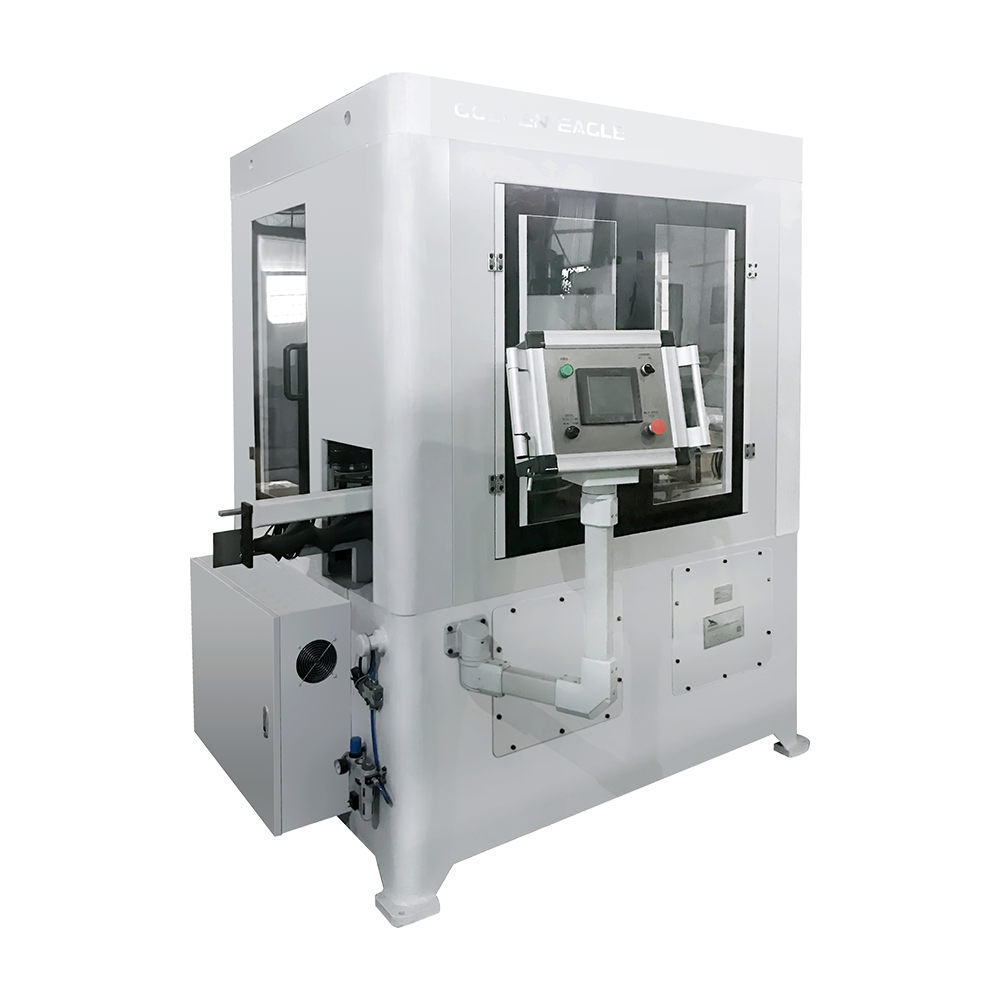
The CNC-C series two-piece can punch press is an automatic punch-pressing system developed for demanding metal packaging applications. Its O-frame pressing structure supports strong rigidity during forming, while its multi-die configuration allows production capacity to be matched to the required can size, material thickness, and output target. Depending on the selected configuration, the system can operate from approximately 80 to 500 cans per minute, with a maximum listed speed of up to 150 strokes per minute for selected operating conditions.
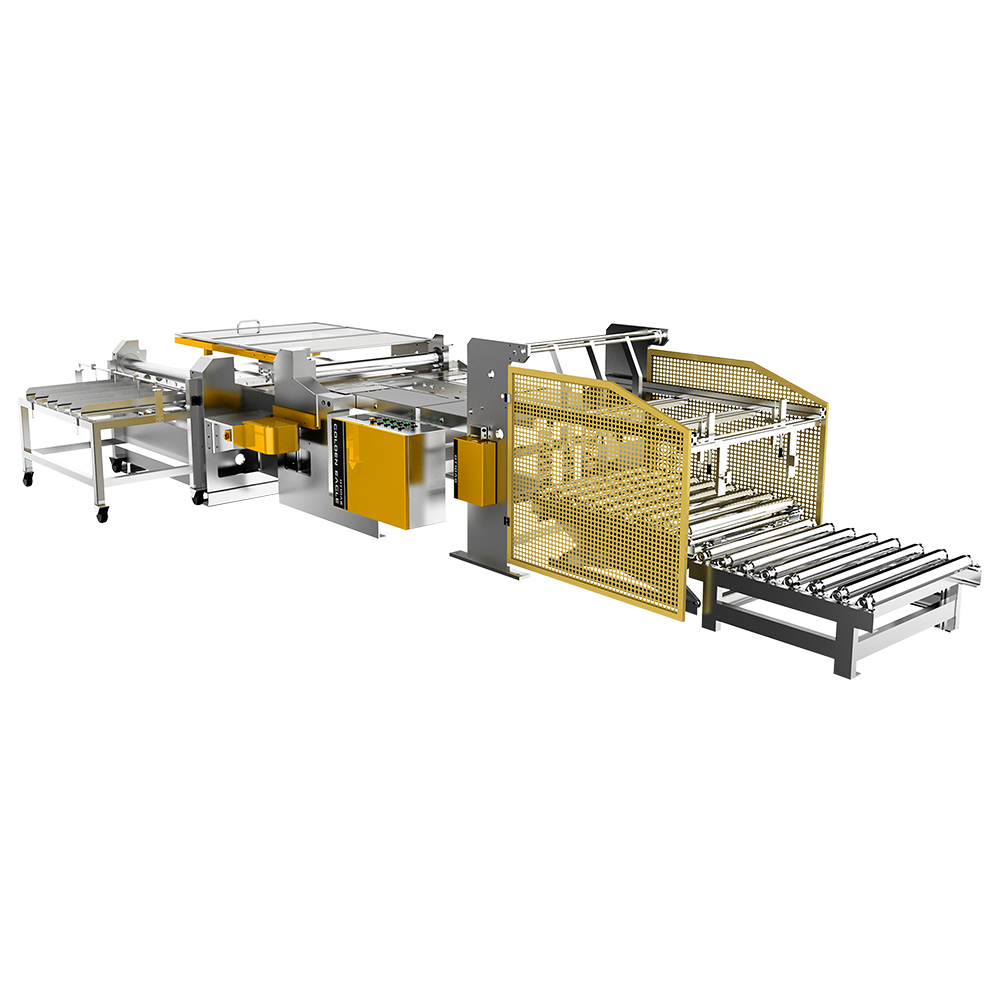
Rather than treating the punch press as an isolated machine, a complete two-piece can production solution connects the press with sheet feeding, die tooling, transfer mechanisms, inspection, and downstream forming or finishing equipment. The result is a coordinated production line capable of improving productivity, reducing manual handling, and maintaining consistent can quality over long operating periods.
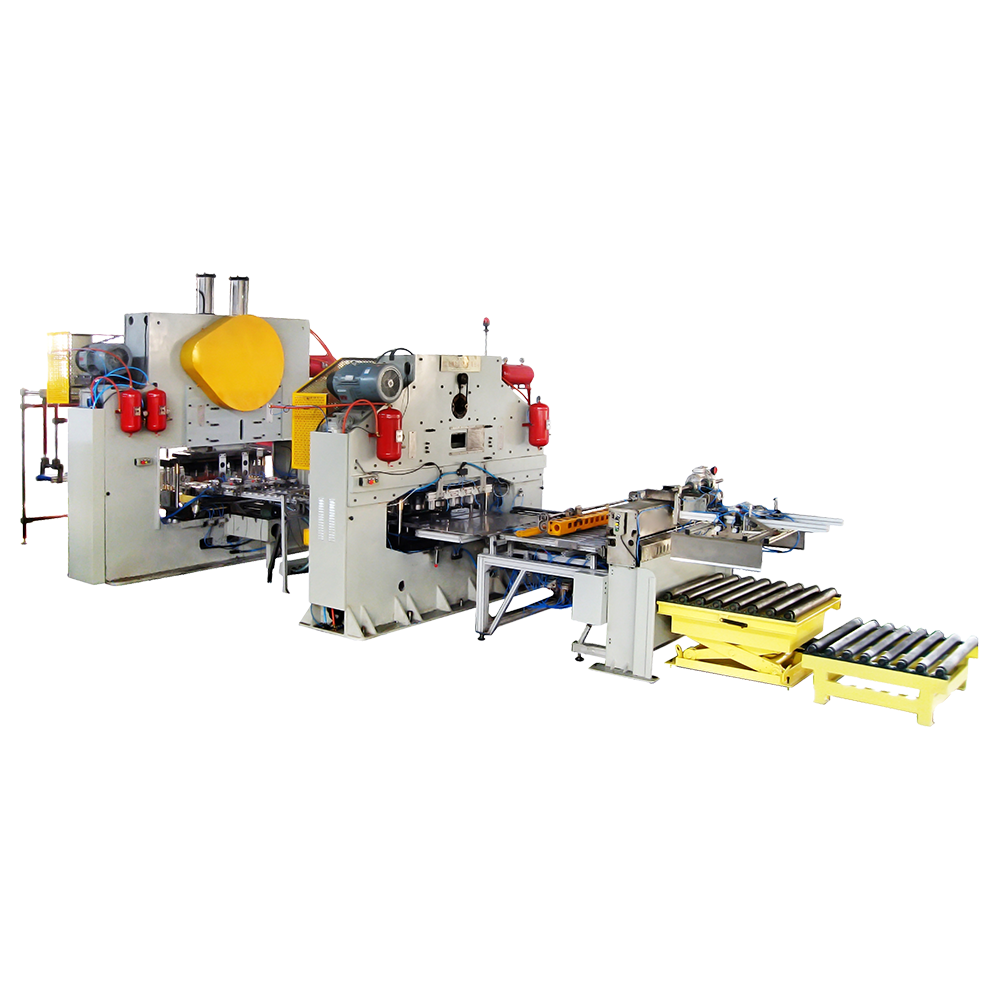
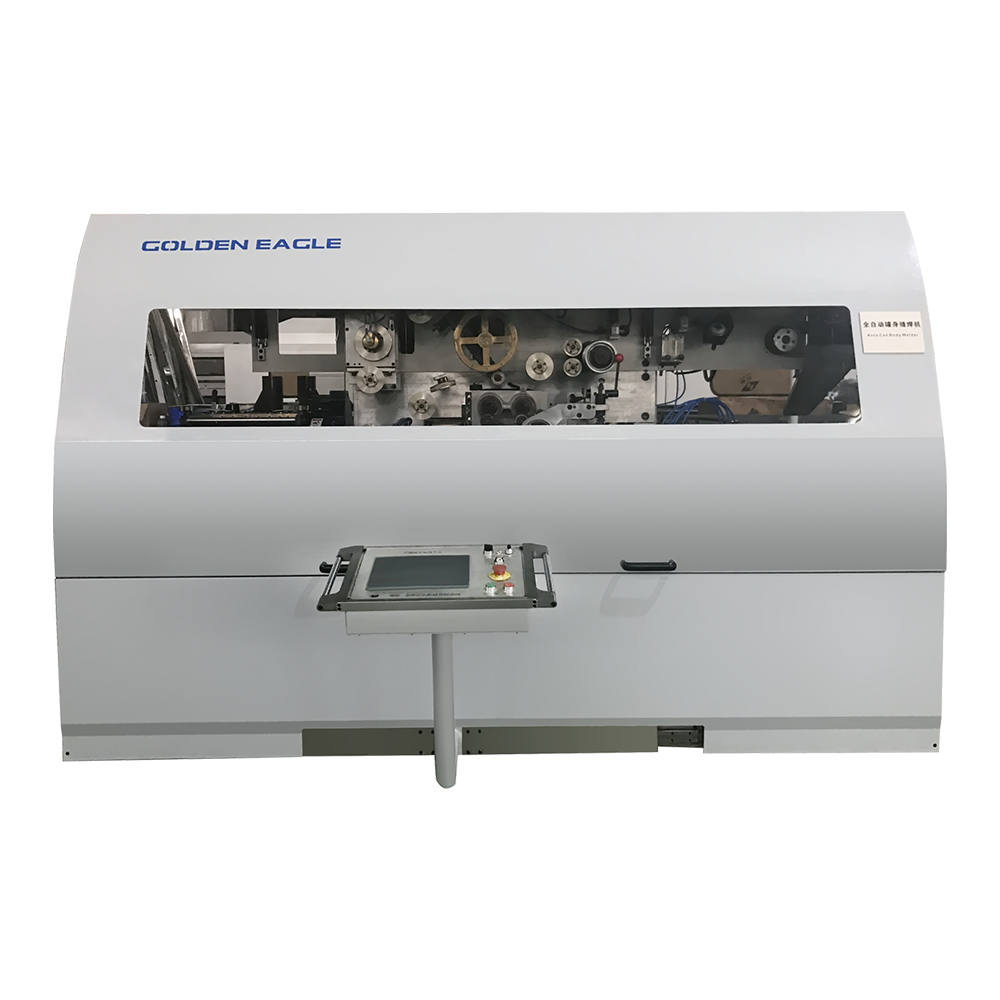
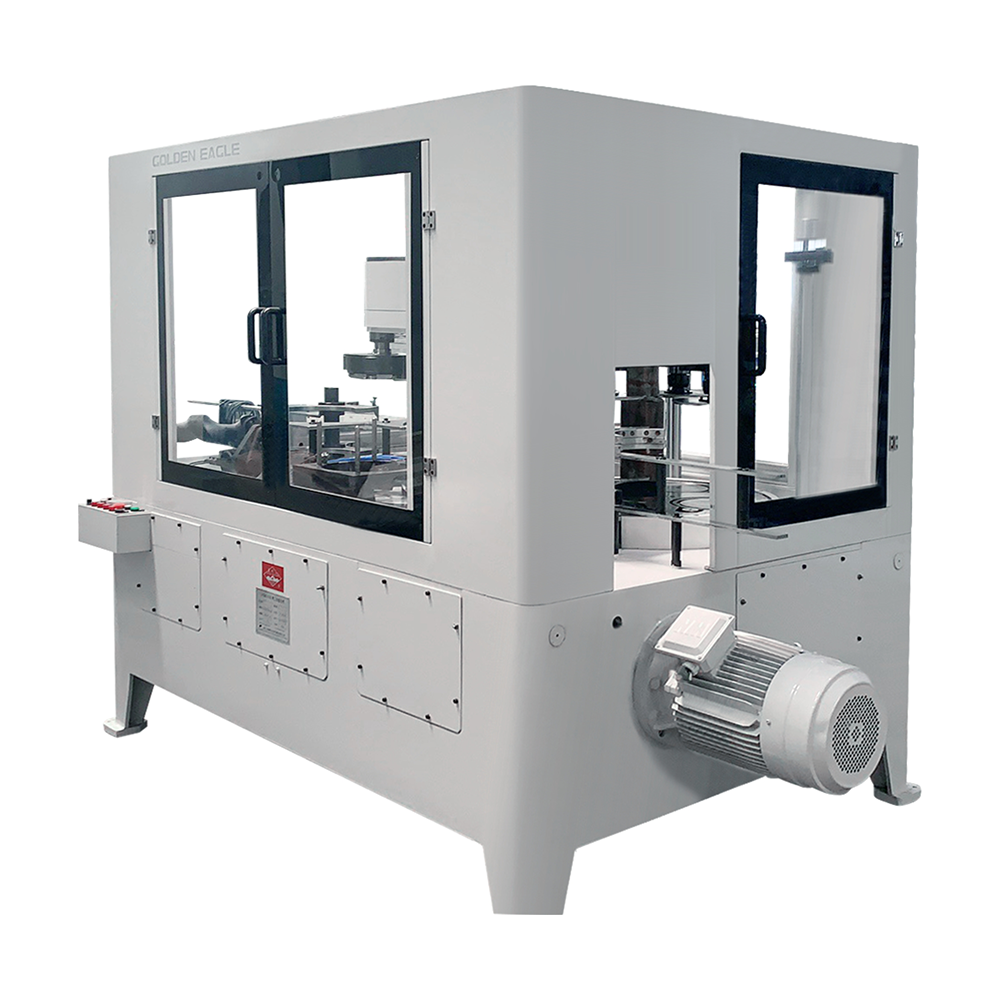
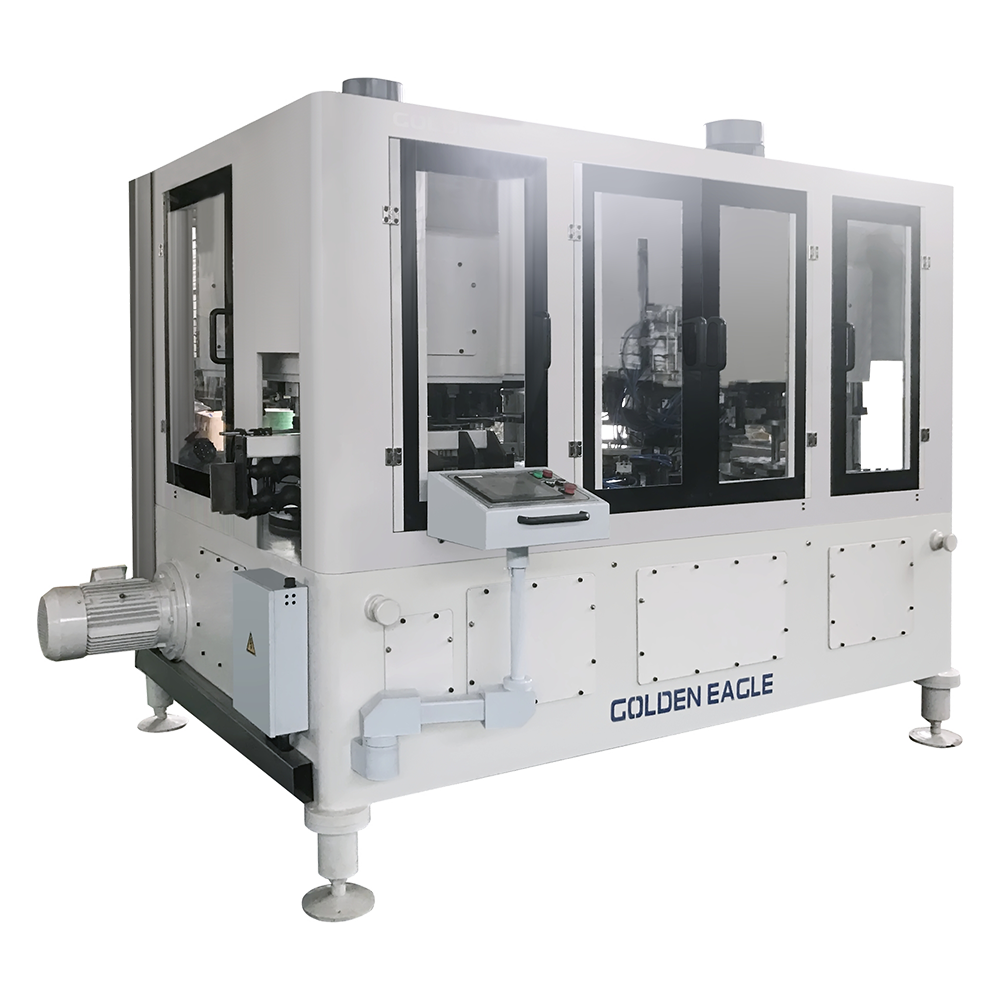
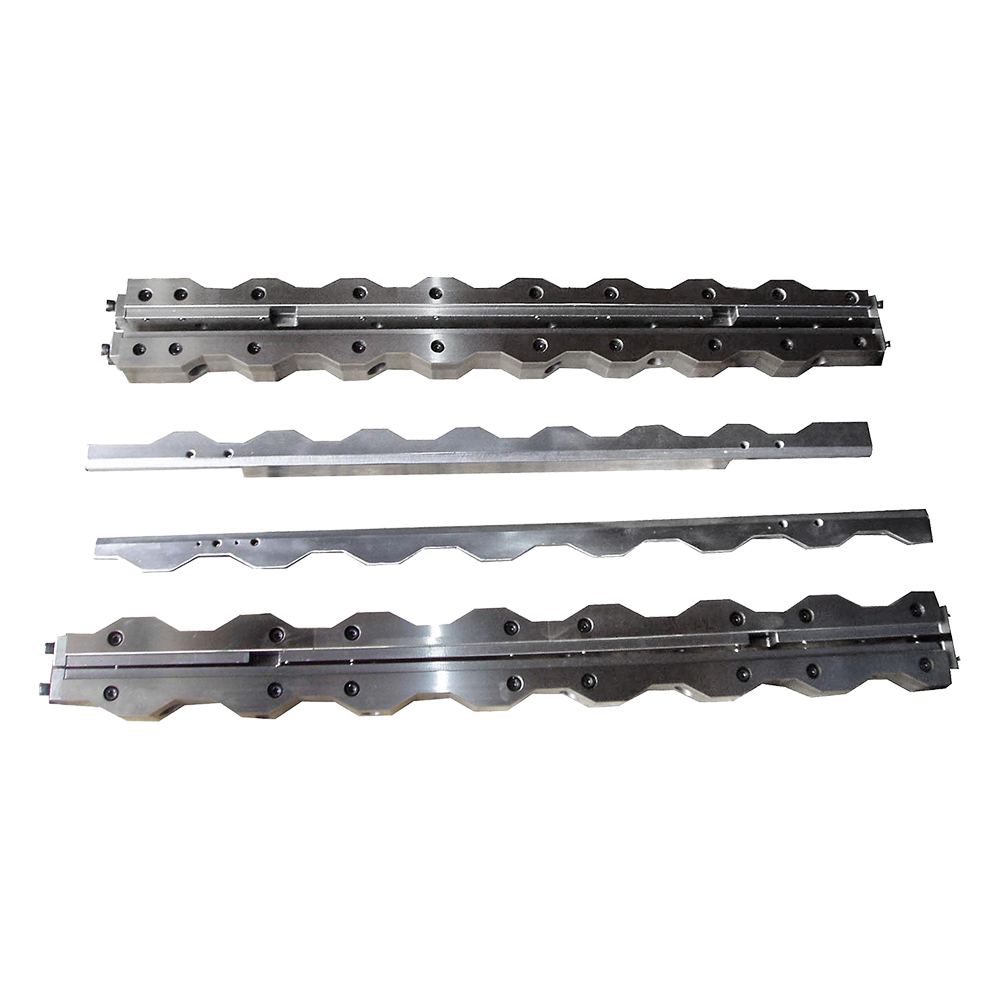
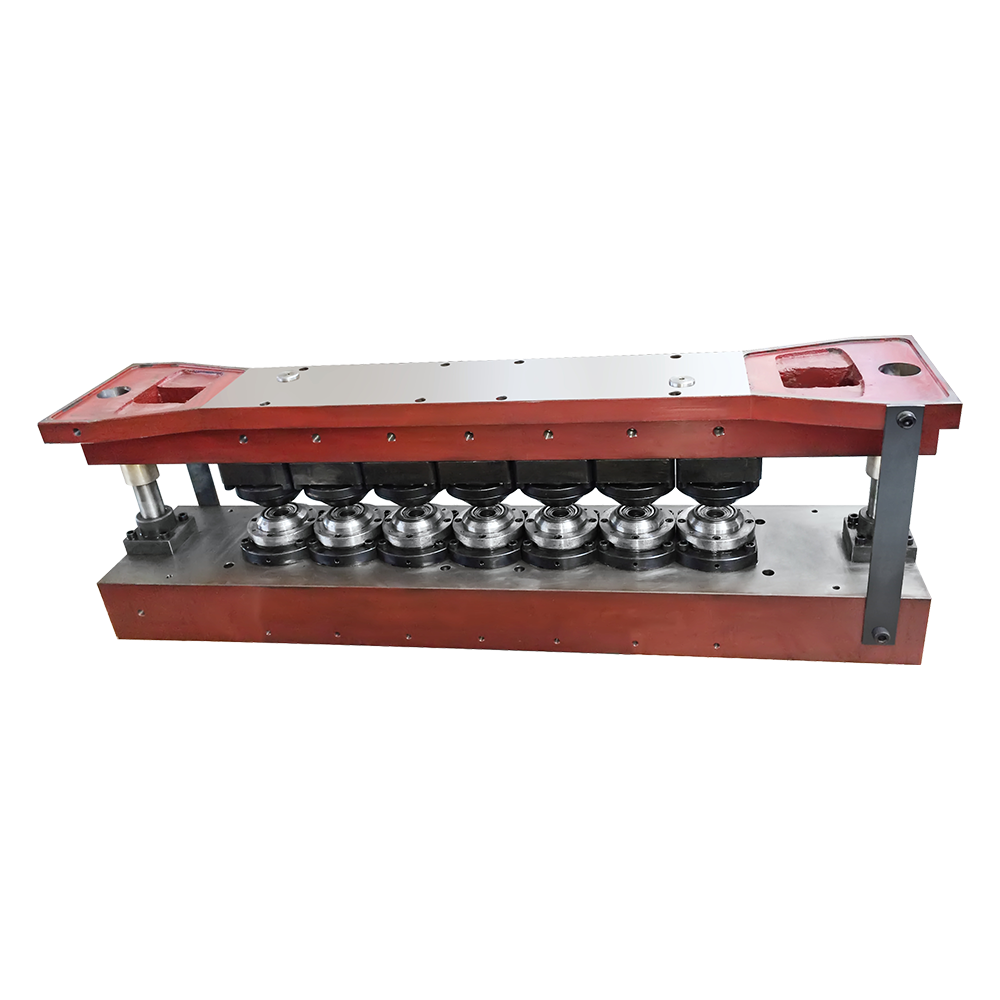
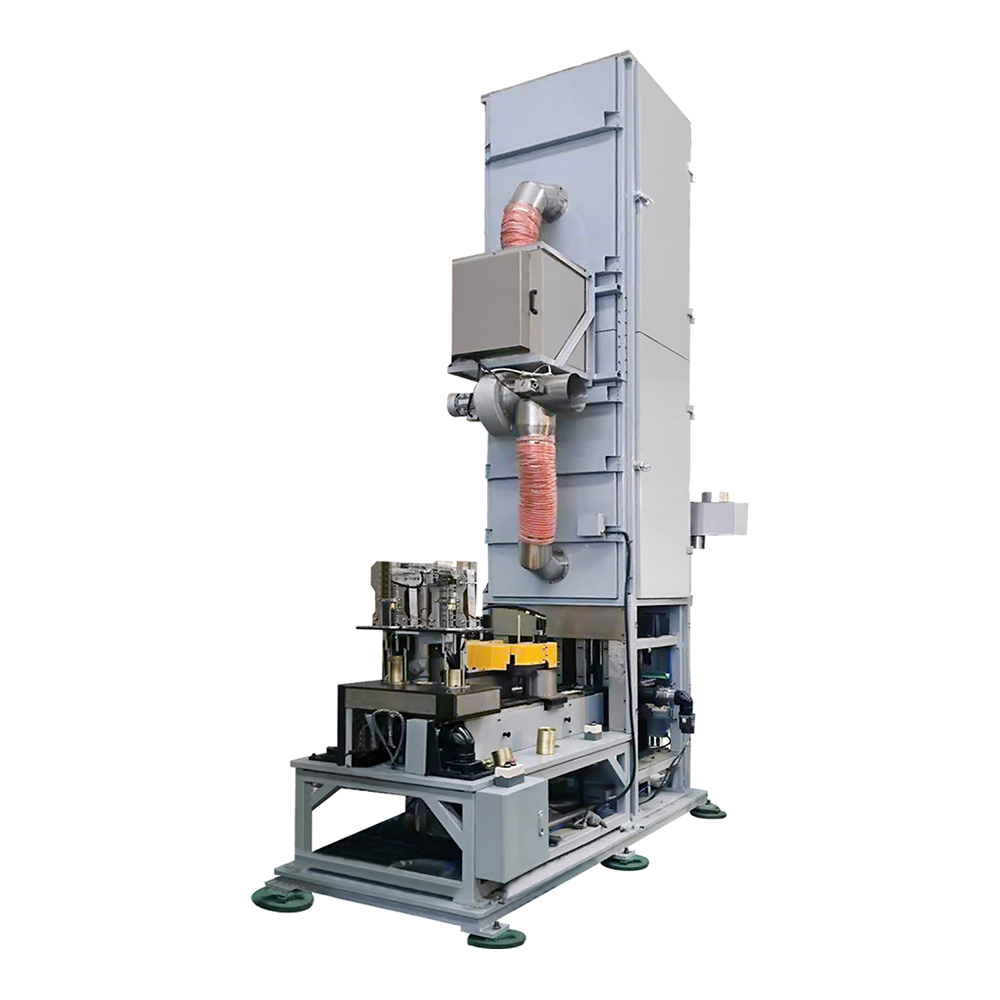
Two cans of CNC multi-mode CNC gantry punch
Two-piece cans are generally produced from a single metal blank that forms the can body and bottom as one component. This differs from three-piece cans, which normally use separate body, top, and bottom components joined by seams. In a two-piece process, the metal sheet must be accurately blanked, drawn, and formed so that the finished container has a uniform wall, a reliable base, and the correct dimensions for subsequent operations.
The punch press is central to this process. It applies controlled mechanical force through a forming tool or die. The die determines the shape of the blank, while the punch drives the sheet into the required cavity. Accurate alignment between the punch, die, sheet, and feeding system is essential. Even a small deviation can affect the can diameter, height, base profile, material distribution, or compatibility with later necking, flanging, washing, printing, or filling operations.
For tuna cans and similar food containers, dimensional repeatability is especially important. The can must support sterilization, filling, closing, transportation, and storage. The bottom profile must resist pressure and deformation, while the sidewall must remain sufficiently uniform for reliable performance. The press must therefore deliver more than high speed; it must provide stable forming conditions throughout every production cycle.
The CNC multi-mode gantry punch press addresses these requirements through a rigid O-frame structure, automatic operation, configurable die capacity, adjustable working parameters, and a range of models designed for different production levels. It is suitable for manufacturers that need a flexible platform rather than a single-purpose machine limited to one can size or output range.
The product is identified as the CNC-C series automatic punch press for two-piece can production. The main application is punch pressing for tinplate and related metal packaging materials. Its can size is described as various and tailor-made, allowing the tooling and line arrangement to be developed around the customer’s required container dimensions.
The series includes several model configurations, including CNC-C2L, CNC-C2H, CNC-C1B-L, CNC-C1H-2, CNC-CVI-L, CNC-C3, CNC-CVI-H, and CNC-C9. These models differ in working pressure, ram stroke, speed, die capacity, motor power, overall dimensions, and production function. This model range enables a packaging plant to select a machine according to its can specification and target output instead of purchasing an oversized or underpowered press.
The system is suitable for automatic operation and can be integrated into a broader production line. Automatic feeding and synchronized transfer reduce the need for repetitive manual loading and unloading. This supports safer operation, more consistent cycle timing, and improved labor utilization. The appropriate configuration can be selected for low-volume specialty production, medium-volume food can manufacturing, or high-throughput industrial output.
The press uses an O-frame construction for metal can forming. The closed-frame arrangement helps resist deformation under load and supports accurate positioning between the punch and die. This is important when forming tinplate because variations in alignment can create uneven drawing, wrinkling, scoring, or dimensional instability.
Working pressure ranges from 120 kN to 900 kN across the listed models. Ram stroke distances range from 140 mm to 190 mm, with selected models providing a maximum lift depth of 35 mm or 55 mm. Maximum stroke rates are listed at up to 150 strokes per minute for certain models, while other configurations are rated at 100 strokes per minute. The actual output depends on the can diameter, number of dies, material properties, feeding arrangement, and production conditions.
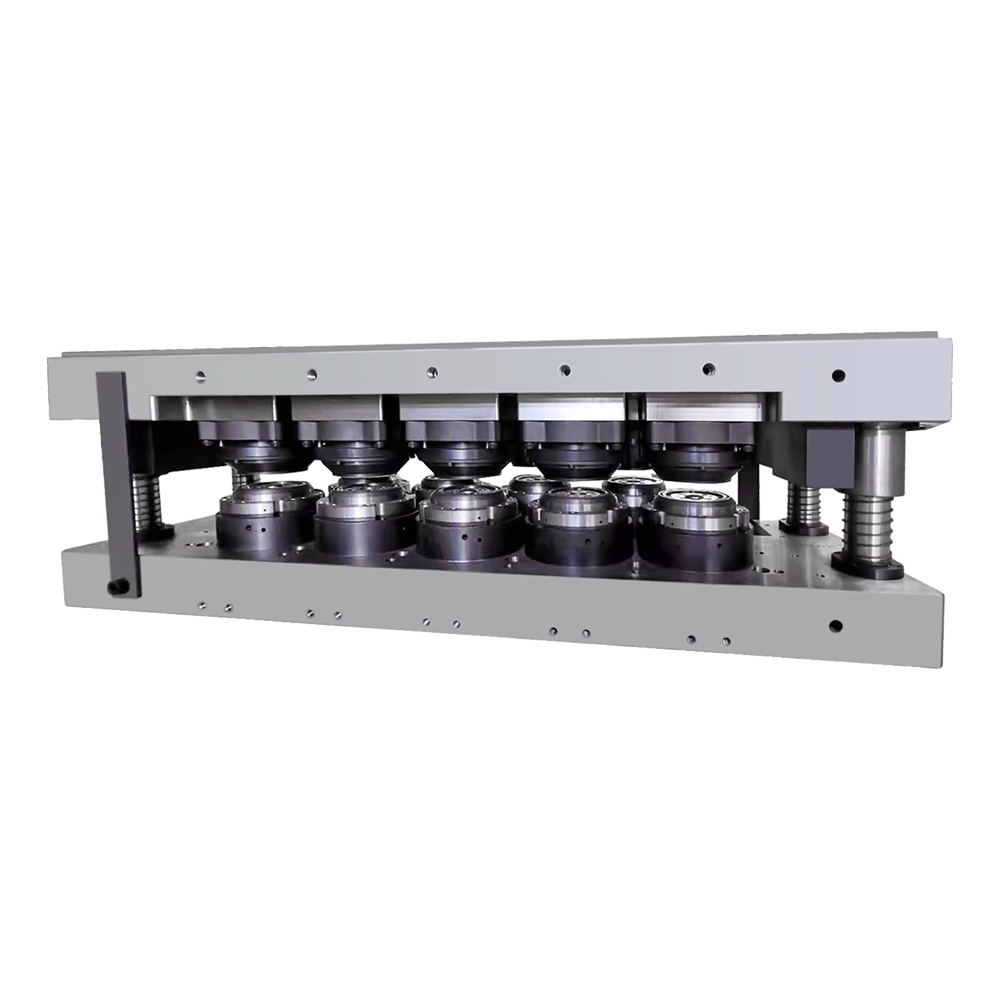
The machine can be configured with one die or multiple dies. The listed configurations include one die, up to two dies, up to three dies, and up to five dies. Multi-die operation increases the number of cans produced per machine cycle and can significantly improve line productivity when the can design and material layout are suitable for multiple-up production.
One of the primary advantages of the series is its flexible production capacity. A manufacturer producing specialty tuna cans may not require the same output as a large industrial food packaging plant. With several models and die configurations available, the press can be selected according to actual demand.
A single-die configuration may be appropriate for smaller can sizes, development work, or moderate production volumes. Two-die and three-die arrangements can provide higher output while retaining a practical machine footprint. A five-die configuration is intended for applications requiring very high production rates, with the listed function reaching approximately 400 to 500 cans per minute under suitable conditions.
This flexibility offers an advantage over conventional single-format presses. Instead of relying on a machine designed around one fixed output level, the buyer can choose a configuration that corresponds to current requirements and future expansion plans. The result can be better capital utilization and a more manageable production strategy.
Two-piece can production depends heavily on efficient use of tinplate sheets. Material is often one of the largest operating costs in a can-making plant, so blank layout, die arrangement, and feeding precision directly influence profitability. Multi-die production allows more than one blank to be processed in each cycle, and the tooling layout can be developed to support efficient sheet utilization.
The press is listed with a maximum sheet size of 1,150 by 1,150 millimeters for the applicable model groups. This provides a substantial working area for large-format tinplate sheets and supports the development of production layouts for different can diameters. Accurate feeding helps maintain the intended blank position and reduces the risk of material damage caused by misalignment.
Efficient material use also reduces scrap handling. Lower scrap volumes can simplify collection and recycling, reduce interruptions, and improve the overall environmental profile of the packaging operation. Actual material savings depend on the can design, blank dimensions, tooling arrangement, and the quality of process optimization.
Forming metal packaging requires force to be applied consistently and predictably. The O-frame pressing structure is advantageous because it provides a strong load-bearing configuration around the working zone. A rigid frame helps maintain the relationship between the punch and die when pressure is applied.
Stable alignment is essential for repeatable can dimensions. If the frame or working mechanism deflects excessively, the result may be uneven forming, tool wear, increased noise, and more frequent quality rejects. By combining a heavy-duty frame with appropriate tooling and maintenance, the press can support continuous production with a high degree of process consistency.
The available pressure range also allows different machine models to be matched to different forming requirements. A lower-pressure model may be sufficient for a particular can size and material specification, while a larger model can be selected for deeper forming, larger diameters, or higher production demand.
The multi-mode concept allows the same equipment family to serve different production conditions. Models with different ram strokes can be selected according to the required forming depth and cycle characteristics. The 140-millimeter stroke configurations are designed for applications where a shorter stroke is suitable, while 190-millimeter versions offer a longer ram movement for other tooling and forming requirements.
Maximum lift depth is listed at either 35 millimeters or 55 millimeters, depending on the configuration. This distinction is important when the die arrangement and can profile require different clearance or transfer conditions. The maximum shut height is listed between 466 and 505 millimeters, with adjustment ranges of 17 or 25 millimeters according to the model.
These adjustment capabilities give the production team more control when setting up tooling. They also help the machine accommodate different die heights and can specifications within the permitted operating range. As with any forming machine, the exact compatibility must be confirmed through a technical review of the can drawing, material, tooling, and line layout.
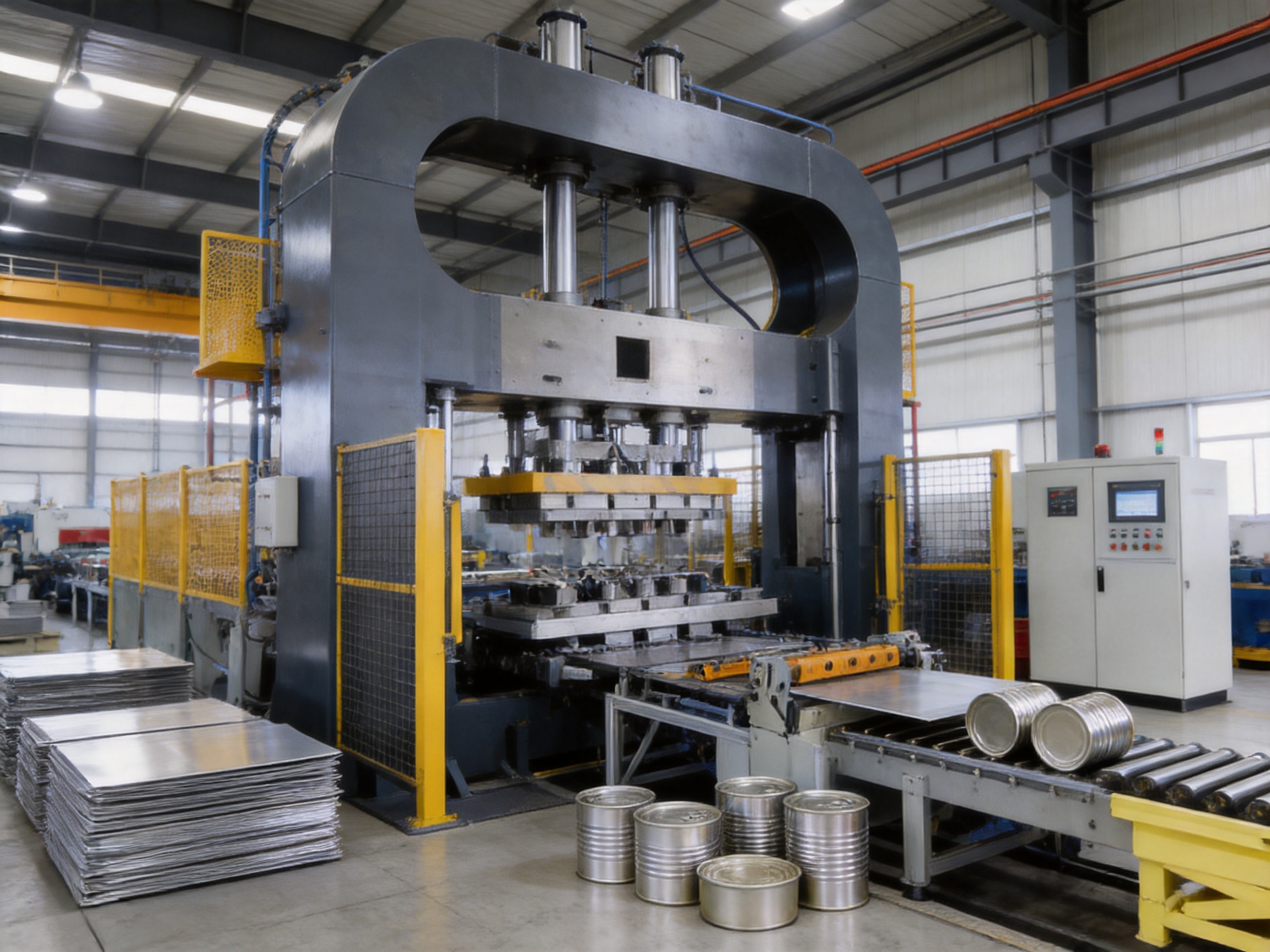
The following table summarizes the principal specifications supplied for the CNC-C series. Because the models have different configurations, buyers should confirm the final values, tooling arrangement, and production conditions before ordering.
| Specification | CNC-C2L | CNC-C2H | CNC-C1B-L | CNC-C1H-2 | CNC-CVI-L | CNC-C3 | CNC-CVI-H | CNC-C9 |
|---|---|---|---|---|---|---|---|---|
| Working pressure | 450 kN | 450 kN | 900 kN | 900 kN | 120 kN | 120 kN | 120 kN | 160 kN |
| Ram stroke distance | 140 mm | 190 mm | 140 mm | 190 mm | 150 mm | 190 mm | 150 mm | 190 mm |
| Maximum stroke rate | 150 spm at 153 mm diameter | 100 spm | 150 spm at 153 mm diameter | 100 spm | 150 spm at 153 mm diameter | 100 spm | 150 spm at 153 mm diameter | 100 spm |
| Punch die number | One die | Up to two dies | Up to three dies | Up to five dies | Configuration dependent | Configuration dependent | Configuration dependent | Configuration dependent |
| Maximum lift depth | 35 mm | 55 mm | 35 mm | 55 mm | 35 mm | 55 mm | 35 mm | 55 mm |
| Maximum shut height | 485 mm | 466 mm | 485 mm | 466 mm | 505 mm | 466 mm | 505 mm | 466 mm |
| Shut-height adjustment | 17 mm | 17 mm | 17 mm | 17 mm | 17 mm | 25 mm | 17 mm | 25 mm |
| Maximum sheet size | 1,150 × 1,150 mm | 1,150 × 1,150 mm | 1,150 × 1,150 mm | 1,150 × 1,150 mm | Configuration dependent | Configuration dependent | Configuration dependent | Configuration dependent |
| Main motor power | 7.5 kW | 7.5 kW | 11 kW | 11 kW | 15 kW | 18.5 kW | 15 kW | 22 kW |
| Total power | 40 kW | 50 kW | 60 kW | 65 kW | Configuration dependent | Configuration dependent | Configuration dependent | Configuration dependent |
| Total weight | 18 tonnes | 22 tonnes | 25 tonnes | 27 tonnes | Configuration dependent | Configuration dependent | Configuration dependent | Configuration dependent |
The differences among models illustrate why a detailed application assessment is necessary. Pressure, stroke, speed, die quantity, and motor power should be evaluated together rather than separately. A high-speed model is not automatically the best choice if the can requires a longer stroke or a particular forming depth. Similarly, a large press may provide more capacity than needed and may increase energy consumption, floor-space requirements, and initial investment.
Production speed is one of the most visible advantages of an automated punch press, but speed must be considered in relation to the entire line. The supplied operating data describes systems ranging from approximately 80 to 500 cans per minute depending on can size and cap or body diameter. The stated maximum speed for selected configurations is up to 150 strokes per minute.
When several dies are used simultaneously, one stroke can produce multiple pieces. The listed functions include approximately 80 to 100 cans per minute with one die, 160 to 200 cans per minute with two dies, 240 to 300 cans per minute with three dies, and 400 to 500 cans per minute with five dies. These figures are indicative and depend on the specific can, sheet layout, tooling, feeding system, and operating conditions.
Multi-die operation can reduce the number of machines required to achieve a target output. It may also reduce the amount of floor space, auxiliary equipment, and labor needed per unit of production. However, high-speed operation places greater demands on lubrication, die maintenance, sheet quality, transfer timing, and inspection. The best result is achieved when the entire line is engineered as one coordinated system.
Increasing the press speed without controlling other variables can lead to unstable production. Sheet feeding must remain synchronized with the ram cycle. Blanks must enter the die in the correct position. Lubrication must be sufficient without contaminating the product or creating downstream cleaning problems. Tool surfaces must remain smooth and correctly aligned.
A practical production plan therefore establishes a stable operating window rather than simply selecting the highest theoretical speed. The line may run at a lower speed during startup, tooling trials, or changeovers and then increase gradually after the material flow and can dimensions have been verified. This approach helps protect the tooling and limits the generation of defective cans.
The CNC-C series provides a platform for this type of controlled optimization. Its range of models allows the buyer to choose an appropriate speed and die arrangement rather than forcing every application into the same operating format.
The performance of a large punch press depends not only on its design but also on the quality of its manufacturing process. Zhejiang Golden Eagle Food Machinery Co., Ltd. has developed can-making machinery and can-making molds since 1978. The company operates with more than 350 trained personnel, including experienced design and development engineers.
Its manufacturing capabilities include CNC high-precision machining equipment and a complete range of mechanical machining equipment. These resources support the production of large structural components, precision tooling, drive elements, forming parts, and replacement components. For a punch press, this combination is important because the frame, ram, die support, guide system, and feeding interface must work together with accurate geometry.
CNC machining provides repeatable control over dimensions, surface finish, hole positions, and component geometry. In can-making equipment, precision machining is especially valuable for die components and alignment-related parts. A small dimensional error in a die or guide component can influence material flow and produce defects across thousands of cans.
Computer-controlled machining also supports repeatability from one replacement part to the next. When a wear component must be replaced, a precisely manufactured spare can restore the intended geometry and reduce the time needed for manual fitting. This supports maintenance efficiency and helps preserve production consistency throughout the machine’s service life.
Large presses require more than isolated precision parts. Their frames and mechanical assemblies must be manufactured, assembled, inspected, and tested as complete systems. The company’s combination of precision CNC resources and broader mechanical machining equipment enables it to manage multiple stages of production within an integrated manufacturing environment.
This approach can improve coordination between design, machining, assembly, and commissioning. It also supports customization. A two-piece can production line may require a specific sheet size, die layout, feeding direction, guarding arrangement, or downstream interface. A manufacturer with experience in both machines and molds is better positioned to coordinate these elements than a supplier that provides only a standalone press.
The company states that its product design principles are similar to those associated with established European can-making equipment manufacturers, including KRUPP, SOUDRONIC, and ALFONS-HAAR. Its engineers have combined practical production experience with ongoing product development and innovation. This experience is relevant because can-making equipment must be designed for real production environments, not only for laboratory performance.
Practical design experience helps identify issues such as accessibility for maintenance, adjustment of tooling, sheet transfer stability, protection of operators, and coordination with upstream and downstream machines. It also helps the supplier understand how a press behaves after years of operation, when wear, material variation, and production changeovers become important considerations.
The punch press and its tooling must be treated as a matched system. A high-quality press cannot deliver reliable cans if the punch and die are poorly designed or manufactured. The company’s long-term involvement in can-making molds is therefore a significant strength.
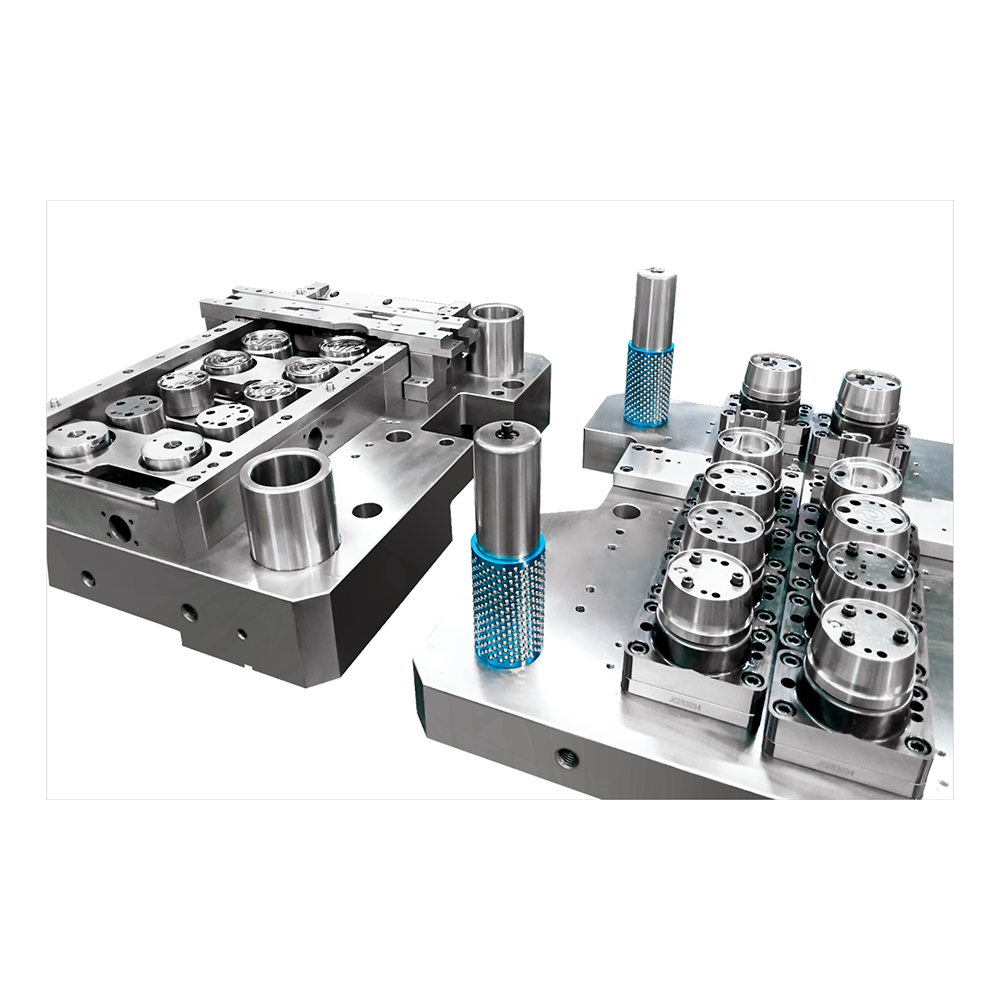
Tooling determines the can profile, blank diameter, drawing characteristics, clearance, material flow, and final dimensional accuracy. For a tuna can, the die must be developed around the required diameter, height, base shape, wall thickness, and tinplate specification. Different materials and coatings may require different forming conditions and surface finishes.
In multi-die production, consistency among the dies is essential. If one die produces a slightly different wall height or base profile, the output may not be uniform across the production batch. Integrated mold manufacturing and machine engineering can help improve compatibility among multiple tooling stations.
Tooling also affects maintenance cost. Correctly designed and finished die surfaces can reduce friction and wear. Replaceable wear parts can make routine service more practical. The buyer should discuss expected tool life, recommended inspection intervals, spare-part availability, and the process for reconditioning dies before finalizing the production line.
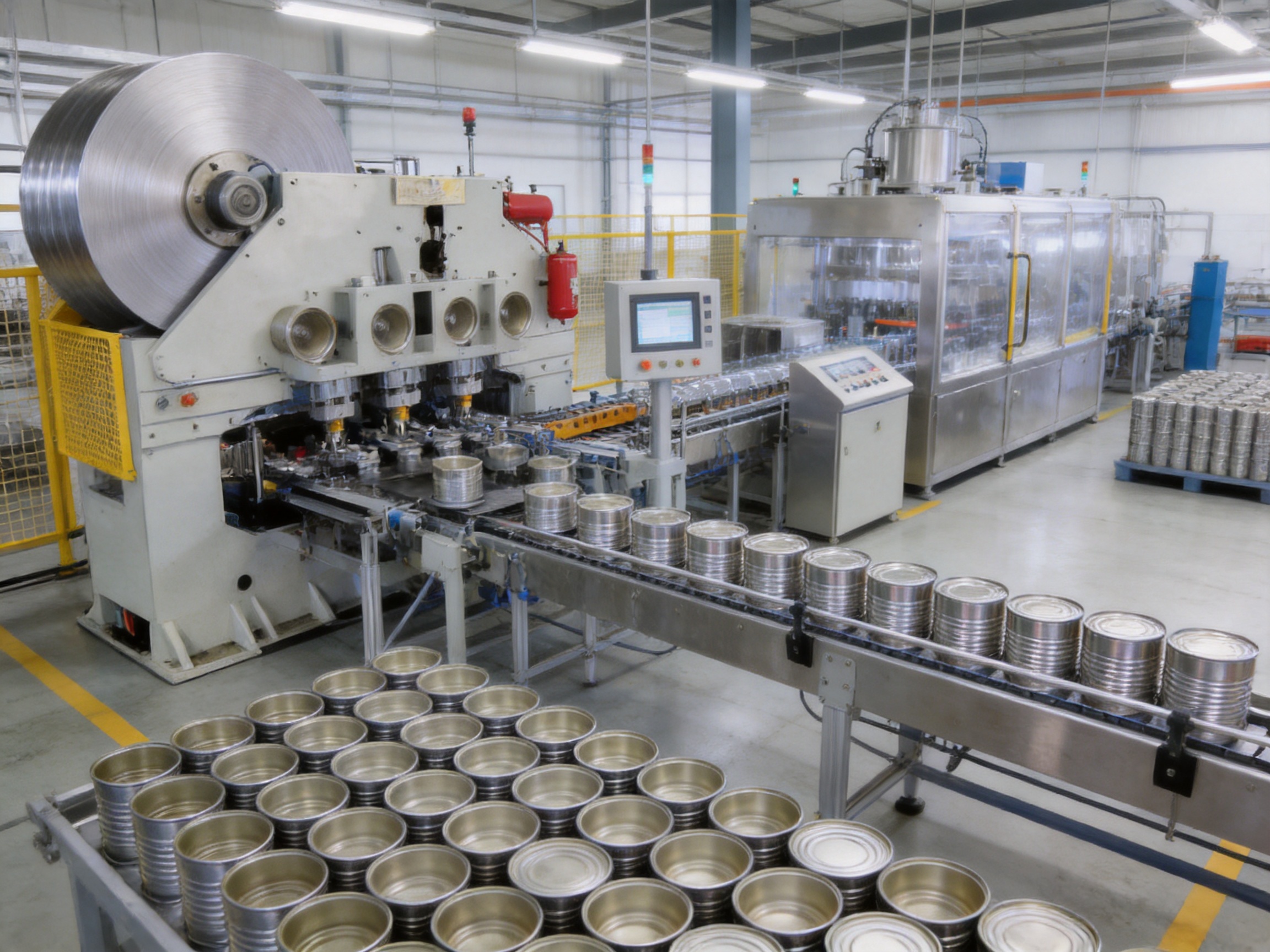
Automatic operation is a central feature of the CNC-C series. An automatic feeding machine can deliver tinplate sheets or blanks to the press at a controlled interval. Correct feeding is necessary to maintain the cycle rate and prevent sheet collision, misalignment, or incomplete forming.
In a complete line, the feeding system may be coordinated with sheet preparation, blanking, forming, transfer, inspection, and collection. Synchronization among these units reduces waiting time and helps prevent bottlenecks. If the press is capable of producing 300 cans per minute but the downstream equipment can process only 200 cans per minute, the effective line capacity will be limited to the slower stage.
Integration also affects operator safety. Automated feeding and transfer can reduce the need for operators to reach into the working area. Proper guarding, interlocks, emergency stops, and safe access procedures should be included in the line design. Operators should receive training in setup, adjustment, fault recovery, and maintenance isolation.
Food packaging producers often manufacture several can sizes or product formats. Changeover time therefore has a direct effect on plant productivity. The press should be evaluated according to how easily dies, guides, feeding components, and related settings can be changed.
Useful changeover practices include clear setup documentation, reference marks, standardized tooling interfaces, accessible adjustment points, and inspection procedures for the first cans produced after a change. Where applicable, digital control and stored parameter settings can help reduce setup variation. The exact control functions should be confirmed with the supplier for the selected model.
A well-planned changeover process protects the tooling and minimizes material waste. It also allows the manufacturer to respond more quickly to orders for different can dimensions without requiring a completely separate production line for every product.
Reliable can production depends on the combined performance of the press, tooling, material, lubrication, feeding, and operator practices. The heavy structure of the machine provides a foundation for long-term service, but regular maintenance remains necessary.
Routine maintenance may include inspection of fasteners, lubrication points, guides, bearings, drive components, sensors, electrical connections, and safety devices. Tooling should be checked for scoring, chipping, deformation, edge wear, and buildup. Feeding components should be inspected for wear that could affect sheet position.
Preventive maintenance is generally more effective than waiting for a failure. A planned inspection schedule can identify abnormal vibration, unusual noise, rising temperature, declining output, or changes in can dimensions before these issues result in major downtime. Maintenance records should include operating hours, replaced parts, tooling adjustments, and observed product defects.
Quality control for two-piece cans typically includes dimensional checks, visual inspection, base-form verification, wall-height measurement, and checks for scratches, wrinkles, cracks, dents, or incomplete forming. The exact inspection plan depends on the can application and applicable packaging requirements.
At high production rates, inspection should be organized so that problems are detected quickly. Sampling at defined intervals can help identify gradual tool wear, while sensors or automated vision systems may be added where the production specification justifies the investment. The press itself should be operated within the recommended limits so that output speed does not compromise product quality.
Uniform cans reduce problems during later operations such as washing, coating, printing, flanging, sealing, filling, and palletizing. Consistent dimensions also help improve the performance of can-end closing equipment and reduce the risk of leakage or handling problems.
The listed main motor power ranges from 7.5 kW to 22 kW, while total power for certain configurations ranges from 40 kW to 65 kW. These figures should be considered during factory planning. Electrical supply, control cabinets, ventilation, lighting, and auxiliary equipment must be designed to support the selected line.
Although a larger machine may offer higher output, its energy use and installation requirements may also be greater. The most economical choice is the model that provides sufficient capacity with an appropriate margin, not necessarily the model with the maximum pressure or die count. Production forecasts, product mix, operating shifts, material cost, labor cost, and expected changeovers should all be included in the investment evaluation.
Machine dimensions and weight are also important. Listed total weights range from approximately 18 to 27 tonnes for the specified model groups, and machine dimensions can extend beyond 12 meters in length. The factory must provide suitable foundations, transport access, lifting equipment, service clearances, and space for sheet storage and finished-can handling.
A properly planned installation can improve the total cost of ownership. Adequate access around the machine simplifies service. Correct foundation preparation helps maintain alignment. Organized material flow reduces unnecessary movement and supports a safer, more efficient workplace.
Purchasing a punch press is a long-term production decision. The machine must be supported not only during installation but also throughout its operating life. An experienced manufacturer can contribute to application evaluation, tooling selection, line integration, commissioning, operator training, and spare-parts planning.
Zhejiang Golden Eagle Food Machinery Co., Ltd. has more than four decades of experience in can-making machinery and molds. The company reports that it has produced more than 10,000 pieces of can and can-lid equipment. Its product range includes food can production lines, beverage can production lines, can-lid production lines, chemical tank production lines, aerosol canister production lines, two-piece can production lines, and pop-can production lines.
This broad product background is valuable for customers seeking a complete line rather than a single press. A supplier familiar with different can formats can better understand how one machine affects the performance of another. It can also help the customer plan future expansion, replacement equipment, and common spare parts.
The company reports certification to the ISO 9001 quality management system and ISO 14001 environmental management system. These certifications indicate that documented management processes are in place for quality and environmental considerations. Customers should still review the specific inspection records, acceptance criteria, and documentation supplied with the machine.
The company’s equipment has been exported to markets in Europe, Asia, Africa, North America, South America, and Oceania. International experience can help a supplier understand different factory conditions, electrical standards, packaging requirements, shipping procedures, and installation expectations.
Global service capability is especially important for large production equipment. Transportation, customs clearance, foundation work, assembly, commissioning, and operator training must be coordinated carefully. Clear technical documentation and communication before shipment can reduce installation delays.
The company states that its after-sales services include installation, commissioning, technical guidance, operation training, and parts supply. These services are important because a high-speed press requires more than mechanical installation. Operators need to understand setup procedures, tooling adjustment, safe operation, fault response, and maintenance routines.
Tuna cans require dependable mechanical strength and reliable compatibility with food-processing conditions. The can body must withstand filling, handling, closing, sterilization, and distribution. A well-controlled punch-pressing process contributes to a stable body shape and consistent bottom geometry.
The CNC-C series can be configured for various tailor-made can sizes. This makes it suitable for manufacturers serving different food products, portion sizes, and retail markets. The final suitability depends on the can drawing, material specification, coating system, required production rate, and downstream equipment.
For food packaging applications, cleanliness and process control are also important. The production area should be organized to prevent contamination and protect formed components from unnecessary damage. Lubrication and cleaning procedures should be established in accordance with the material and product requirements. Any process chemicals or lubricants used around food packaging should be selected and controlled according to the applicable regulations and customer specifications.
The punch press can form the foundation of a broader food can production line. After body forming, additional operations may include washing, drying, coating, printing, flanging, beading, inspection, and packing. A coordinated line design ensures that the can body produced by the press is compatible with these later processes.
Compared with basic single-die or manually fed punching systems, a CNC multi-mode gantry punch press offers several practical advantages. Automatic feeding reduces repetitive handling. Multi-die production increases output per cycle. A rigid O-frame supports stable forming. Multiple model choices allow closer matching between machine capacity and product requirements.
Compared with a collection of separate low-capacity presses, a multi-die system may reduce the number of production units needed for a given output. This can simplify material flow and reduce the number of operators required at the pressing stage. It may also centralize tooling management and maintenance.
Compared with a machine designed for only one can format, the configurable model range offers more flexibility for manufacturers with a diversified product portfolio. Different stroke lengths, pressures, die quantities, and power levels help the buyer select an appropriate solution for different production objectives.
These advantages should be evaluated against the application. A multi-die press may require more complex tooling and a higher level of maintenance discipline than a simple single-die machine. The correct comparison should therefore include output, changeover time, labor, scrap, energy, tooling cost, maintenance, service support, and expected equipment life.
Before selecting a model, the buyer should prepare a complete technical specification. This should include can diameter, can height, base profile, metal material, thickness, coating, sheet dimensions, required output, number of shifts, and planned product variations.
The buyer should also confirm the complete line arrangement. Questions should address whether the press will process full sheets or pre-cut blanks, how sheets will be stacked and separated, how finished pieces will be transferred, and which downstream operations will follow. The location of electrical cabinets, operator stations, safety guarding, lubrication equipment, and maintenance access should be shown in the layout.
Tooling requirements deserve special attention. The buyer should request details about die construction, materials, expected service life, replacement parts, adjustment procedures, and the number of tooling sets included in the quotation. If multiple dies are used, the supplier should explain how die-to-die consistency will be verified.
Acceptance testing should be defined before production begins. Typical criteria may include cycle rate, can dimensions, appearance, reject rate, noise level, safety functions, and continuous running time. Clear acceptance criteria help ensure that both parties share the same understanding of the expected result.
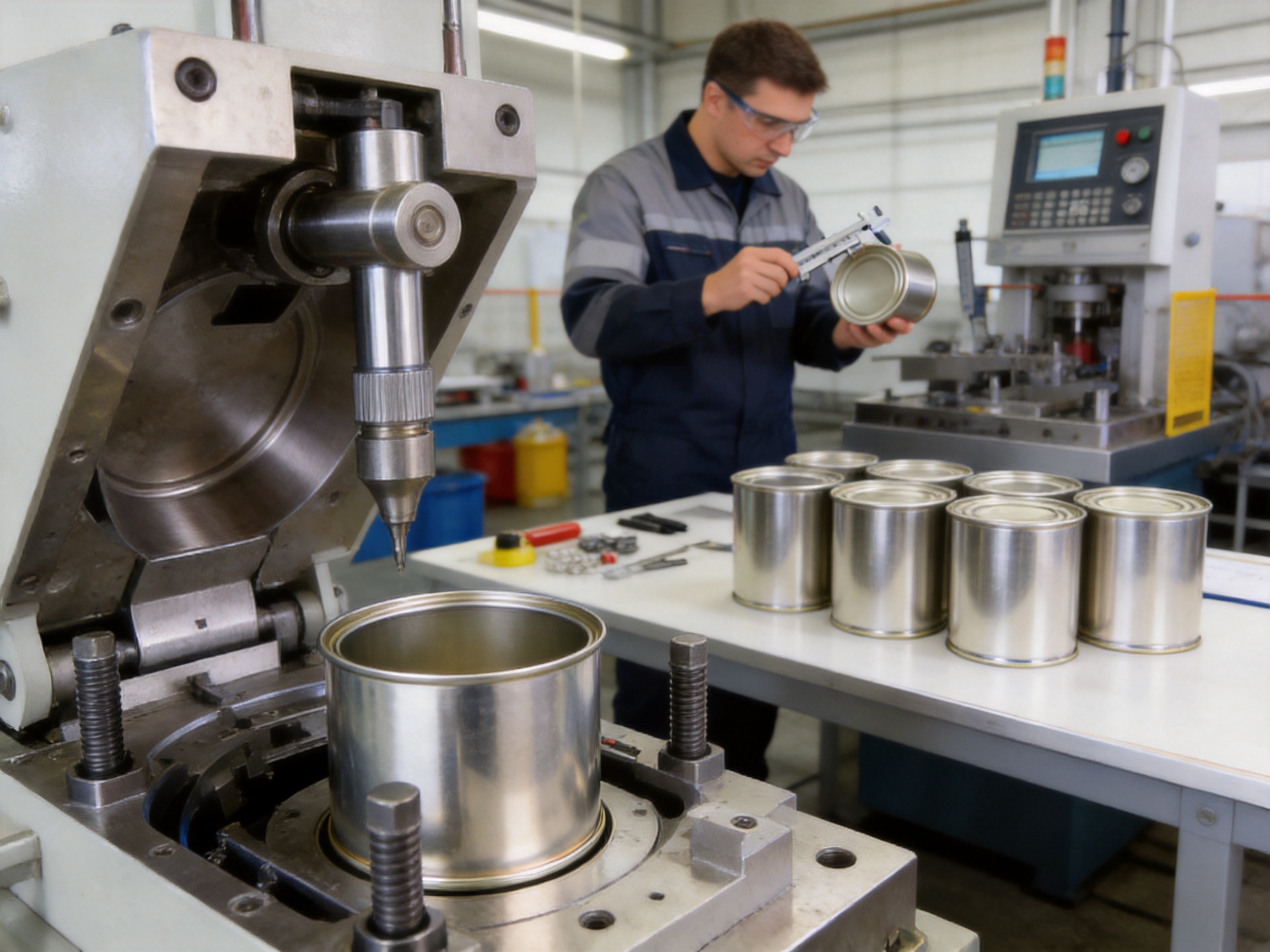
Large punch presses require careful installation. The foundation must support the machine weight and operating forces. The installation area must provide sufficient clearance for assembly, die changes, inspection, and maintenance. Electrical power, compressed air, ventilation, and material-handling systems must be prepared before the equipment arrives.
Commissioning normally includes mechanical inspection, electrical connection, control verification, safety testing, dry running, low-speed testing, tooling setup, and production trials. The line should be operated gradually until feeding, forming, transfer, and inspection are confirmed to be stable.
Operator training should cover normal operation, startup and shutdown, product changeover, die adjustment, alarm response, safety procedures, lubrication, cleaning, and first-level troubleshooting. Maintenance personnel should receive additional instruction on wear-part replacement, alignment checks, electrical diagnostics, and preventive maintenance schedules.
Technical documentation should include machine drawings, electrical diagrams, operation instructions, maintenance requirements, spare-parts lists, lubrication charts, and recommended inspection intervals. Such documents are important for reducing dependence on individual operators and preserving knowledge when staff changes occur.
The company’s stated after-sales program includes installation, commissioning, technical guidance, operation training, and parts supply. Customers should confirm the scope, response arrangements, warranty conditions, remote support, and availability of critical spare parts during contract discussions.
Metal forming can generate noise, vibration, scrap, lubricant residue, and heat. A modern installation should include appropriate guarding, noise management, lighting, ventilation, and housekeeping procedures. The press area should be designed so that operators can inspect the process without entering hazardous zones during operation.
Scrap tinplate should be collected systematically and sent for recycling where appropriate. Efficient nesting and multi-die production can reduce the quantity of unused material. Preventive maintenance can also reduce leaks, excessive lubrication, and premature component replacement.
The ISO 14001 environmental management certification reported by the manufacturer indicates that environmental management is included in its organizational systems. For the end user, environmental performance will also depend on factory operation, material selection, energy management, scrap recovery, and maintenance practices.
The value of a two-piece can punch press should be measured over its entire service life. Initial purchase price is only one part of the calculation. Output stability, material yield, tooling life, labor requirements, energy use, maintenance intervals, spare-parts availability, and service support all influence the total cost of ownership.
A properly selected CNC multi-mode press can provide a scalable production platform. A manufacturer may begin with a lower-output configuration and later expand capacity through additional tooling, complementary equipment, or a higher-capacity model in the same product family. Standardized operating methods across the series can simplify training and maintenance.
Durability is also important for packaging plants that operate multiple shifts. A robust frame, accurately machined components, reliable tooling, and an organized maintenance program can help the machine maintain performance over extended use. Production stability reduces unplanned downtime and helps the plant meet delivery schedules.
The ability to produce different can sizes is another long-term advantage. Market demand can change, and customers may request new dimensions or packaging formats. A configurable press and an experienced mold supplier can make it easier to develop new products without replacing the entire production concept.
The CNC multi-mode gantry punch press is a high-capacity solution for automatic two-piece can manufacturing. Its O-frame pressing structure, range of working pressures, selectable ram strokes, adjustable shut heights, multi-die configurations, and compatibility with tailor-made can sizes provide the flexibility required by modern metal packaging producers.
Its main advantages over conventional single-format or manually fed solutions include higher automation, greater production flexibility, improved potential for multi-up output, stable forming under load, and better integration with complete can-making lines. The listed output range extends from approximately 80 to 500 cans per minute depending on the can size and die configuration, while selected models can reach up to 150 strokes per minute.
The strength of the equipment is supported by the manufacturer’s long experience in can-making machinery and molds. Since 1978, Zhejiang Golden Eagle Food Machinery Co., Ltd. has developed equipment for food cans, beverage cans, can lids, chemical tanks, aerosol containers, two-piece cans, and other metal packaging applications. Its engineering team, CNC machining resources, broad mechanical manufacturing capability, quality and environmental management systems, international export experience, and after-sales services provide a foundation for complete project support.
For a buyer, the best result comes from selecting the press as part of a carefully engineered production line. Can dimensions, material, forming depth, output, die quantity, feeding method, downstream operations, factory conditions, and maintenance requirements should all be reviewed before choosing the final model. When these factors are matched correctly, the CNC multi-mode punch press can support efficient, consistent, and scalable two-piece can production.
The press is designed for automatic punch pressing in two-piece metal can production. It is suitable for tinplate containers such as tuna cans and other tailor-made food or general packaging cans, provided that the can design and material are compatible with the selected model and tooling.
A two-piece can is generally formed from one metal blank that becomes the can body and bottom. The top or end is normally attached in a later operation. This differs from a three-piece can, which uses a separate body sheet and separate ends joined through additional forming or seaming processes.
The supplied information states that production systems can operate from approximately 80 to 500 cans per minute depending on can size and die configuration. Selected models are listed with maximum stroke rates of up to 150 strokes per minute. Actual output must be confirmed according to the can diameter, material, die arrangement, feeding system, and line conditions.
Multi-die operation allows several blanks to be processed during one press cycle. The listed functions include approximately 80 to 100 cans per minute with one die, 160 to 200 with two dies, 240 to 300 with three dies, and 400 to 500 with five dies under suitable conditions. The final output depends on the complete production setup.
The O-frame structure provides a closed and rigid load-bearing arrangement around the pressing area. This helps resist deflection during forming and supports stable alignment between the punch and die. Better structural stability can contribute to consistent can dimensions and reduced forming variation.
The product information describes the can size as various and tailor-made. Different sizes require appropriate dies, feeding arrangements, and process settings. Customers should provide detailed can drawings and material specifications so that the supplier can confirm the suitable model and tooling configuration.
The listed maximum sheet size for the applicable model groups is 1,150 by 1,150 millimeters. The final sheet-handling capability should be verified for the selected model, feeding equipment, sheet thickness, blank layout, and production method.
The listed configurations include one die, up to two dies, up to three dies, and up to five dies. The correct quantity depends on the can dimensions, production target, material layout, tooling design, and press model.
The main applications are metal packaging and can-making industries. Potential users include food can manufacturers, tuna can producers, beverage packaging companies, and plants making other tinplate or two-piece containers. The equipment can also be integrated into broader packaging machinery production lines.
The manufacturer states that it provides installation, commissioning, technical guidance, operation training, and parts supply. The exact scope, warranty, response time, remote assistance, and spare-parts arrangement should be confirmed in the purchase agreement.
The customer should prepare the foundation, factory access, lifting and handling equipment, electrical supply, service clearances, material storage, downstream connections, safety provisions, and trained personnel. A complete installation drawing and utility list should be reviewed before shipment.
Regular inspection and preventive maintenance help identify wear, misalignment, lubrication problems, loose fasteners, abnormal vibration, and electrical faults before they cause major downtime. Tooling inspection is particularly important because worn or damaged dies can affect can dimensions and surface quality.
Yes. The punch press can be connected with automatic feeding and other upstream or downstream equipment. A complete line may include sheet handling, forming, transfer, washing, drying, coating, printing, flanging, inspection, and packing. The final configuration should be engineered around the customer’s product and factory layout.
Buyers should compare more than purchase price or advertised speed. Important criteria include working pressure, stroke, die capacity, actual output, material utilization, tooling life, changeover time, energy demand, machine footprint, maintenance requirements, safety systems, commissioning support, spare-parts availability, and the supplier’s experience with similar can-making projects.
1. Product technical information for the CNC-C series two-piece can punch press, including model specifications, working pressure, ram stroke, speed, die capacity, power, weight, and dimensions.
2. Manufacturer information for Zhejiang Golden Eagle Food Machinery Co., Ltd., including company history, manufacturing capabilities, product range, quality systems, export experience, and after-sales services.
3. General principles of sheet-metal punching, drawing, and forming for metal packaging containers.
4. Industrial guidance on preventive maintenance, tooling inspection, and safe operation of mechanical power presses.
5. General production-planning principles for automatic two-piece can manufacturing lines, including feeding, forming, transfer, inspection, and downstream integration.
Related Products

Founded in 1978, the company is one of the largest can-making machinery well-known companies at home and abroad.
Product Categories
Contact Information
Zhongshatou Shenjiamen Zhoushan Zhejiang China
+86-580-3056646

 English
 中文简体
中文简体
 русский
 عربى
عربى
 Español